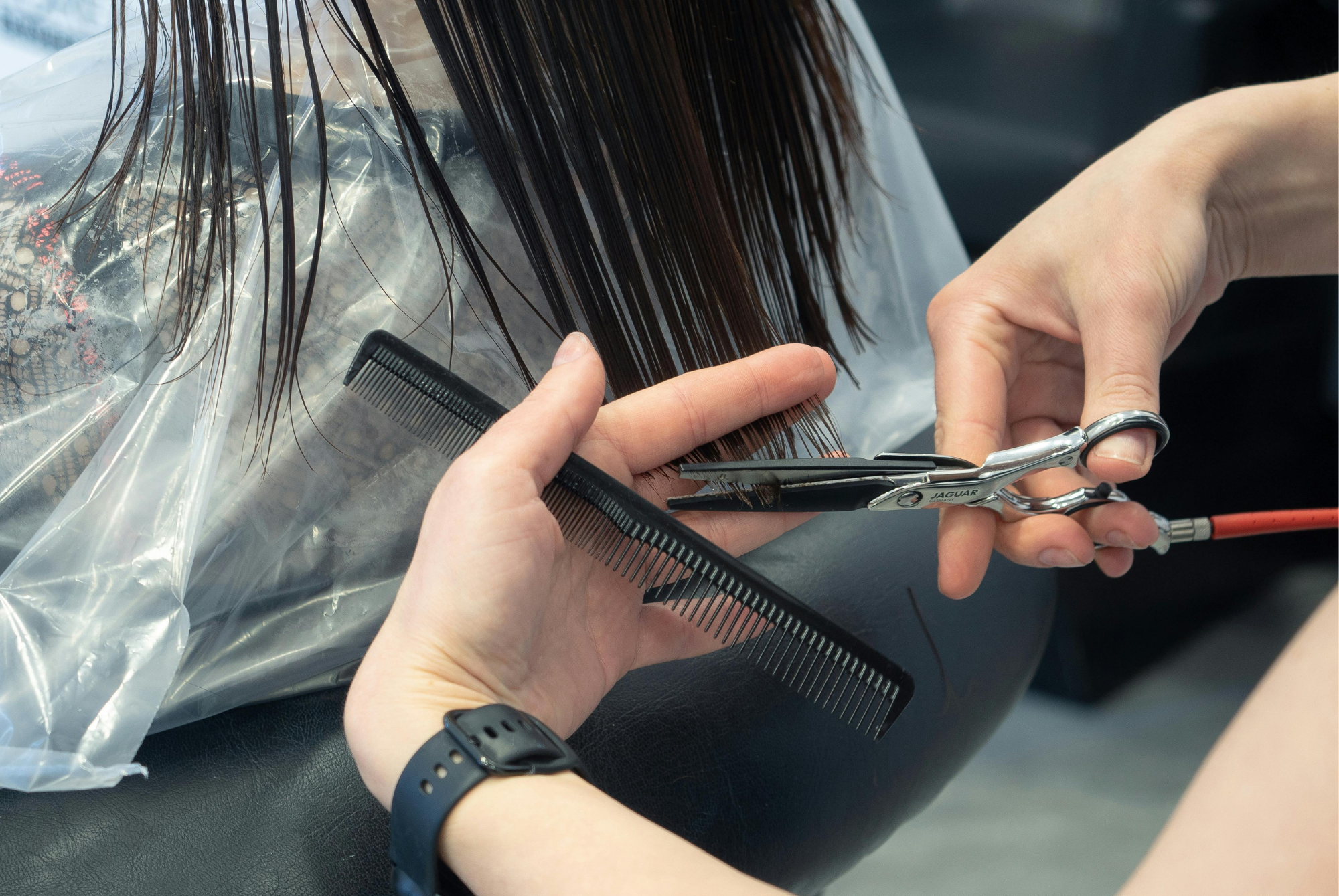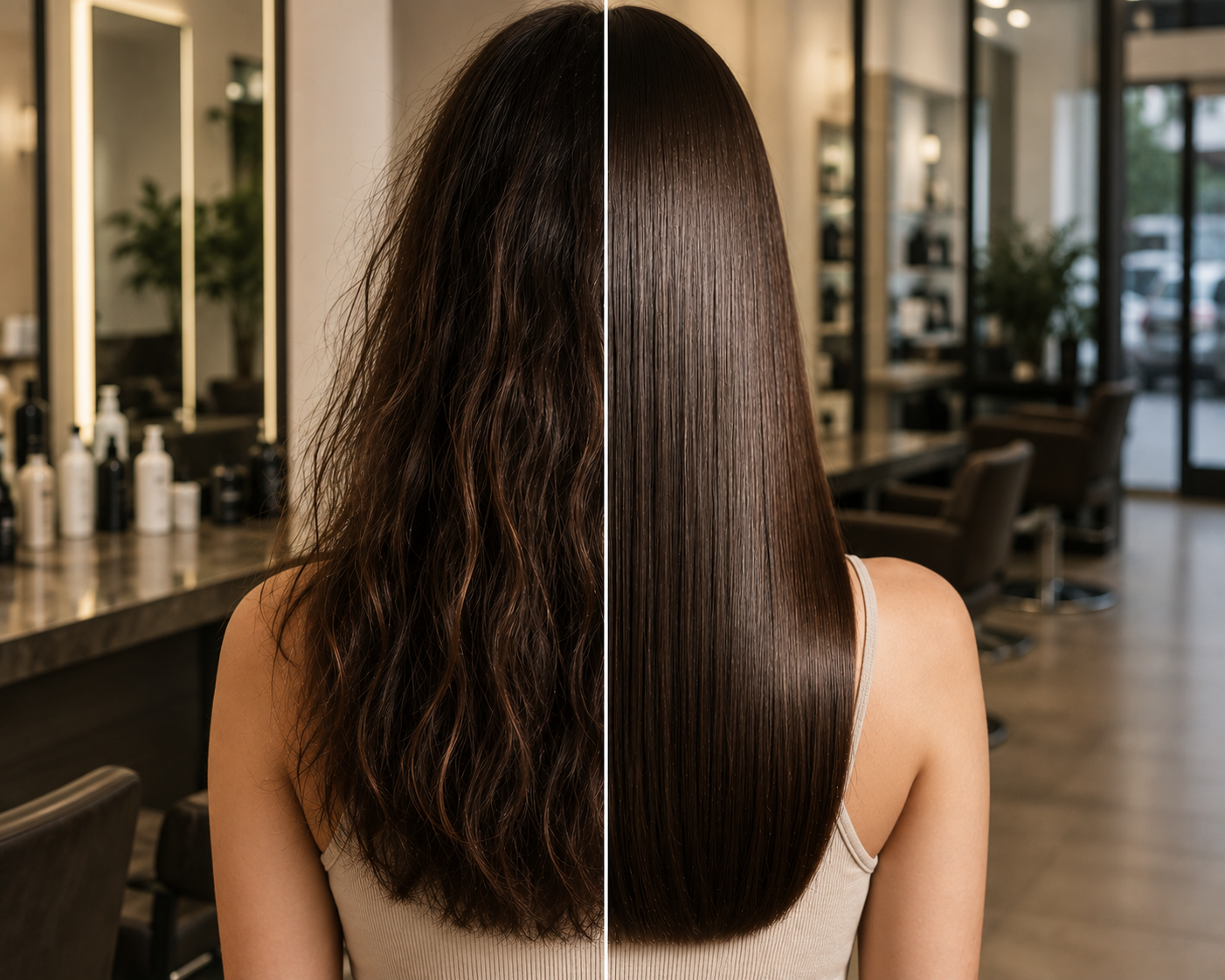

Hair thinning often comes up in the salon chair before it comes up in a medical appointment. A client points to a wider part, a lighter ponytail, or more hair in the brush and asks a practical question: What can help without making the hair harder to live with?
A cut, color adjustment, root powder, or a new part can create immediate fullness. Those are styling tools, not treatments for the follicle. For this guide, our panel focused on options with human evidence, a plausible mechanism, or a useful role in supporting the scalp.
The Scorecard
 1

1RE:YOU Dual-Path Hair Revival Serum
 2
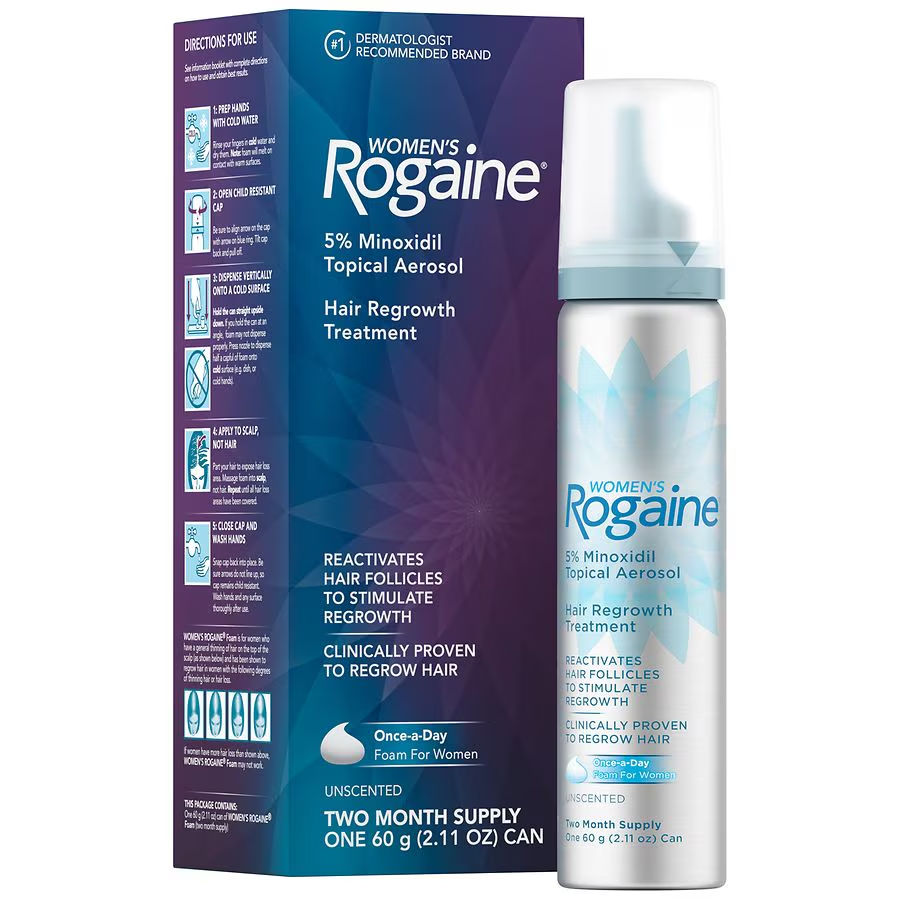
2Women's Rogaine Minoxidil Unscented Foam
 3
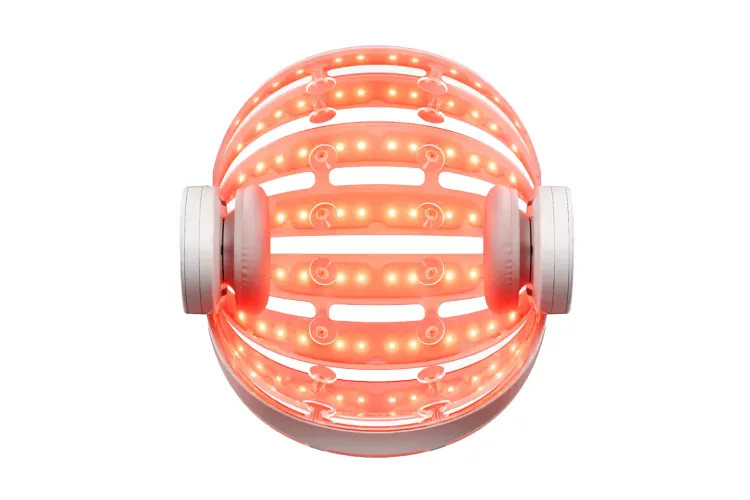
3CurrentBody Skin LED Hair Regrowth Device
 4
4Platelet-Rich Plasma (PRP)
 5
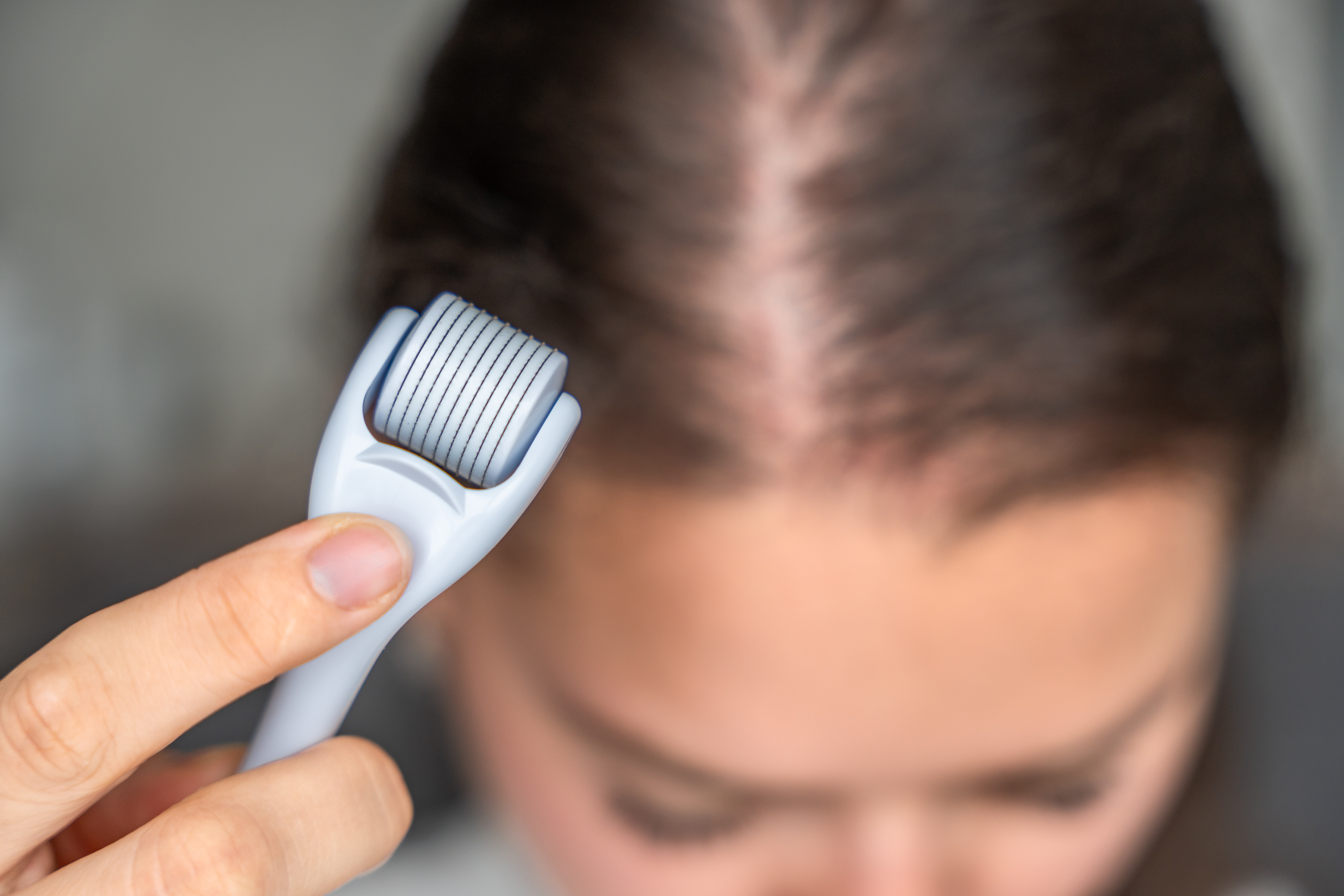
5Microneedling
Curious what these numbers actually measure? See how we evaluated the treatments below for the criteria behind each score.
1. Best Overall: RE:YOU Dual-Path Hair Revival Serum
Best For
Someone who wants a non-prescription, drug-free topical with human clinical data and does not want treatment residue dictating how their hair looks that day.
Pros
- Strong combination of clinical data and styling compatibility
- Once-daily use with no oily finish
- Proprietary molecules developed around the follicle and its surrounding environment
- Direct 90-day comparison with minoxidil
- No reported initial shedding phase in the 90-day data
- Works with varied textures and color-treated routines
- Drug-free and hormone-free
- Clear application instructions and a realistic 30-second massage step
Cons
- The price makes consistency harder for budget-conscious users
- The technology is new, so independent and longer-term replication is still limited
- We would like to see the complete six-month results once available
As a group of hair professionals, we expected the science to be the main reason RE:YOU ranked first. Once we considered how it would fit into the routines we see behind the chair, the texture mattered almost as much.
That may sound superficial in a hair-thinning review, but every pro on our panel recognized the same practical problem: a treatment that makes the roots look oily, stiff, or wet creates a daily conflict. A client may care deeply about future density and still skip tonight's application because they have a blowout, curls they do not want to disturb, or a meeting the next morning. The routine has to survive real life.
RE:YOU feels closer to a lightweight scalp-care serum than a traditional medicated solution. The directions call for one to two full droppers once daily on a clean, dry scalp, followed by about 30 seconds of massage. The formula is described as lightweight, non-sticky, and compatible with regular styling products.
How Our Hair Pros Would Use It
Our pros recommend dividing the scalp into several narrow partings instead of emptying a full dropper into one place. Apply most of the product where thinning is visible, usually the part line, crown, temples, or hairline.
On fine hair, we would use smaller drops across more sections to reduce temporary wetness at the root. With dense curls, coils, braids, or protective styles, our priority would be getting the dropper tip close to the exposed scalp rather than coating the hair. The curved dropper is designed for exactly this kind of targeted application, making it easier to navigate partings and reach the scalp directly.
"Clean scalp" does not have to mean freshly shampooed every day. On a non-wash day, the scalp should still be accessible and reasonably free of heavy oil, wax, or several layers of dry shampoo. The serum needs contact with the scalp. It does not need perfectly clean lengths.
We recommend letting the serum absorb before adding root spray, heat protectant, mousse, gel, or other styling products. None of our pros would mix it into a styling product in the palm. RE:YOU belongs on the scalp, while most styling products belong on the hair fiber.
The formula has a light fragrance. Alcohol Denat. also appears high in the ingredient list. Neither point automatically makes the formula harsh, but both are worth knowing if the scalp is reactive.
The brand reports non-sensitizing results, testing across more than 24 human cell assays, and successful HRIPT skin compatibility testing. Even with reassuring testing, someone with eczema, psoriasis, active dermatitis, open skin, or a history of fragrance reactions should patch test and stop if persistent irritation develops.
Why the Science Feels More Substantial Than a Typical Cosmetic Serum
Most cosmetic hair serums are built from familiar botanicals, peptides, or conditioning ingredients, then positioned around a broad scalp-health story.
RE:YOU contains botanicals too, but the differentiating technology is NOVOGRO™, a proprietary group of small molecules developed specifically around hair-follicle biology. The current serum uses three NOVOGRO™ molecules.
NOVOGRO™ 623 + 624
Follicle Signaling
Designed to support dermal papilla cells, the cells that help direct follicle size, cycling, and growth activity.
NOVOGRO™ 273
Scalp Environment
Designed around the environment surrounding the follicle and the signaling involved in oxygen, nutrients, and regenerative support.
That distinction is important. RE:YOU is not claiming that one general-purpose ingredient solves every cause of thinning. The formula was developed around two connected biological areas: activity inside the follicle and the environment needed to support it.
The technical manuscript describes AI-enabled screening across millions of compounds, followed by laboratory testing in primary human cells and a three-dimensional follicle organoid model. The molecular paper is company-authored and should be read as early mechanistic evidence, not independent long-term proof. Still, publishing the methods, assays, limitations, and competing interests is more reassuring than leaving the technology as a marketing name with no visible work behind it.
The Clinical Data Is the Main Reason It Made the List
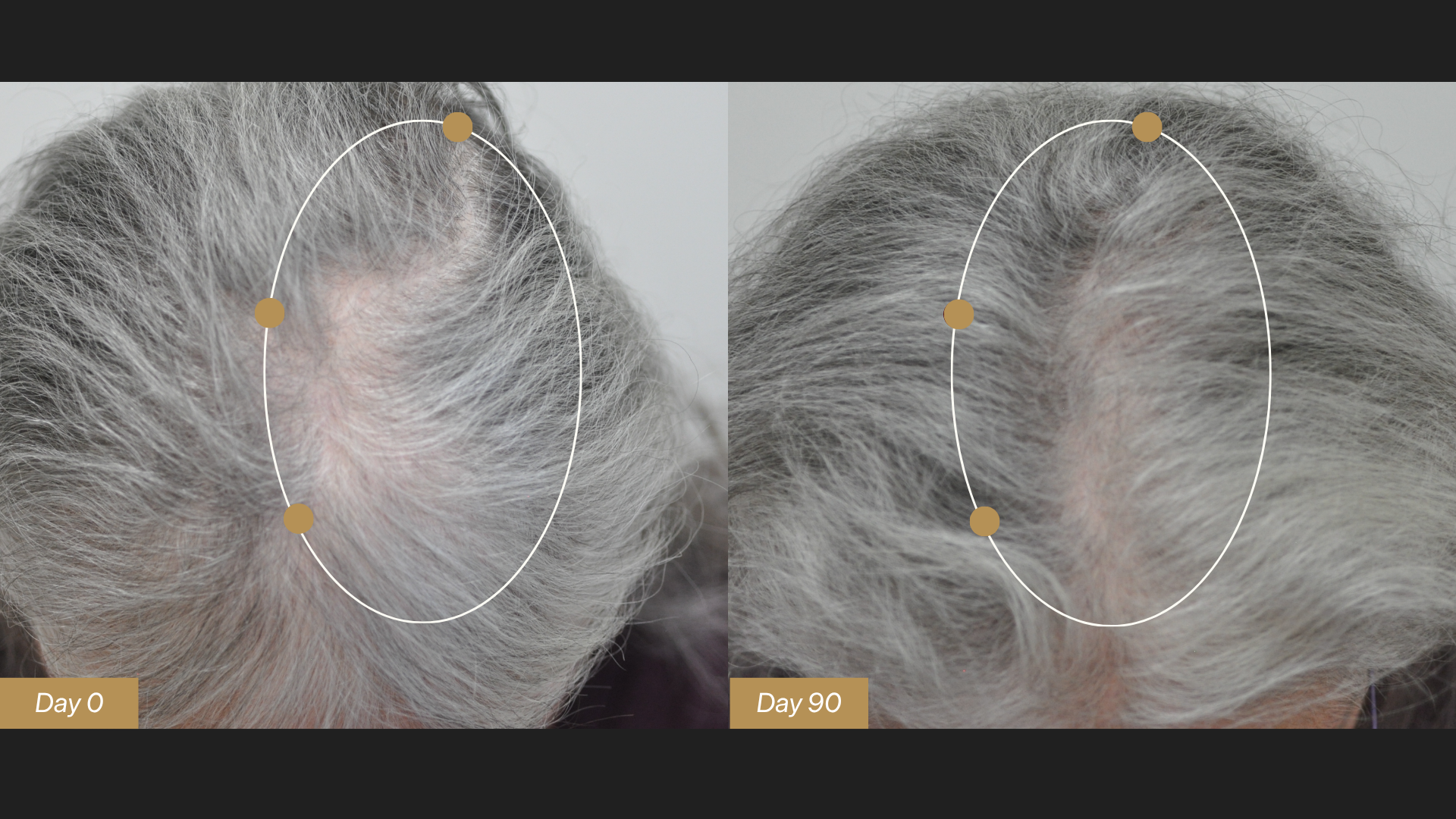
RE:YOU reports 90-day interim results from a randomized, double-blinded clinical study involving 190 women with visible thinning.
Participants used the product daily. The study compared RE:YOU directly with a minoxidil control rather than only with placebo. Evaluation included machine imaging, blinded expert grading, standardized comb testing, and participant-reported outcomes.
At 90 days, the brand reports:
- 58% decrease in hair loss
- 19% increase in hair density
- 1.7× greater improvement in the overall appearance of thinning than minoxidil
- 90% of participants saw thicker hair
These numbers do not all measure the same thing. Hair density was assessed objectively. Visible improvement involved blinded professional grading. Hair loss was evaluated through standardized comb testing. The 90% figure reflects participant experience.
As reviewers, we think keeping those methods separate makes the data more believable, not less. A percentage based on machine imaging should not be presented as if it came from the same measurement as a participant survey.
Safety, Pregnancy, and Breastfeeding
Safety note: RE:YOU is drug-free and hormone-free.
The brand states that it was formulated without ingredients known to be unsafe during pregnancy or breastfeeding. It still recommends that anyone who is pregnant or breastfeeding check with their OB/GYN before beginning a new product.
What Happens If You Stop?
This is where RE:YOU has a more favorable story than minoxidil, but also less mature evidence.
We reached out to RE:YOU customer support about long-term use. The team told us that after someone reaches their desired result—usually after 6 to 12 months—they may reduce use to once weekly or every few days. Customer support also said that reducing use is not associated with a withdrawal shedding phase.
— Guidance provided by RE:YOU customer support
That guidance is encouraging, but a formal published discontinuation study is not currently presented on the product page.
For that reason, we scored RE:YOU higher than minoxidil for "After Stopping," but not close to 5. The available information supports a lower-maintenance plan. It does not yet establish exactly what every user will retain after stopping completely.
The Biggest Drawback Is Price
At the time of review, the 30-day subscription price was listed at $141, with a higher one-time purchase price. Since the clinical checkpoint is 90 days, this is a three-bottle decision, not an inexpensive one-month experiment.
The 90-day money-back guarantee reduces some risk, but users must follow the guarantee requirements and track their progress.
Our pro tip: Take baseline photos before the first application. Use the same part, lighting, camera distance, and styling every time, then repeat the photos every 30 days.
Looking in the mirror every morning is a poor way to judge slow change. It is much easier to assess a part line or crown when the documentation is consistent.
Why It Ranked First
RE:YOU is not the cheapest option. It also does not have minoxidil's decades of independent evidence.
We ranked it first because it addresses the problem our hair pros see derail many routines: the product is credible enough to take seriously and easy enough to keep using.
A strong treatment on paper is not useful when someone repeatedly skips it because it ruins the way their hair looks. Across our panel, RE:YOU delivered the best balance of clinical validation, daily usability, scalp-focused technology, and low styling disruption.
See the RE:YOU clinical results →
2. Best Established Drug Option: Women's Rogaine Minoxidil Unscented Foam
Best For
Someone who prioritizes the longest evidence history and accepts daily, long-term drug use.
Pros
- Strongest long-term evidence in this group
- Widely available and relatively inexpensive
- FDA-approved formulations
- Works for many people with pattern hair loss
Cons
- Initial shedding may occur
- Daily use is generally indefinite
- Irritation and unwanted facial hair are possible
- Some formulas interfere with styling
- Serious household risk for pets, especially cats
- Not appropriate during pregnancy or breastfeeding
Women's Rogaine Minoxidil Unscented Foam is a topical minoxidil product, and it is not prescription-only — it is sold over the counter as an FDA-approved formulation for pattern hair loss.
For female pattern hair loss specifically, the American Academy of Dermatology describes topical minoxidil as the most recommended treatment and notes that 2% and 5% products are approved.
Its strength is evidence. Its weakness is everything the user has to accept around that evidence.
Temporary increased shedding can occur during the first two to eight weeks. Scalp dryness, itching, scaling, redness, and unwanted hair on the forehead or face are also recognized issues. Results can take 6 to 12 months to judge, and continued daily use is required. When treatment stops, the benefit gradually disappears and shedding increases.
Texture depends on the format. Foam is usually easier around styling. Liquid solutions can leave fine roots looking damp or greasy, especially when too much lands on the hair instead of the scalp.
The Pet-Safety Warning
Warning: The pet warning is not a minor footnote. Topical minoxidil can cause severe and potentially fatal poisoning in pets, especially cats. Transfer can happen through spills, hands, treated skin, pillows, bedding, or other residue.
I once shared a home with a cat and chose not to use Women's Rogaine Minoxidil Unscented Foam because I did not trust myself to control every possible transfer point. That was a personal risk decision, but it is a reasonable one to discuss.
People who are pregnant, planning pregnancy, or breastfeeding should avoid topical minoxidil and discuss alternatives with a clinician.
3. Best Product-Free Routine: CurrentBody Skin LED Hair Regrowth Device
Best For
Someone who would rather wear a device than put another product on the scalp.
Pros
- No residue and no effect on styling
- Non-invasive
- Evidence supports benefit for pattern hair loss
- Mild short-term side effects for most users
- Easy to combine with another treatment
Cons
- High upfront cost for reputable devices
- Device protocols vary
- Requires repeated sessions for months
- Ongoing use is usually needed
- Evidence is stronger for pattern hair loss than for other causes
The CurrentBody Skin LED Hair Regrowth Device uses red light therapy, usually discussed as low-level light or laser therapy, which is appealing because it does not wet the roots, change the curl pattern, or compete with styling products. Put on the cap or helmet, complete the session, and remove it.
Session length varies by device. Some are designed around approximately 10-minute use, while others require 20 to 30 minutes several times a week. That difference matters. A device can have good technology and still be a bad purchase if its schedule does not fit the user's life.
A 2025 systematic review included 38 studies and 3,098 patients across several alopecia types. For androgenetic alopecia, low-level light therapy significantly improved hair density compared with placebo, although study protocols and results varied.
One contributor noticed short, soft hairs around the front hairline after about a month of consistent use. That is a personal observation, not a promised timeline. Controlled trials generally assess results after several months, and continued use is usually needed to maintain them.
Eye protection and device quality matter. Choose a device with a clear regulatory status and a specific hair protocol rather than a generic red lamp marketed for every possible concern.
4. Best In-Office Option: Platelet-Rich Plasma (PRP)
Best For
Someone who prefers periodic appointments over daily application and can tolerate injections and cost.
Pros
- Human evidence supports improved density
- No daily topical routine
- Minimal interference with hair styling between visits
- Uses the patient's own blood product
- Can be combined with other approaches
Cons
- Expensive and usually not insured
- Pain, tenderness, swelling, and pinpoint bleeding can occur
- Protocol quality varies by clinic
- Multiple initial sessions and maintenance are common
- Not a one-time treatment
PRP stands for platelet-rich plasma. A clinician draws blood, separates a platelet-rich portion in a centrifuge, and injects it into thinning areas of the scalp.
It is not a hair transplant and does not place new follicles into the scalp.
The procedure can hurt. Numbing helps, but multiple scalp injections are still multiple scalp injections.
Most protocols use an initial series, often one appointment a month for three months, followed by maintenance every three to six months.
The evidence is genuinely promising. A 2024 systematic review and meta-analysis focused on female hair loss included 21 studies and 628 participants and found improvements in hair density and thickness, with adverse effects generally mild and temporary.
Another 2024 meta-analysis found an increase in density but also highlighted high heterogeneity, low-quality evidence, and publication bias. Both points belong in the same conversation. PRP appears useful, but clinics do not all prepare or inject it the same way.
From a styling perspective, PRP is simple after the short recovery period. There is no daily residue. The tradeoff is price, discomfort, and the need to return for maintenance.
5. Best as an Add-On: Microneedling
Best For
Someone already using a proven treatment who wants to discuss an adjunct with a dermatologist.
Pros
- Plausible biological mechanism
- Combination studies show added benefit
- No permanent residue after recovery
- Can be relatively affordable
Cons
- Standalone evidence remains limited
- No FDA-cleared microneedling device for hair loss
- Infection, irritation, pigment change, and scarring are possible
- At-home technique is inconsistent
- It can increase topical penetration in ways that have not been fully studied
Microneedling creates controlled micro-injuries with very small needles. The proposed benefit comes from the wound-healing response and, when paired with a topical, increased delivery through the scalp.
The mechanism is plausible. The evidence is also easy to overstate.
Most clinical studies do not test microneedling alone. They compare minoxidil plus microneedling with minoxidil alone.
Those studies suggest that needling can add benefit, but they do not prove that an at-home roller by itself performs like minoxidil, PRP, or a clinically tested serum. A systematic review of microneedling for hair loss reached the same practical conclusion: monotherapy data is limited, while much of the research combines microneedling with minoxidil or PRP.
Professional treatment and a cheap home roller are not equivalent. Needle depth, sterility, pressure, frequency, and scalp condition all matter.
The FDA has not cleared any microneedling device for hair loss and has not cleared microneedling devices for use with another topical product.
I would not use it over active dandruff, dermatitis, infection, open skin, or an inflamed scalp. More injury is not automatically more stimulation.
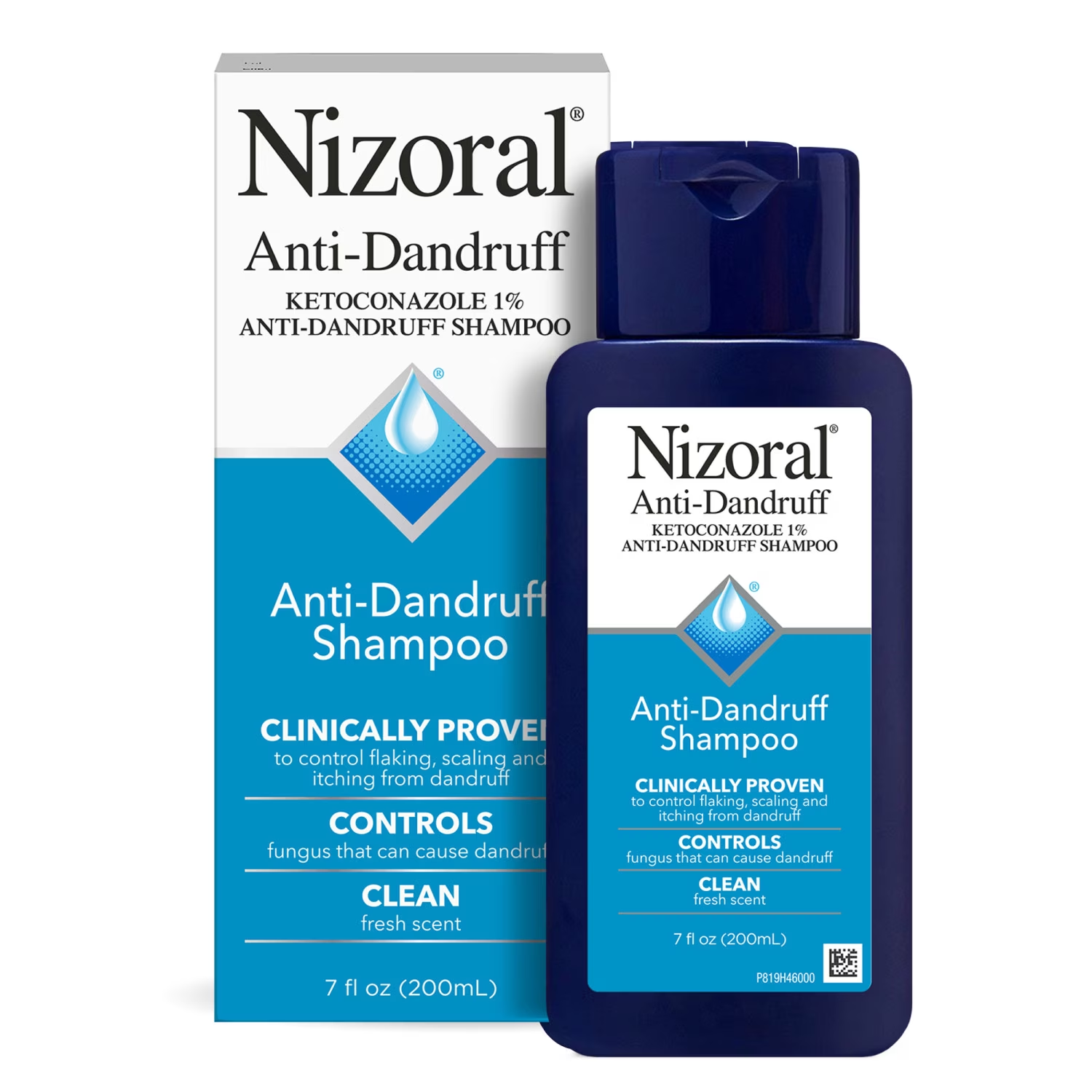
Bonus: Ketoconazole Shampoo for an Itchy, Flaky Scalp
Best For
Someone managing thinning alongside dandruff, oiliness, itching, or seborrheic dermatitis.
Pros
- Treats dandruff and seborrheic dermatitis
- Easy to rotate into an existing wash routine
- Low-cost compared with procedures
- Most useful when scalp inflammation is part of the problem
Cons
- Not a primary standalone hair-growth treatment
- Can dry the scalp or lengths
- Hair-growth evidence is limited
- Best used for a specific scalp indication, not as a universal deep-cleaning shampoo
Ketoconazole shampoo is useful, but it does not belong in the top five as a primary thinning-hair treatment.
Its clearest job is treating dandruff and seborrheic dermatitis. Ketoconazole is antifungal, so it helps control the process behind flaking, scaling, and itching.
The 1% version is available over the counter in the United States, while 2% formulations may require a prescription depending on the product.
There is limited research suggesting a possible adjunct role in androgenetic alopecia, but the evidence is small and much less mature than the evidence for minoxidil.
I would recommend it most confidently when someone has thinning plus dandruff, oiliness, itching, or seborrheic dermatitis. Clearing an inflamed, uncomfortable scalp can make an existing routine easier to tolerate, even when the shampoo is not the main growth treatment.
It should not automatically replace regular shampoo at every wash.
For OTC Nizoral, the current label guidance is about twice weekly for eight weeks, then as needed for dandruff control. Follow the label or a dermatologist's plan, especially with prescription-strength ketoconazole. Dryness, altered texture, itching, or irritation can occur.
Where We Would Start
For the strongest established medication evidence, choose Women's Rogaine Minoxidil Unscented Foam and go in knowing that consistency, side effects, pet safety, and long-term use are part of the decision.
For someone who wants a drug-free daily serum, cares about clinical data, and refuses to compromise the look of their hair while waiting for results, RE:YOU is the most balanced starting point in this review.
The CurrentBody Skin LED Hair Regrowth Device is the cleanest fit for a product-free routine.
PRP makes sense for someone comfortable with cost and injections.
Microneedling is more convincing as an add-on than as a replacement for a better-established option.
Ketoconazole belongs in the plan when dandruff or seborrheic dermatitis is present.
Whatever route you choose, document the starting point and give the routine enough time. Use the same lighting, part, camera distance, and styling in progress photos. Hair changes slowly, and memory is not a reliable measurement tool.
How We Evaluated the Treatments
Over three months, 20 working hair professionals contributed to this review, including hairstylists, colorists, and texture specialists. Our panel works with straight, wavy, curly, and coily hair, as well as fine, medium, and coarse strands. We also considered highlighted, bleached, chemically processed, protective-styled, and frequently heat-styled hair.
For at-home options, we looked at application, residue, drying time, wash-day compatibility, and whether the routine was realistic to maintain. For PRP and professional microneedling, we did not pretend a salon panel could replace clinical research. Those scores reflect published evidence, treatment schedules, known risks, and the practical experiences clients commonly bring back to the chair.
Each option received a score from 0 to 5:
Efficacy
How much meaningful improvement the evidence supports
Evidence
Study quality, sample size, controls, and maturity of the research
Styling Fit
Residue, greasiness, wash frequency, and compatibility with normal products
Commitment
A higher score means the routine is easier to maintain
Cost
A higher score means the option is more affordable
Tolerability
A higher score means fewer or milder common side effects
After Stopping
A higher score means less dependence on continuous treatment
Overall scores give Efficacy and Evidence 25% each. Styling Fit, Commitment, Cost, Tolerability, and After Stopping contribute 10% each. We round the result to one decimal place.
Every number in the scorecard above was built from these seven criteria, so a treatment's overall score is only as useful as the metric behind it you actually care about.
This article reflects HairPro Voices panel experience and is not medical advice. Talk with a licensed clinician before starting, combining, or stopping any hair-loss treatment, and before use during pregnancy or breastfeeding.