You know the routine. Wash your hair. Blow-dry it. Maybe run a flat iron through the ends. Add a few curls because they hold better when you start with straight hair. The next morning, touch up the pieces around your face. Maybe straighten the ends again.
None of these steps feels particularly damaging on its own. But as a stylist, I can usually tell when heat styling has quietly become part of someone's everyday routine. The ends start looking thinner. The hair feels rougher. Frizz becomes harder to control. You may notice more little pieces around your shoulders or more split ends than usual.
And this is where I want to clear something up: heat styling isn't automatically bad for your hair. The issue is frequency, temperature, technique, and the condition your hair is already in.
Heat Damage Doesn't Always Look Like Damage at First
One of the biggest misconceptions I hear in the salon is, “My hair looks fine, so the heat can't be hurting it.” I understand why people think this. Hair can still look shiny and styled even when the fiber underneath has started to weaken.
Heat can affect the hair's outer cuticle, which is the protective layer surrounding the inner structure of the strand. With repeated exposure, the cuticle can become rougher and less uniform. The result is hair that feels less smooth, loses moisture more easily, and becomes more vulnerable to breakage.
This is why damaged hair sometimes becomes a vicious cycle. It feels frizzy, so you use more heat to smooth it. The heat makes the hair more compromised, so it becomes even frizzier. Then you reach for the flat iron again. I see this all the time.
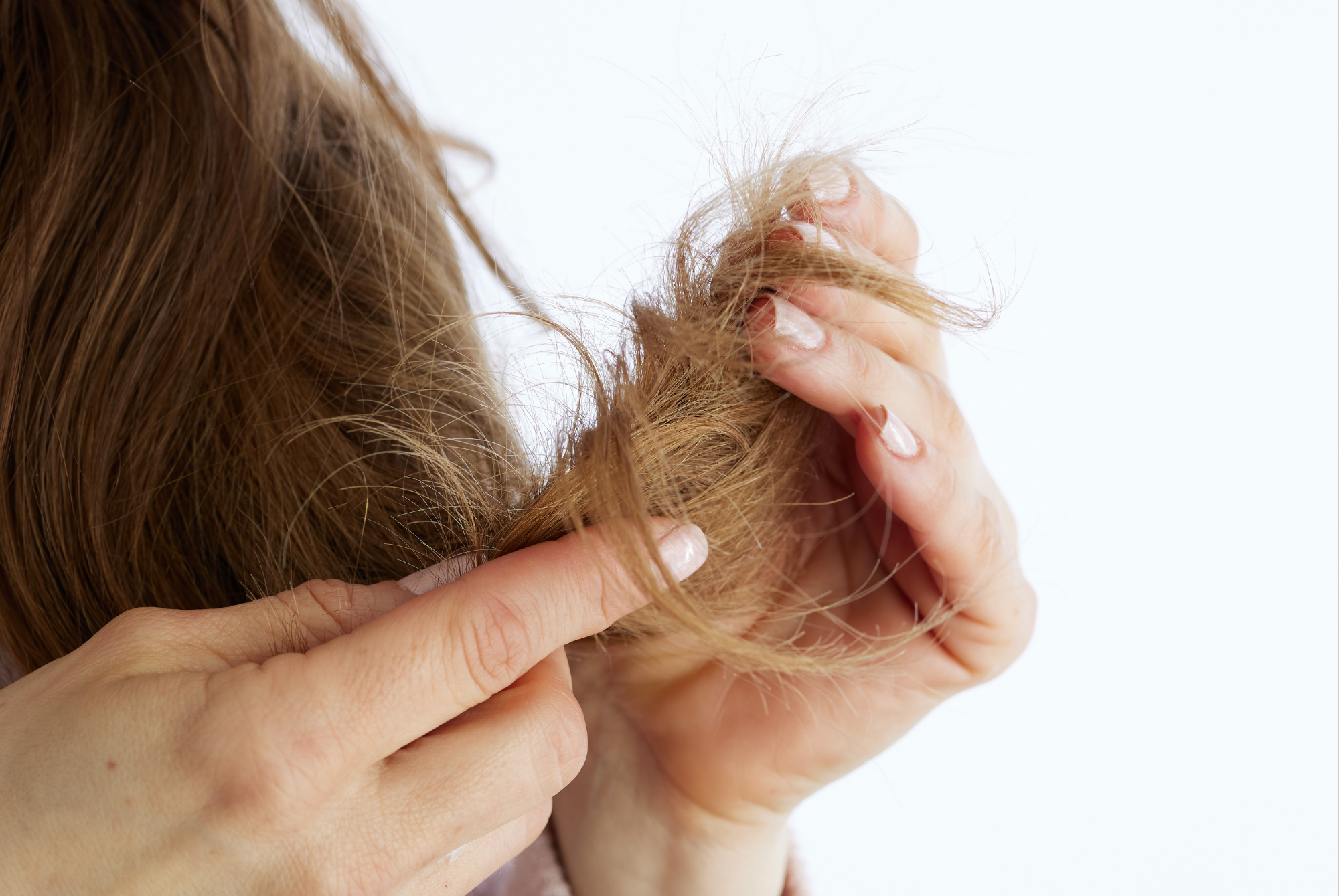
If you use heat every day, look at your ends. They are the oldest part of your hair, which means they have already experienced everything you've done to your hair before they ever reach the salon chair. Repeated blow-drying, straightening, curling, brushing, coloring, sun exposure, and general wear can all add up.
Some of the first things I look for are:
- Dry, straw-like ends
- Increased split ends
- Tiny white dots at the ends of strands
- Short pieces throughout the hair
- Frizz that doesn't respond to conditioning
- Hair that tangles more easily than it used to
- Ends that look noticeably thinner than the rest of the hair
That last one is especially telling.
If your hair starts looking full near the roots but significantly thinner toward the bottom, sometimes you're not failing to grow long hair. You're simply losing length to breakage.
The Temperature Matters More Than You Think
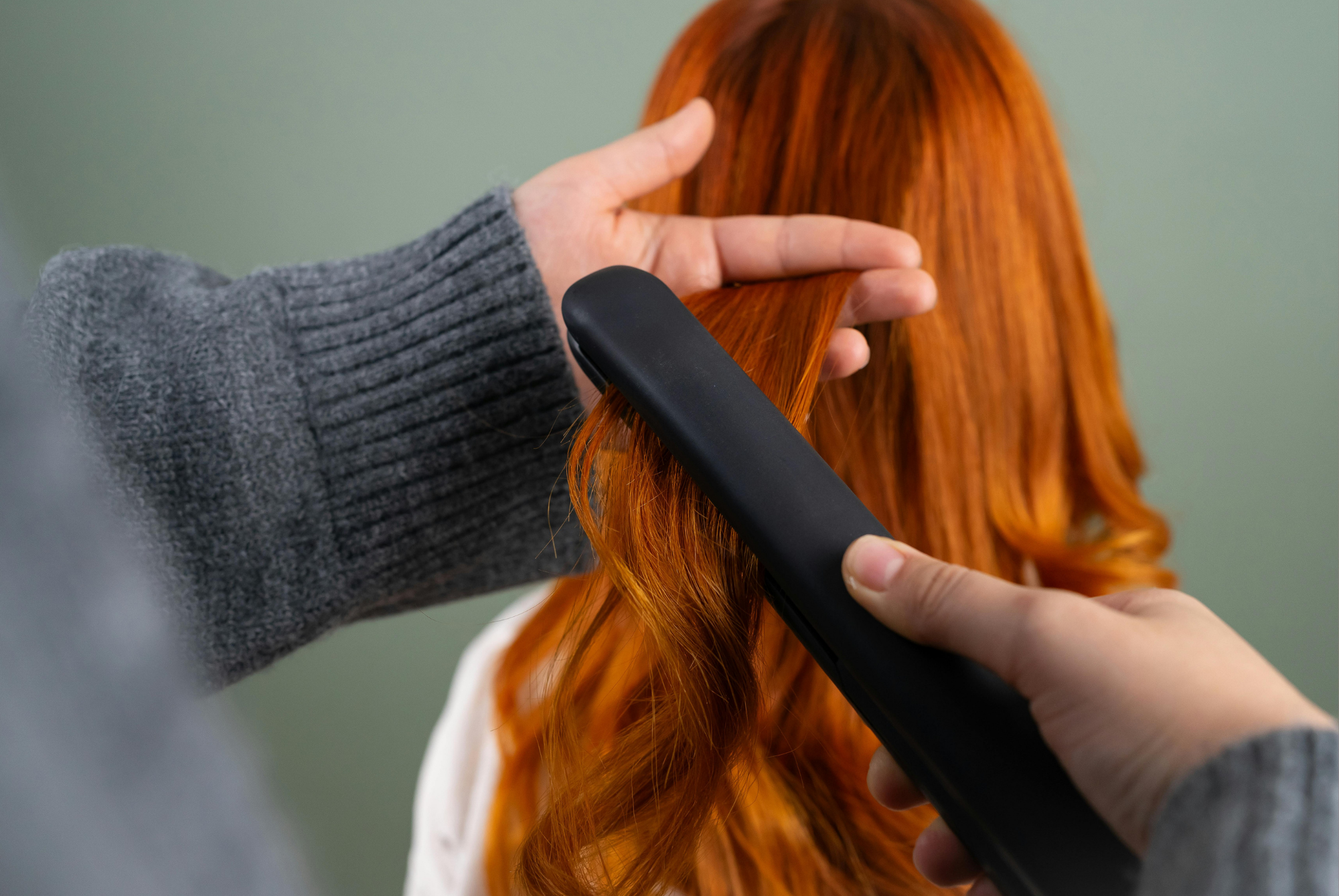
I have clients tell me, “I only straighten my hair for a few minutes.” That isn't necessarily the part I'm worried about. How hot is the tool? High heat can make styling faster, but faster does not mean healthier.
Very high temperatures can cause significant damage, particularly when you repeatedly pass a hot tool over the same section. Fine, bleached, highlighted, or already-damaged hair generally has less room for error than healthy, untreated hair.
You also don't need the highest setting just because your tool goes that high. If a lower temperature gets the job done, use it. Your hair does not get bonus points for surviving 450 degrees.
Wet Hair + High Heat Is a Different Problem
This is one of the biggest mistakes I see at home. Someone gets out of the shower, towel-dries their hair, and starts reaching for a flat iron because they're in a hurry.
Hair is particularly vulnerable when wet, and using a very hot styling tool on damp hair can cause much more aggressive damage than styling hair that has been properly dried first.
If you're using a flat iron or curling iron, your hair should be completely dry before the tool touches it.
For blow-drying, start by removing excess moisture gently with a towel or microfiber towel. You don't need to get every drop out before you pick up the dryer, but you also don't want to spend ten minutes blasting soaking-wet hair with maximum heat.
Your Hair May Need a Break From the Heat — Not From Styling
This is where I think hair advice sometimes gets unrealistic. If someone tells me, “Never use heat again,” I know most clients aren't going to follow that advice. And honestly, they don't have to.
The goal is to make your routine less damaging, not to make you hate your hair. Try alternating your styling.
If you normally straighten your hair every morning, see whether you can go two or three days between full-heat styling sessions. On other days, refresh the front pieces, put your hair into a loose braid, wear your natural texture, or choose a style that doesn't require another round with the iron.
You can still have the polished hair you like without applying the same amount of heat to the same strands every day.
Heat Protectant Helps. It Does Not Make Heat Harmless.
I will always recommend a heat protectant when you're using hot tools. But I want clients to understand what that actually means.
A heat protectant is there to reduce the impact of heat. It is not an invisibility cloak for damage. You can't spray a product onto your hair and suddenly make 400-plus-degree styling completely harmless.
Use the product evenly. Follow the directions. Give it a moment to distribute through the hair if the product calls for it. And don't assume that applying more and more product means you can turn up the temperature.
The best protection is a combination of product, reasonable temperature, and good technique.
Stop Going Over the Same Section Again and Again
This is another habit that seems harmless until you do it every day. You run the flat iron over a section. It isn't perfect. So you go over it again. And again. And again.
Instead, slow down and focus on your technique.
Make sure the section is properly detangled. Don't take sections that are so large the heat can't distribute evenly. Don't clamp the tool aggressively. And don't repeatedly chase one piece of frizz with a hot iron.
If you're constantly needing five passes to get the result you want, your problem may not be the temperature.
It may be your technique.
Color-Treated Hair Has Less Room for Error
If your hair is bleached, highlighted, or chemically processed, I want you to be particularly careful with daily heat. Chemical services can already change the structure and strength of the hair. Adding frequent high heat on top of that can push the hair past what it can comfortably tolerate.
This doesn't mean you can't curl highlighted hair. It means your routine needs to account for everything else your hair is already experiencing. A client with virgin, healthy hair and a client with heavily lightened hair should not necessarily be using the exact same temperature, frequency, or styling routine.
So, How Often Is Too Often?
There isn't one magic number. Some people can use a blow-dryer regularly without experiencing obvious problems. Someone with fine, bleached hair who flat-irons at a very high temperature every day may see breakage much sooner.
Instead of asking, “How many times per week can I use heat?” I tell clients to ask: What is my hair telling me?
If your hair is staying soft, flexible, manageable, and relatively strong, your routine may be working for you. If it is becoming increasingly dry, brittle, tangled, frizzy, or prone to breakage, it's time to reassess. And don't wait until your hair is snapping off to make a change.
What I Tell My Clients Who Love Their Hot Tools
You do not have to choose between healthy hair and styling your hair. You just have to stop treating heat like it has no consequences.
My starting point is simple:
1\. Use the lowest effective temperature. Don't automatically turn the dial to the highest setting. Start lower and increase only if you genuinely need to.
2\. Never flat iron soaking-wet or damp hair. Dry it completely first.
3\. Use a heat protectant. Think of it as part of the styling process, not an optional extra.
4\. Limit repeated passes. One controlled pass is better than repeatedly ironing the same section.
5\. Give your hair heat-free days. You don't need to recreate your salon blowout every morning.
6\. Pay attention to your ends. If they are becoming increasingly rough, thin, or split, don't keep adding heat and hoping a mask will reverse it.
7\. Adjust your routine after chemical services. Freshly lightened or processed hair may need a gentler approach.
The Stylist Takeaway
Heat styling is not the enemy. Daily, high-temperature, repetitive heat styling without considering your hair's condition is where I start to worry.
Your hair can look perfectly polished on the outside while becoming progressively more fragile underneath. And once you're dealing with significant breakage, there isn't a product that can turn damaged hair back into completely untouched hair.
That is why I would rather see a client prevent the damage than try to repair it later. You can blow-dry your hair. You can curl it. You can straighten it. Just give your hair a little less heat, a little more intention, and the occasional day off.