Dry shampoo has gone from emergency bathroom product to everyday hair essential. It can revive a blowout, add volume to flat roots, and make a second- or third-day style look intentional instead of accidental.
But there is one thing stylists wish more clients understood: dry shampoo is not actually cleaning your hair.
It is buying you time.
And when you know how to use it properly, that can be a very good thing.
So, What Is Dry Shampoo Actually Doing?
Most dry shampoos work by absorbing excess oil around your roots. Depending on the formula, that can come from starches, powders, silica, alcohol-based ingredients, or other oil-absorbing particles.
The result? Your roots look less greasy, your hair can feel fresher, and you may even get a little extra texture and volume.
What it does not do is wash away sweat, dead skin cells, dirt, or product buildup. That still requires traditional shampoo and water.
Think of dry shampoo as a reset button—not a replacement for wash day.
Why Stylists Actually Love It
There is a reason dry shampoo has become a backstage, salon, and bathroom-counter staple.
For one, it can help extend a hairstyle. If you spent an hour getting a blowout or styling your hair, you probably don't want to undo all that work the next morning.
Dry shampoo can also give fine hair some much-needed grip. Clean hair can sometimes be too slippery to hold a braid, ponytail, bun, or other style. A little dry shampoo can create texture without making the hair feel like it has been coated in hairspray.
And then there is volume.
A small amount at the roots can make hair look fuller and give a hairstyle more structure. This is especially useful when your hair tends to fall flat overnight.
The trick is knowing when you are refreshing your hair—and when you are just covering up a scalp that actually needs to be washed.
The Biggest Dry Shampoo Mistake? Using Too Much.
More product does not mean cleaner-looking hair.
In fact, it can have the opposite effect.
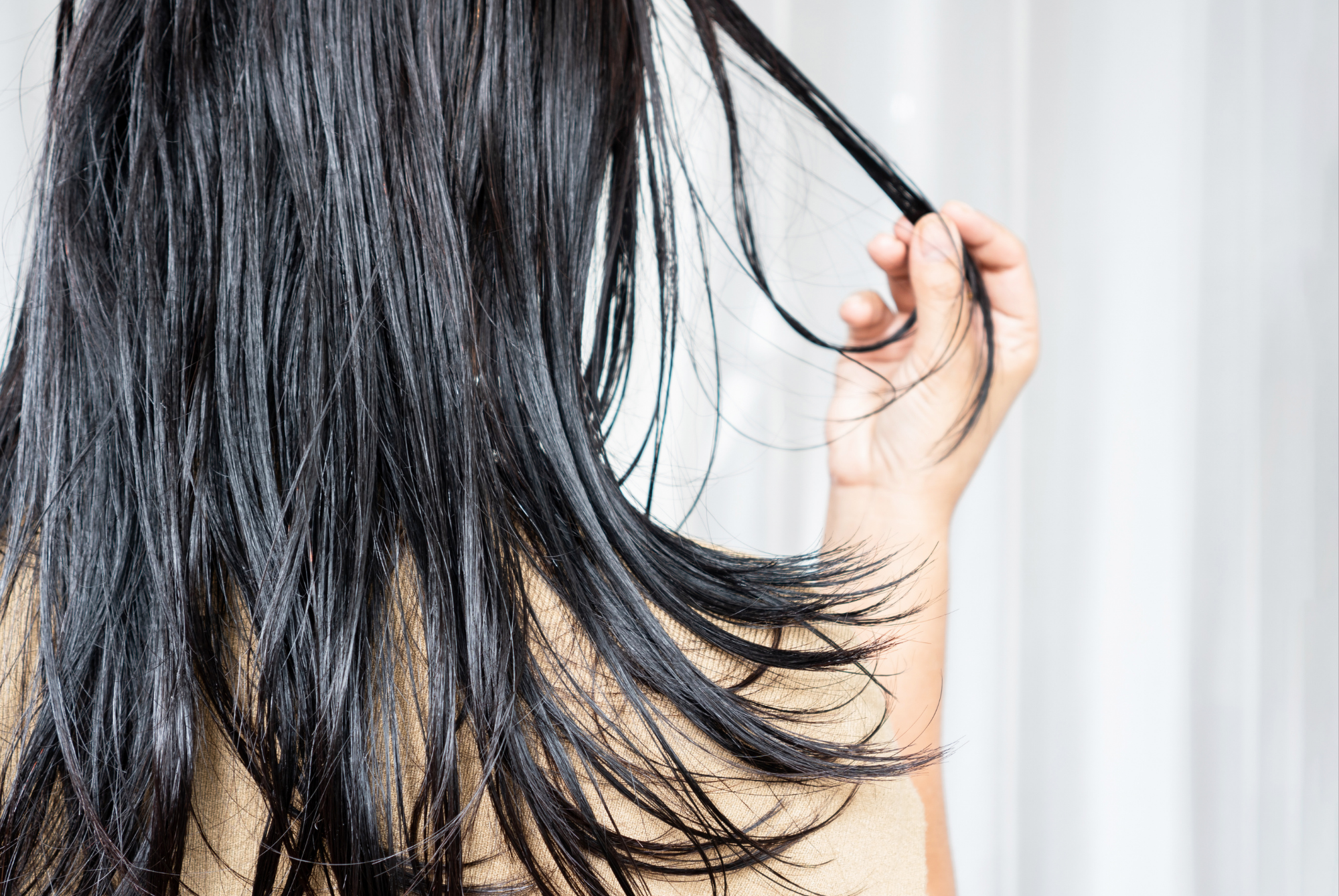
Overapplying dry shampoo can leave your hair feeling stiff, gritty, dull, or coated. You may also notice visible residue, especially if you have dark hair.
Start with a small amount around the areas that are actually oily. You can always add more.
Your roots need the product. Your entire head probably doesn't.
Where You Apply It Matters
One of the easiest ways to get better results is to stop treating dry shampoo like hairspray.
You don't need to spray it randomly over your entire hairstyle.
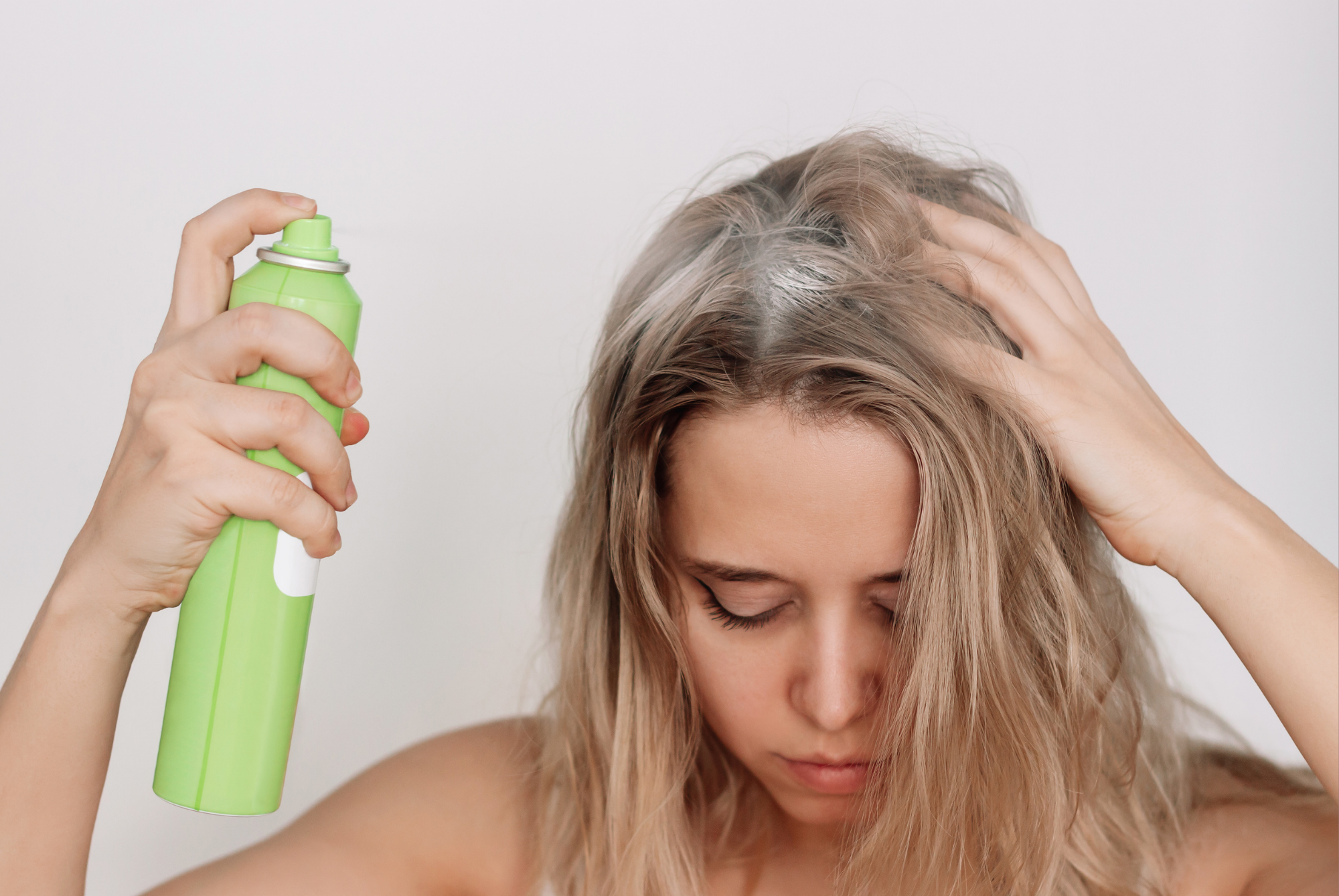
Focus on the roots and areas where oil tends to show up first. Give the product a little time to absorb, then work it through with your fingers or brush it out according to the product's directions.
If you spray too close to the scalp or pile on too much product in one spot, you are more likely to end up with that unmistakable dry-shampoo texture.
The goal is for your hair to look refreshed—not like you used dry shampoo.
Can You Use It Every Day?
Technically, you can reach for dry shampoo whenever your roots start looking oily.
But that doesn't mean you should go indefinitely without washing your scalp.
Dermatologists recommend continuing to shampoo with water because dry shampoo does not remove the buildup that regular washing does. Leaving too much product on the scalp can contribute to irritation, and excessive reliance on dry shampoo may contribute to issues like dandruff or seborrheic dermatitis.
A good rule of thumb?
Use dry shampoo to extend the time between washes, not eliminate washing altogether.
The American Academy of Dermatology notes that dermatologists recommend washing with regular shampoo and water after roughly one or two uses of dry shampoo.
Your Hair Type Changes the Game
Not every head of hair needs dry shampoo in the same way.
Fine, straight hair may become visibly oily faster and often benefits from the added texture and volume.
Thicker or curly hair may not show oil as quickly, so dry shampoo can be more about refreshing the roots or extending a style than hiding grease.
Color-treated hair can also benefit from stretching out wash days, particularly when frequent washing affects how quickly color appears to fade.
And if you have a dry or sensitive scalp, pay attention to how your scalp feels after using it. If you notice itching, burning, or irritation, it may be time to switch formulas—or stop using the product altogether.
The New Dry Shampoo Is Getting More Interesting
Traditional aerosol dry shampoo is no longer the only option.
Newer formulas are experimenting with lighter textures, liquid applications, and even micellar-inspired formulas designed to feel less powdery on the scalp. Some of these newer products are being positioned as a middle ground between traditional dry shampoo and a full wash.
That shift makes sense.
Consumers want the convenience of dry shampoo without the heavy, chalky feeling that some formulas leave behind.
The next generation of dry shampoos may be less about disguising oily roots and more about creating a lightweight refresh that works with the way people actually style their hair.
The Stylist Takeaway
Dry shampoo is one of those products that works best when you stop asking it to do too much.
Use it to extend a blowout. Use it before a workout if you know you won't be washing immediately afterward. Use it to give a braid more grip. Use it when your roots need a quick refresh before heading out the door.
Just don't mistake refreshed-looking hair for clean hair.
Your stylist isn't trying to take away your favorite shortcut. They just want you to know what the shortcut is actually doing.
Dry shampoo can make your hair look better between washes.
It just can't replace wash day.