
Every stylist knows this consult. A client sits down, says she wants to go short, and then immediately walks it back: "But I don't want to look harsh. Or older. Or like I'm trying too hard." What she's really telling you is that the last short cut she had was too sharp, too blunt, too much edge and not enough softness.
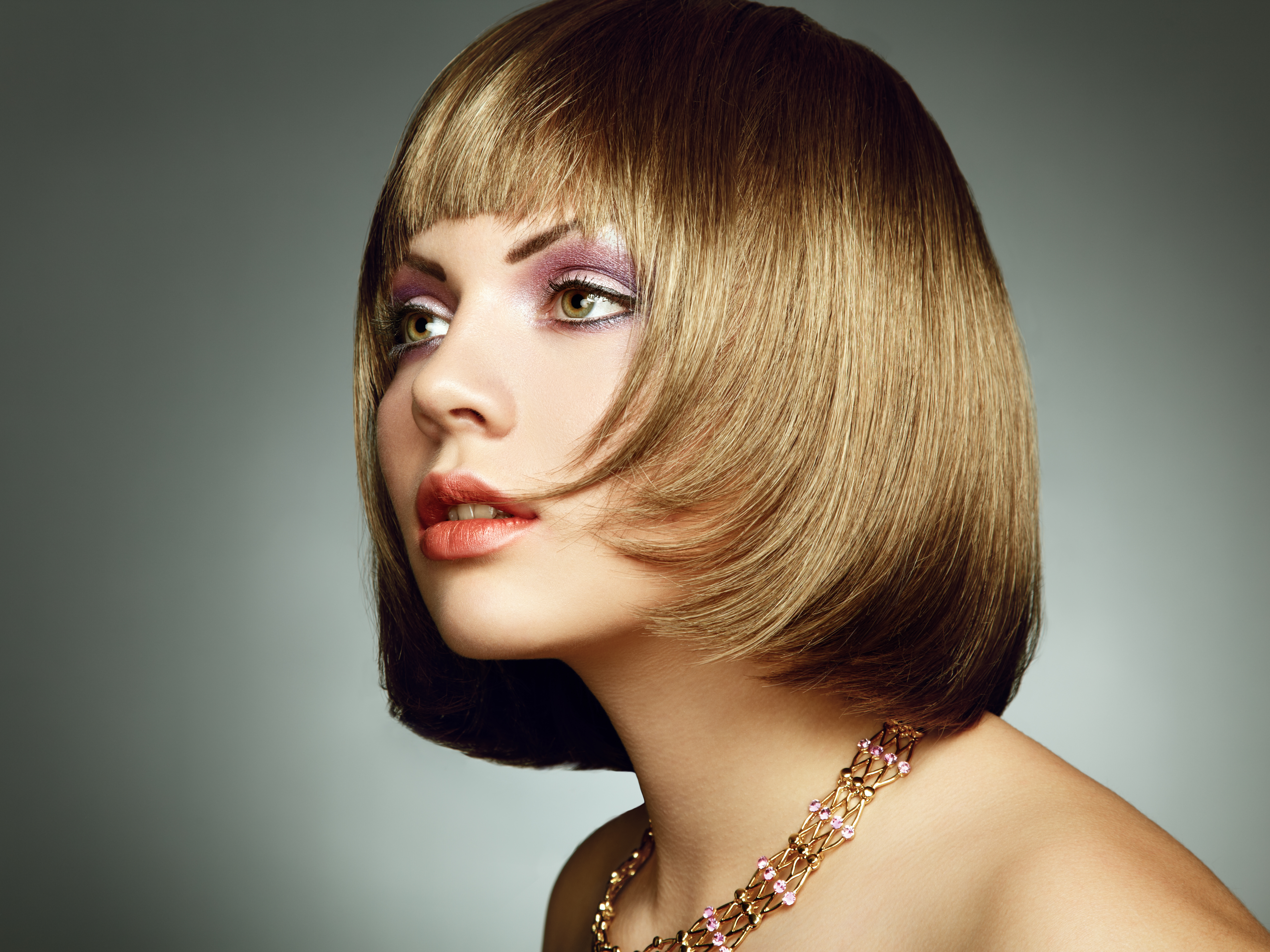
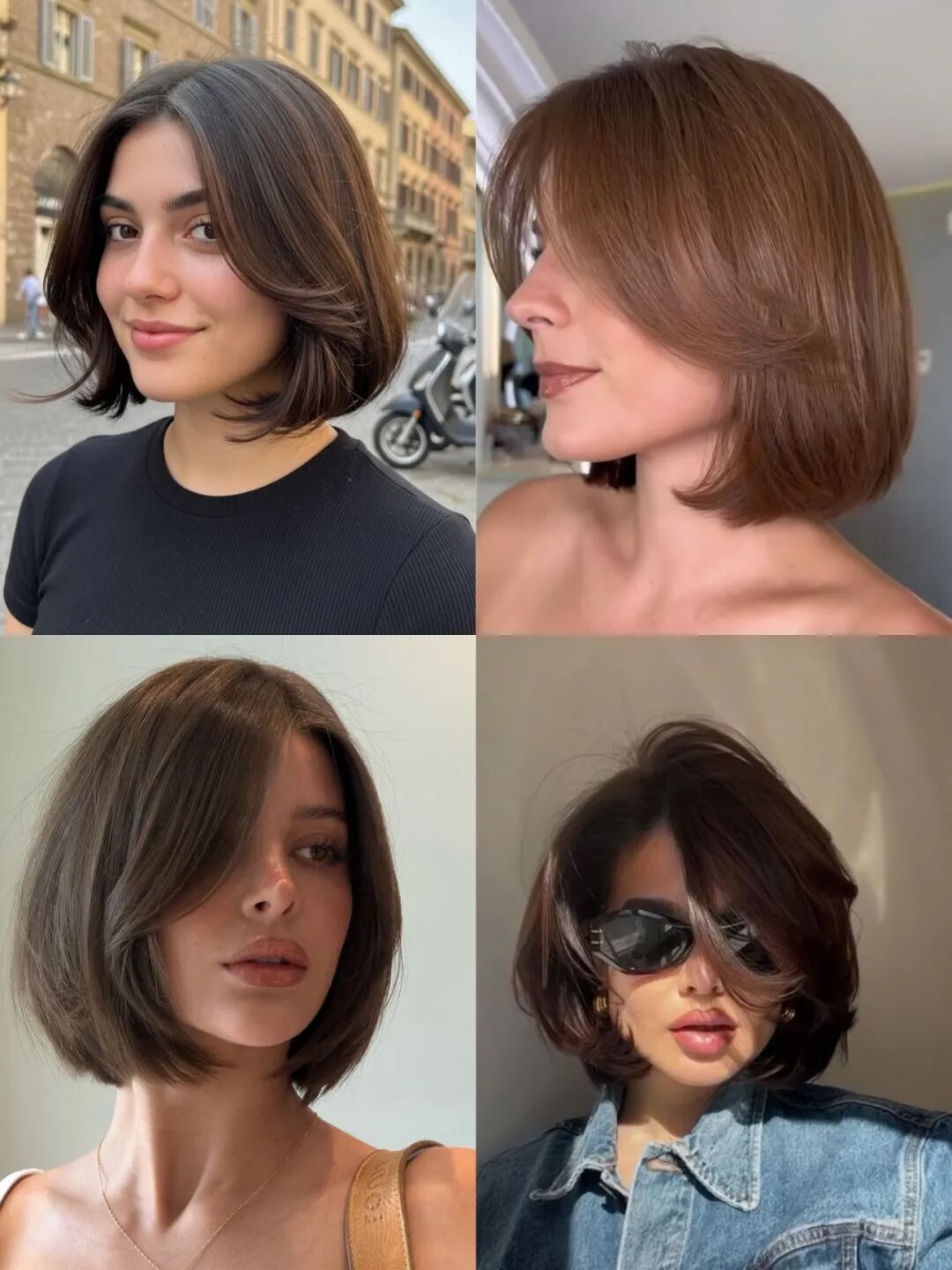
That's the gap this cut fills. The soft-layered French bob, the one half the European editorial feeds have been running for two seasons now, splits the difference perfectly. It reads clean and intentional, but it moves. And here's the part I love behind the chair: it doesn't fight the face shape. Round, square, diamond, it doesn't matter. The shape wraps the face instead of exposing it, so even a bare-faced client heading to the office walks out looking pulled together and quietly expensive. It's the kind of cut that doesn't date.
Why I Keep Recommending It
Three things make this cut earn its keep.
It does the face-flattering work for the client. I build curved, face-framing layers down the sides and keep the perimeter sitting somewhere between the cheekbone and the jaw. That curve softly drapes over a high cheekbone or a wider jaw and creates that natural hair-hugging-the-face effect, which visually narrows the width of the face. You're not relying on the client to style around her features—the cut handles it.
It's genuinely low-maintenance, which clients only believe after they try it. No perm required. A round brush with a slight inward turn at the finish is all the shape needs. Fine, flat hair gets its lift from those side layers propping up the crown instead of collapsing. Coarse, thick hair gets softened with careful thinning so it doesn't blow out wide. Either way, it's a five-minute styling job, and a client who can actually replicate the look at home is a client who rebooks.
It flexes across them whole life. This is where color and parting come in. A blue-black or cool brown keeps it office-appropriate and quietly flatters warmer skin tones. A lighter chestnut brown gives it that softer, daytime-date energy. A center part reads cool and a little intellectual; a side part softens everything and takes years off. I've put this cut on clients from their twenties to their mid-forties and it lands every time.
Four Versions, Depending on Who's in the Chair
I don't cut this one identical on everybody. There are really four variations, and matching the right one to the client is most of the job.
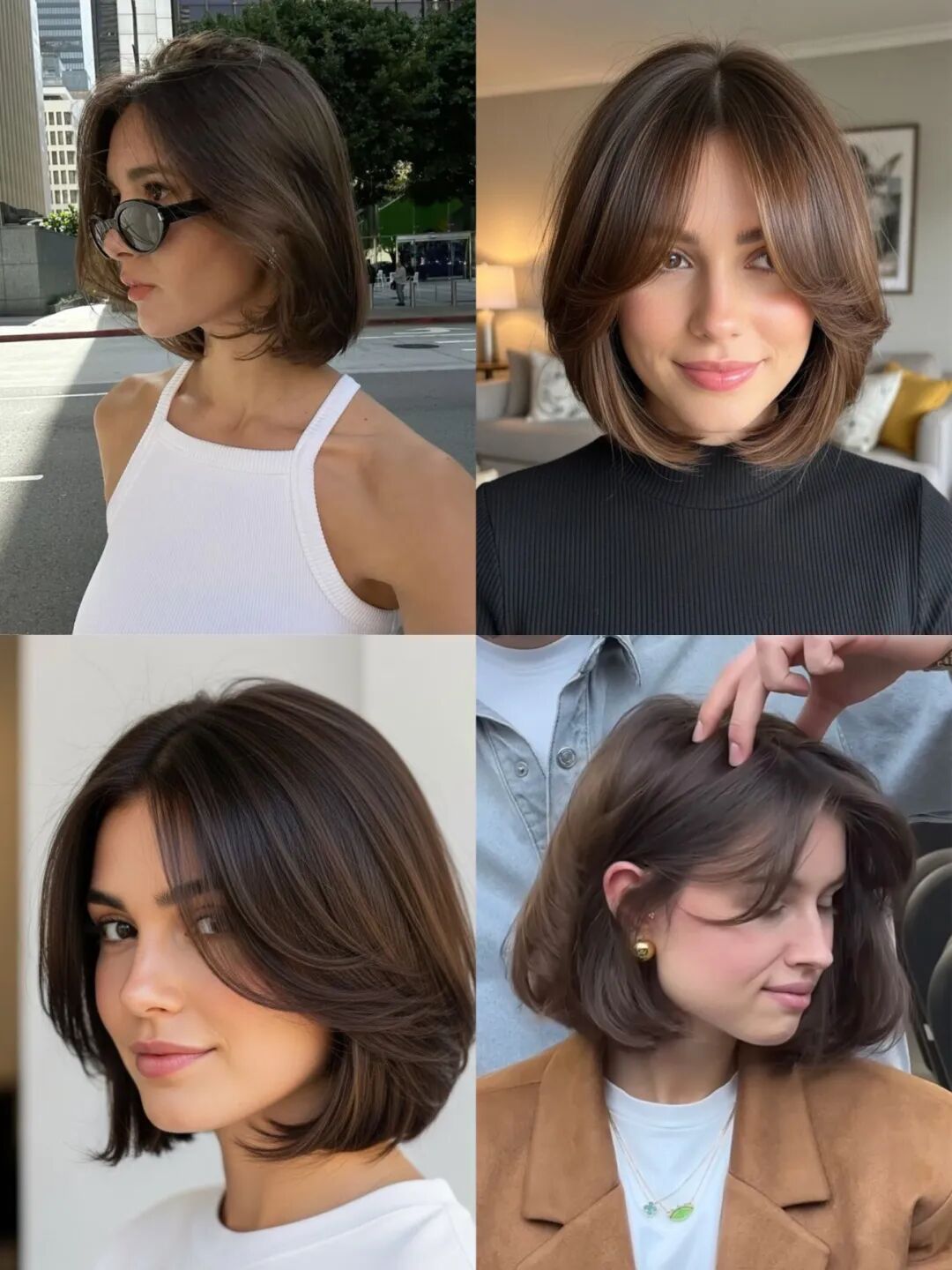
Clean Center-Part
Sharpest · most office-forward
The minimalist take, no extra face-framing pieces, just a precise line. Save it for clients with strong, balanced features and a good amount of height at the crown.
Curtain Bang
Most forgiving · youthful
My go-to for anyone nervous about going short. Those soft, parted-down-the-middle fringe pieces quietly fill in hollow temples and shave width off a rounder face, exactly what I reach for with a first-time short-hair client.
Side-Part Layered
Best for fine, flat hair
Built to add lift. The extra texture and the deeper part create movement, which fixes that pressed-to-the-scalp, flat-on-top problem fine hair tends to have.
Soft Inward-Curl
Effortless · no-makeup friendly
Lets the ends collect a little weight and bend gently toward the face. It gives you that rounded, lived-in finish that looks great even on a bare-faced day.
How I Actually Cut It
If you're cutting this, or coaching a newer stylist through it, here's the part that keeps it from going wrong.
Set the length between the jaw and the middle of the collarbone, and leave weight in the ends. Resist the urge to over-thin. A French bob that's been point-cut into oblivion loses the soft body that makes it work.
Build curved, soft layers around the cheeks and pair them with a light curtain or side fringe. No heavy, blunt, straight-across bangs—that's what tips it from "soft and modern" into "severe."
And don't forget the back. A little stacked weight through the occipital gives you a full, rounded head shape. Skip it and you get that flat, heavy look at the back that ages the whole cut.
The Takeaway
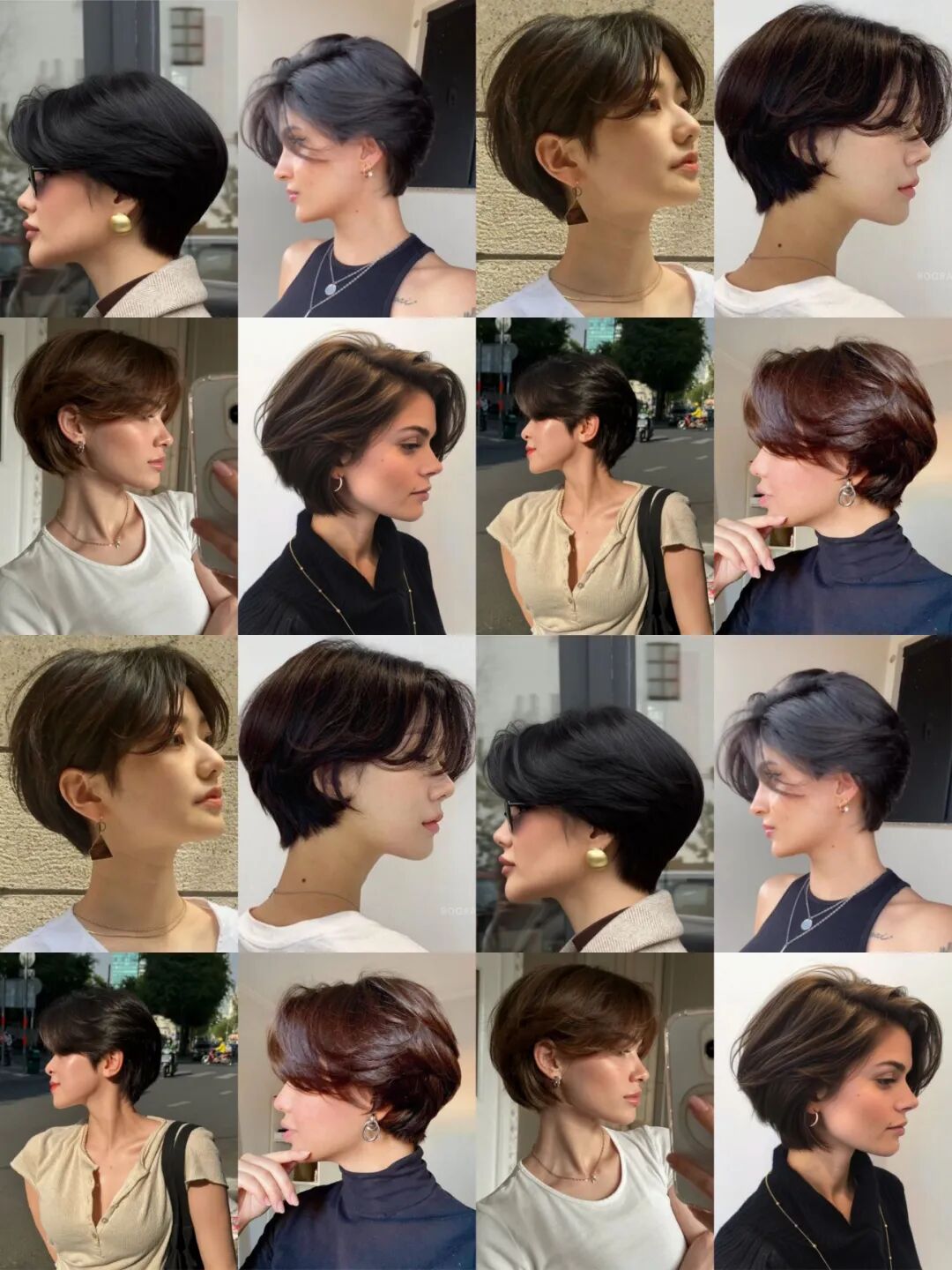
The thing I want every client, and every stylist, to understand is that the "expensive" look in short hair was never about a harder, more dramatic line. It's about soft layers placed exactly where they need to be. That's the whole trick.
So next time a client says she wants short but soft, you already know the cut. What's your go-to French bob variation chairside, and which face shapes are you matching it to? Drop it in the comments.