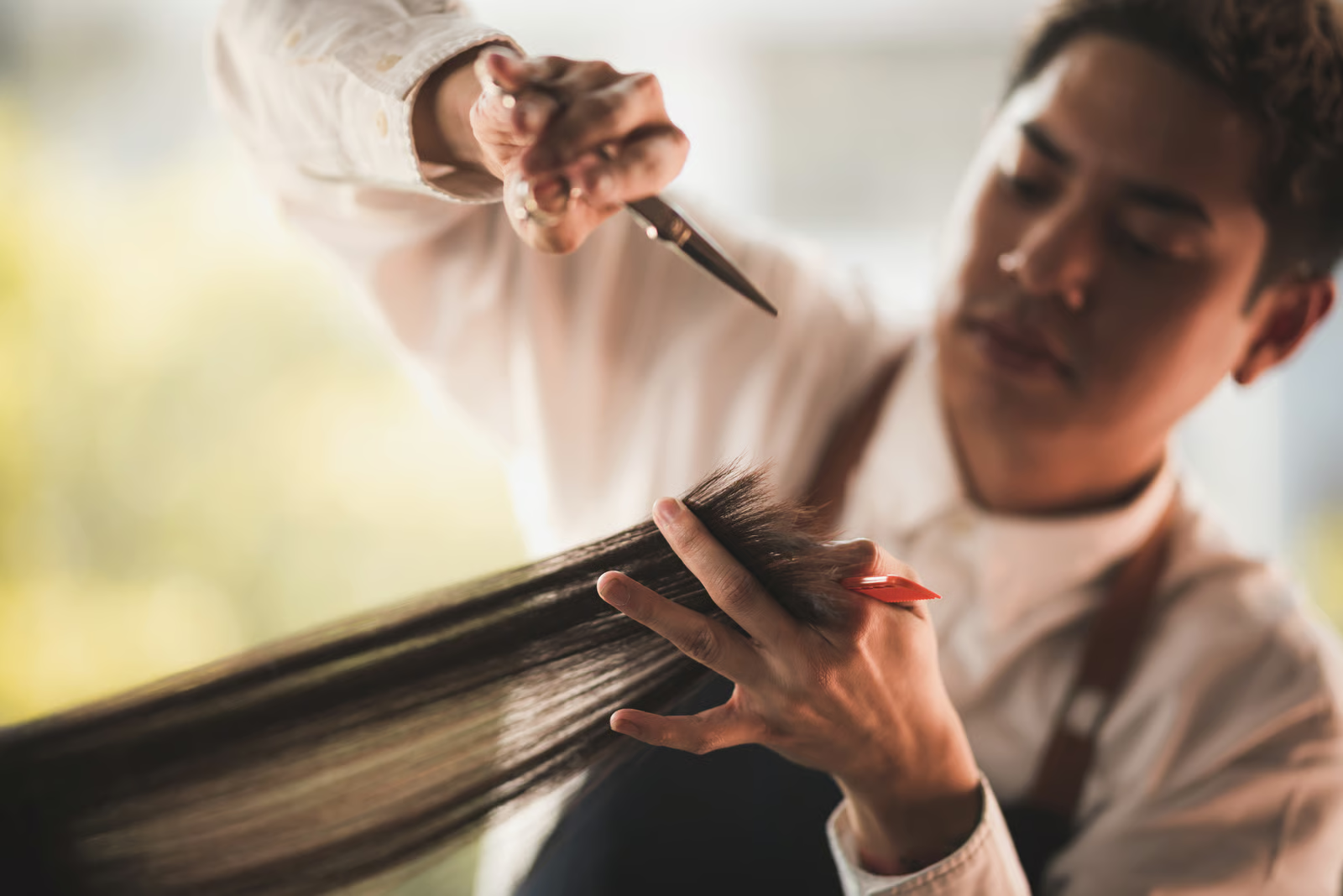

A client sits down, lifts a section at her crown, and says the line every one of us has heard: "I'm losing so much hair. Is something wrong with me?"
Here's the thing most clients don't know, and honestly something a lot of newer stylists get tangled up on too: "losing hair" and "losing length" are two completely different problems. One is happening at the root. The other is happening somewhere along the strand. And if you treat breakage like shedding, or shedding like breakage, you'll send your client home with the wrong routine and watch them get frustrated when nothing changes.
The good news is you can tell the difference at the chair in about two minutes, without any special tools. Here's exactly how I do it.
First, Get Clear on What You're Actually Looking At
Shedding is hair leaving the scalp at the follicle. It's a whole-strand event, root and all. We shed 50 to 100 hairs a day normally, so "I see hair in my brush" is not, by itself, a problem. Shedding becomes worth a conversation when the volume jumps noticeably or stays elevated for weeks.
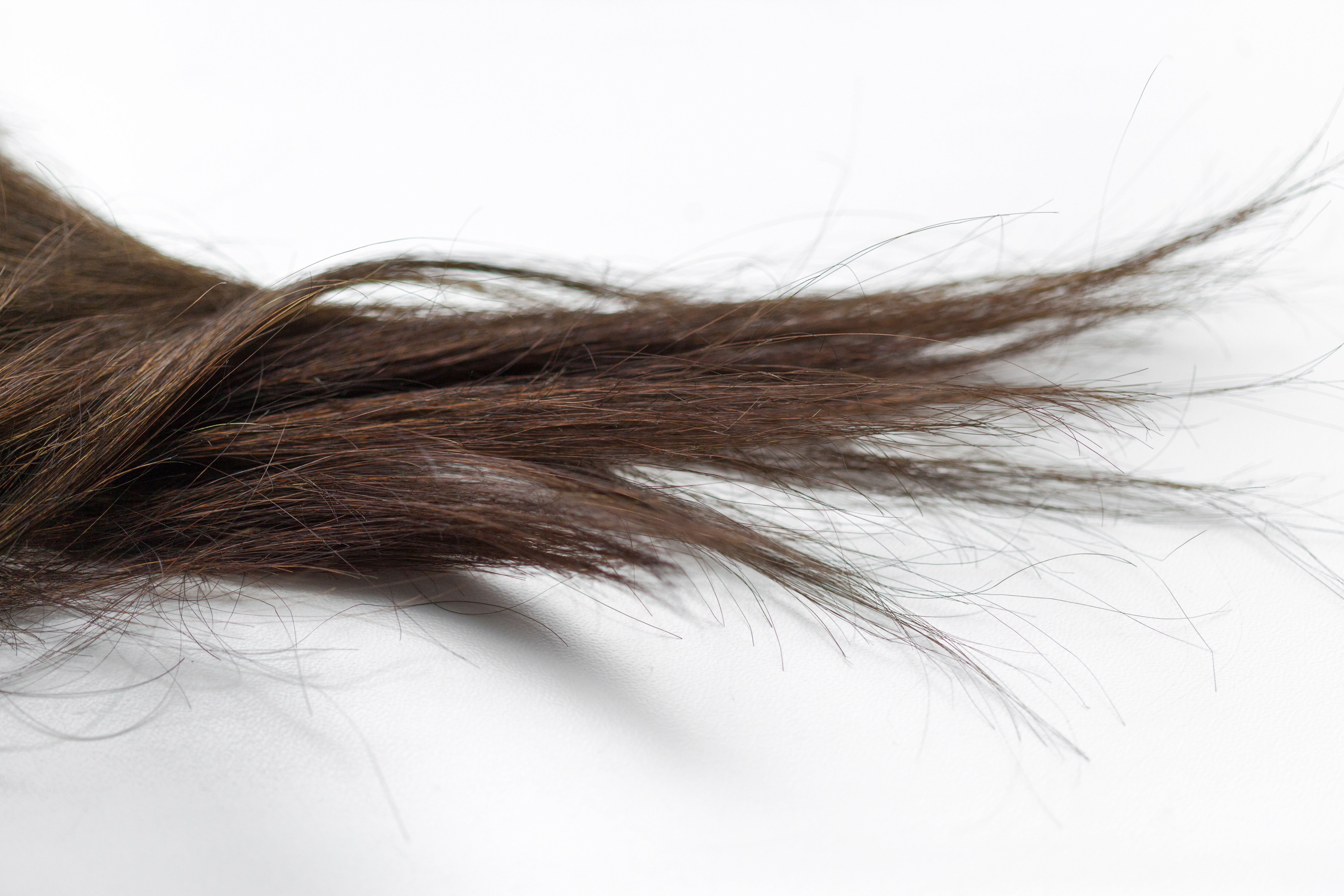
Breakage is the strand snapping somewhere along its length. The follicle is fine and still anchored. The hair is just failing structurally, usually from mechanical stress, heat, chemical services, or a compromised cuticle.
Why it matters: Shedding is a follicle/cycle conversation (and sometimes a medical one). Breakage is a hair-integrity conversation you can usually fix in the salon and at home. Same symptom (hair "everywhere"), totally different fix.
The 2-Minute Chairside Test
1. Pick up a few of the lost hairs
Ask the client to bring you what's in their brush, or pull a few strands you find on the cape. Look at the ends.
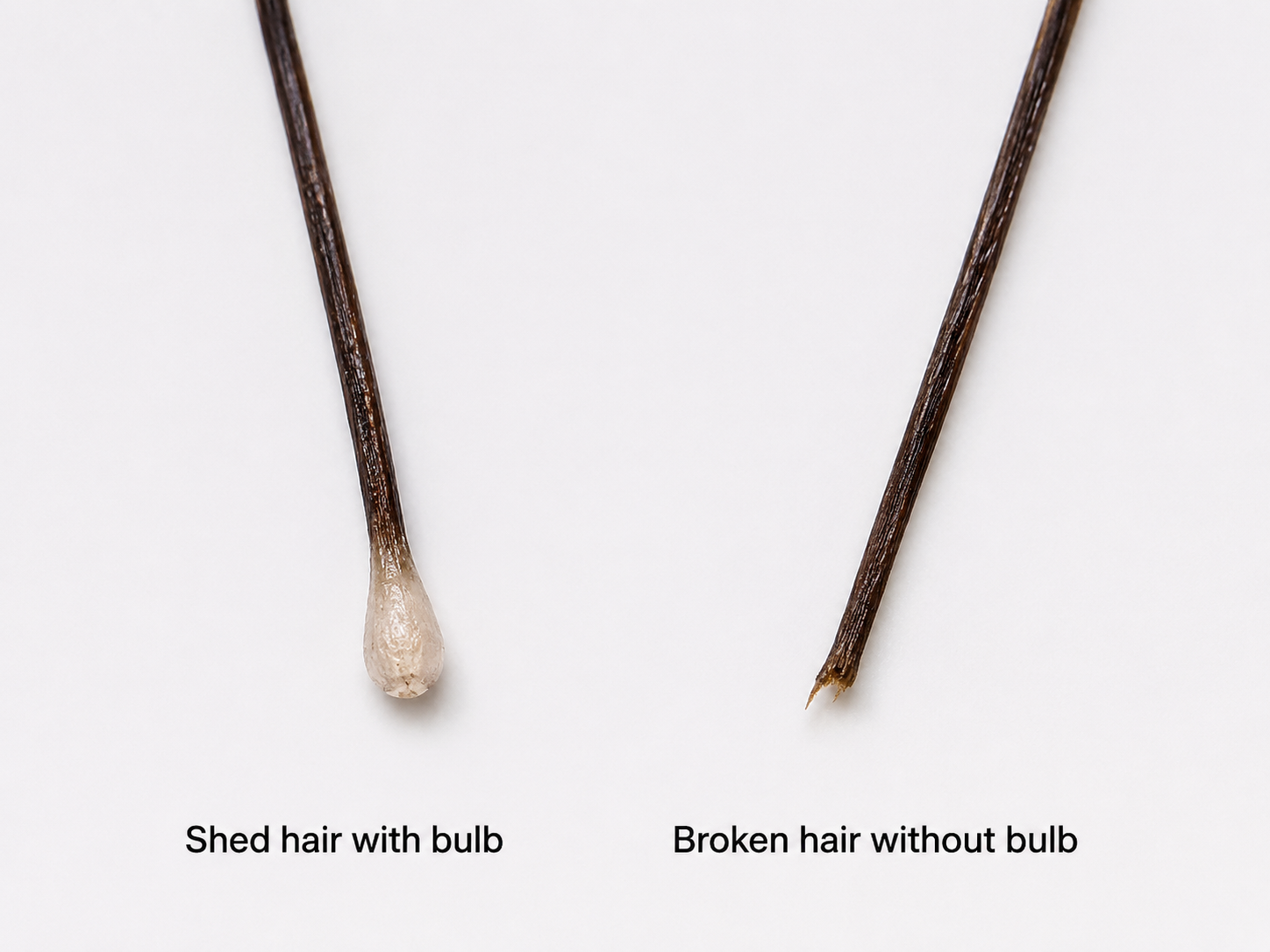
- A tiny white or translucent bulb on one end = shed hair. That bulb is the root; the hair completed its cycle and released. This points to shedding.
- Both ends blunt or frayed, no bulb = breakage. The strand snapped. This points to mechanical or chemical damage.
2. Check the lengths
Shed hairs are usually full-length and fairly uniform. A pile of short, uneven pieces, especially little broken bits around the hairline, part, or crown, is the signature of breakage.
3. Do a gentle stretch test on a single strand
Hold one hair between your fingers and stretch slightly. Healthy hair has give and bounces back. Hair that snaps immediately with almost no stretch is telling you the cuticle and cortex are compromised (breakage territory).
4. Look at the scalp and the line
Part the hair in a few places. Widening at the part or diffuse thinning across the top leans toward a shedding/density issue. Breakage tends to show up as flyaways, a "halo" of short regrowth-looking pieces, or spots that line up with tension (extensions, tight ponytails) or heat habits.
Two minutes, no magnification needed. You'll be right the large majority of the time.
What You Tell the Client (For Each Path)
If it reads like breakage
This is your wheelhouse, and it's reassuring news for them. Walk through the likely culprits (over-processing, hot tools without protection, aggressive brushing, tight styles) and build a repair plan:
- Bond-building treatments
- Lower heat settings
- A wide-tooth comb on wet hair
- Looser styling
They'll often see improvement within a few weeks, which builds enormous trust.
If it reads like shedding
Set expectations honestly. Some shedding is cyclical and self-resolving (post-stress, postpartum, seasonal). Persistent or heavy shedding, a rapidly widening part, or any patchiness deserves a referral to a dermatologist or trichologist. Say so, kindly and clearly.
For the cosmetic, maintenance side of a shedding phase, a consistent scalp-and-growth routine helps clients feel proactive while the cycle sorts itself out. This is where I'll talk through a daily growth serum like re:you as the "treat" step (not a cure, but a low-effort way to support the scalp environment and stay consistent during the regrowth phase). I frame it exactly that way with clients, because over-promising is how you lose them.
A quick note on scope: We are not diagnosing medical hair loss at the chair. Our job is to tell cosmetic from structural, support what's in our lane, and refer out confidently when something looks medical. Clients respect that line. It's part of why they trust us.
Quick Reference: Shedding vs. Breakage
What you see
Shedding
Full-length hairs with white/translucent bulb at one end
Breakage
Short, uneven pieces with blunt or frayed ends (no bulb)
Where it happens
Shedding
At the follicle/scalp
Breakage
Along the hair shaft
Common causes
Shedding
Stress, postpartum, hormones, seasonal cycles, medical conditions
Breakage
Heat damage, chemical over-processing, tight styles, aggressive brushing
What it feels like
Shedding
Hair feels normal to the touch but more comes out
Breakage
Hair feels dry, brittle, snaps easily when stretched
Scalp appearance
Shedding
Widening part, diffuse thinning
Breakage
Halo of short broken pieces, damage concentrated around tension points
Your lane
Shedding
Support + refer out when needed
Breakage
Fix it: bond builders, heat control, gentler handling
Timeline
Shedding
May resolve on its own (weeks to months); medical intervention if persistent
Breakage
Often improves within 2 to 4 weeks with proper care
| Shedding | Breakage | |
|---|---|---|
| What you see | Full-length hairs with white/translucent bulb at one end | Short, uneven pieces with blunt or frayed ends (no bulb) |
| Where it happens | At the follicle/scalp | Along the hair shaft |
| Common causes | Stress, postpartum, hormones, seasonal cycles, medical conditions | Heat damage, chemical over-processing, tight styles, aggressive brushing |
| What it feels like | Hair feels normal to the touch but more comes out | Hair feels dry, brittle, snaps easily when stretched |
| Scalp appearance | Widening part, diffuse thinning | Halo of short broken pieces, damage concentrated around tension points |
| Your lane | Support + refer out when needed | Fix it: bond builders, heat control, gentler handling |
| Timeline | May resolve on its own (weeks to months); medical intervention if persistent | Often improves within 2 to 4 weeks with proper care |
Keep This Where You Can Reach It
Print the four-step test and tape it inside a station drawer for your newer team members. The strand-end check alone (bulb vs. blunt) resolves most of these conversations, and getting it right in front of the client is one of those small moments that turns a worried guest into a loyal one.
Chairside FAQ
How much daily shedding is normal? Roughly 50 to 100 hairs a day. Volume that's clearly higher than the client's normal, sustained over weeks, is what's worth a closer look.
Can someone have both at once? Absolutely, and it's common. A postpartum client with heat-damaged ends, for example. Address the breakage you can fix and set realistic expectations on the shedding side.
When should I refer out instead of recommending a routine? Patchy or circular loss, a fast-widening part, scalp pain, redness or scaling, or shedding that doesn't settle. When in doubt, refer. It protects your client and your credibility.
Will a growth serum fix breakage? No. Breakage is a strand-integrity issue (that's bond-builders, heat control, and gentler handling). Growth serums belong to the scalp/shedding conversation, not the breakage one.