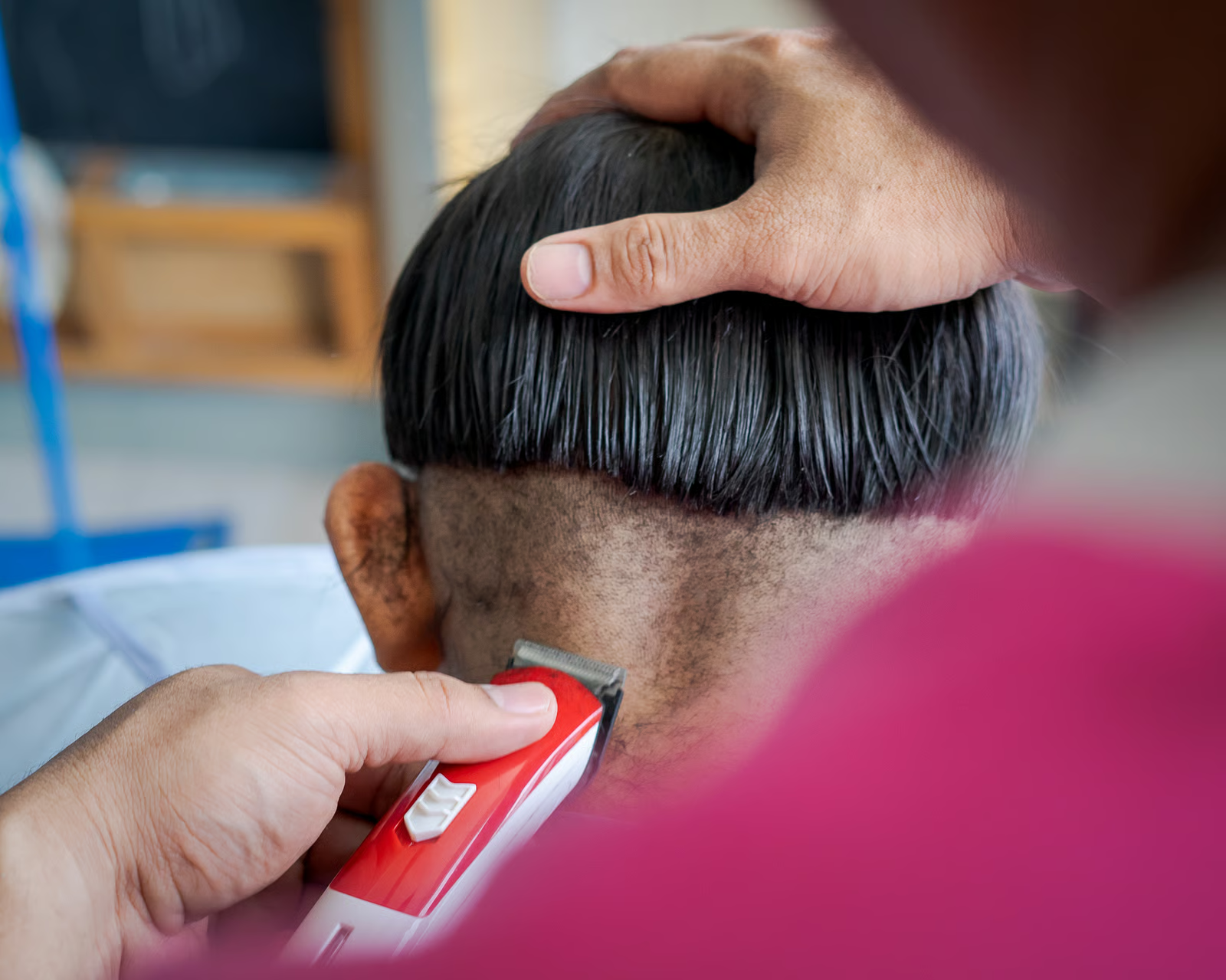

Why a Good Haircut Is More Than Just "Taking Length Off"
Most clients still walk into the salon thinking a haircut is maintenance.
"Just a trim." "Take an inch off." "Clean it up."
From a stylist's perspective, that's rarely what's actually happening.
A haircut is structure. It decides how your hair moves, how it sits when you do nothing to it, and whether your styling routine works or constantly fights you.
"The haircut is the foundation. If that's off, no amount of styling is going to fix it."
— Nina Patel, Salon Educator, Chicago
Cutting Is About Shape, Not Length
Length is the most visible change, but it's not the most important one.
Stylists are thinking about:
- Where the weight sits
- How the hair collapses or expands
- How it frames your face
- How it grows out over time
Two people can leave with the same "length," and one will feel full and polished while the other feels flat or uneven.
That difference is shape.
This is why a blunt cut can make thin ends look thicker, while soft layering can add movement to heavier hair. It's not about trends. It's about what the hair needs.
The Balance Between Movement and Density
This is where most haircuts go wrong.
Clients ask for layers because they want volume. But if the hair is already fine or low density, too many layers can remove the very thing they need, which is weight.
On the other hand, leaving everything one length can make thick hair feel heavy and unmanageable.
Stylists are constantly balancing:
- Movement (so the hair doesn't sit flat)
- Density (so the hair still looks full)
"You're either building shape or removing it. There's no neutral when you're cutting."
— Marcus Bell, London
Why Your Hair Doesn't Look the Same at Home
One of the most common frustrations: it looked amazing at the salon, but you can't get it to do that at home.
Part of that is styling, but a lot of it comes back to the haircut.
A good haircut should:
- Fall into place without heavy styling
- Work with your natural texture
- Still look intentional air-dried
If your hair only looks good after a full blowout with multiple products, something in the cut is doing too little or too much.
Texture Changes Everything
Curly, wavy, and straight hair all respond differently to cutting.
- Straight hair shows every line, so precision matters
- Wavy hair needs balance so it doesn't puff or collapse
- Curly hair requires cutting for shape when dry or in its natural pattern
This is why the same reference photo can't be applied universally.
A layered haircut on straight hair looks clean and defined. On curly hair, it can either create beautiful shape or unwanted volume depending on how it's done.
"Texture isn't a detail. It's the whole plan."
— Dana Reeves, Nashville
The Role of the Hairline and Face Shape
Stylists don't just cut hair. They design around the face.
That includes:
- Where the shortest pieces hit
- How the front frames the cheekbones or jaw
- Whether the hairline is strong, soft, or uneven
Face-framing is one of the most customized parts of any haircut. A few inches too short or too long can completely change how the haircut feels.
This is why fringe, layers, and front pieces are never one-size-fits-all.
Why Grow-Out Matters More Than the First Day
A haircut shouldn't only look good when you leave the salon.
Stylists are thinking ahead:
- How will this sit in 3 weeks?
- Will the layers collapse?
- Will the ends start to feel thin?
- Will the shape still make sense as it grows?
This is where experience shows. A good cut grows out softly. A bad one looks off within weeks.
"I'm not cutting for today. I'm cutting for the next two months."
— Nina Patel
The Difference Between a Trim and a Haircut
Clients use "trim" as a safe word. It feels less risky.
But technically:
- A trim is removing minimal length, usually for maintenance
- A haircut reshapes the hair
Most appointments are actually somewhere in between.
Even taking off half an inch can change the way the hair sits if the ends were uneven or damaged. And sometimes, what a client calls a trim turns into a necessary reshape once the stylist sees the condition.
When to Cut vs When to Treat
Not every problem is solved with scissors.
If the issue is dryness, frizz, breakage, or damage from color or heat, then a treatment may be just as important as the cut itself.
But if the issue is flat shape, heavy ends, uneven growth, or lack of movement, then cutting is what fixes it.
Good stylists know the difference and will usually combine both when needed.
What Stylists Wish Clients Would Say Instead
Instead of saying "just a trim," try:
- "My ends feel thin"
- "My hair falls flat here"
- "It doesn't sit right when I style it"
- "I want it to look fuller / softer / lighter"
This gives your stylist something to work with beyond length. Because the goal isn't shorter hair. It's better hair.
The Bottom Line
A haircut is not just maintenance. It's the structure everything else depends on.
It affects how your hair looks without effort, how long your style lasts, and how often you feel like you need to fix it.
"A good cut makes styling easier. A great cut makes it almost unnecessary."
— Marcus Bell