
Between color consults, scalp treatments, blowouts, and the usual "is my part getting wider?" conversations, new hair-growth treatments are coming up more than ever.
PP405 is one of the names clients keep asking about. Some have even mentioned trying supplier-sourced molecules they believe act like PP405. The appeal is easy to understand: PP405 is being talked about as a topical that may wake up dormant follicles without directly touching hormones. For clients who are tired of minoxidil or finasteride, or not ready for PRP or transplant conversations, that sounds like a dream.
NOVOGRO™ is also part of this next wave, but it approaches thinning hair differently. Built around a science-led, multi-pathway system, NOVOGRO™ looks at hair support from several cellular angles. New growth is only meaningful if the follicle has the right conditions to produce hair that looks thicker and more lasting.
From the chair, we have learned to be careful with anything that promises a big hair comeback too quickly. So in this article, we are looking at both approaches with a clearer lens. We brought the science team into the conversation to compare PP405 and NOVOGRO™ more systematically, by what each one is actually trying to do for the follicle.
What PP405 Is Trying to Do
PP405 is being developed by Pelage Pharmaceuticals as a topical treatment for androgenetic alopecia. The idea is different from the usual hair-loss playbook. It is not positioned as a DHT blocker like finasteride, and it is not just another minoxidil-style growth stimulant.
Instead, PP405 is being talked about as a way to help "wake up" sleeping hair follicles. The thinking is that it may change how follicle cells use energy, which could help inactive follicles become active again.
That is why people are excited. Many people with thinning hair like the idea of potentially restarting hair growth without using hormone-related treatments.
The Data Sounds Exciting Until You Read It Closely
A lot of people online are repeating the idea that 31% of trial participants saw more than 20% hair growth in eight weeks. That sounds incredible. But that is not exactly what the reported language says.
The key result appears to apply to only a subset of participants, men with a higher degree of hair loss, not the entire trial population. The study included men and women, and different levels of hair loss. So when the strongest number is reported only for a subgroup, we have to ask what happened with everyone else.
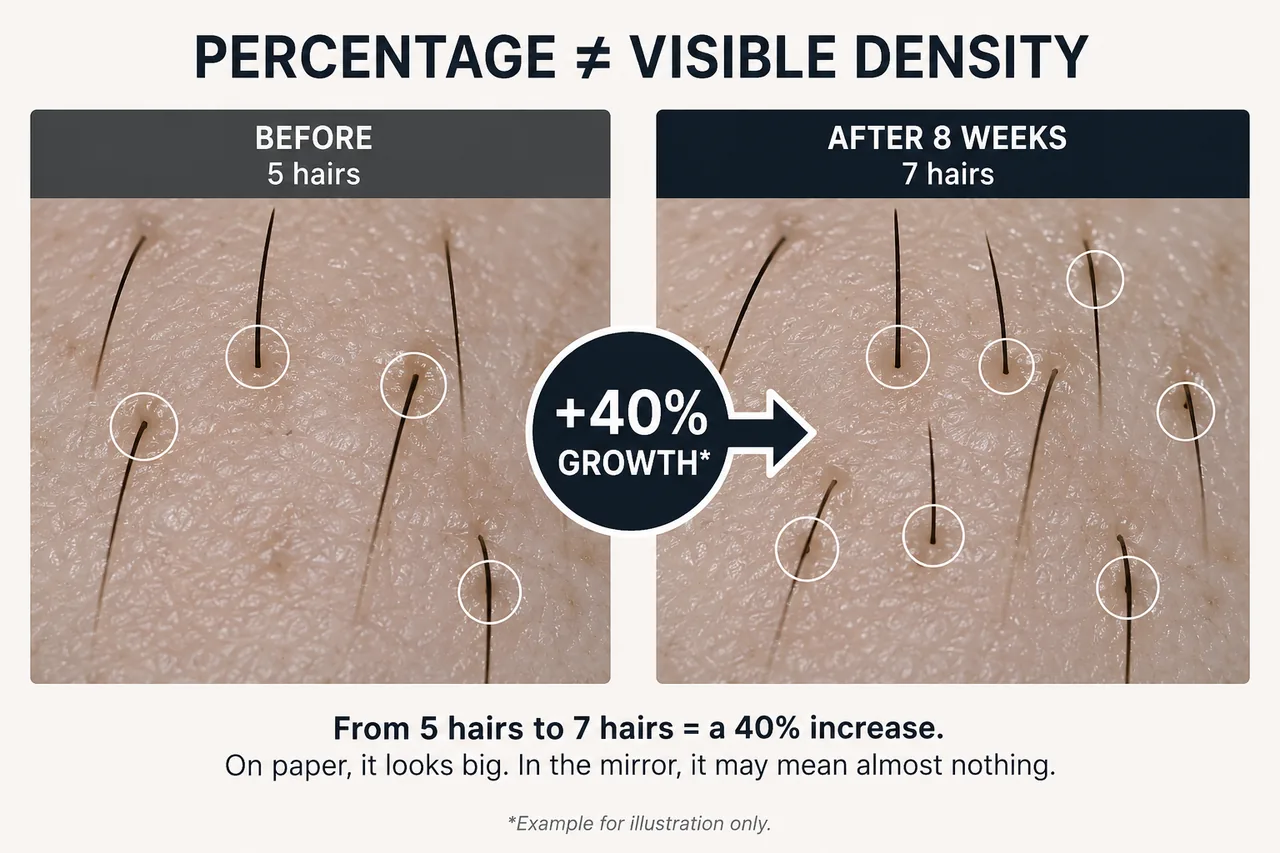
There is also a second issue: the result is reported as a percentage increase in hair density. Percentages can sound more dramatic than they are, especially when someone starts with very little hair in the measured area.
There is another issue with hair-density claims: what kind of hairs were counted?
In the salon, we see a lot of baby hairs. Some are promising. Some stay soft, short, and barely visible. These are often called vellus-like hairs. They can show up under close scalp imaging but may not add real coverage. That is why serious hair studies usually separate vellus hairs from non-vellus or terminal hairs.
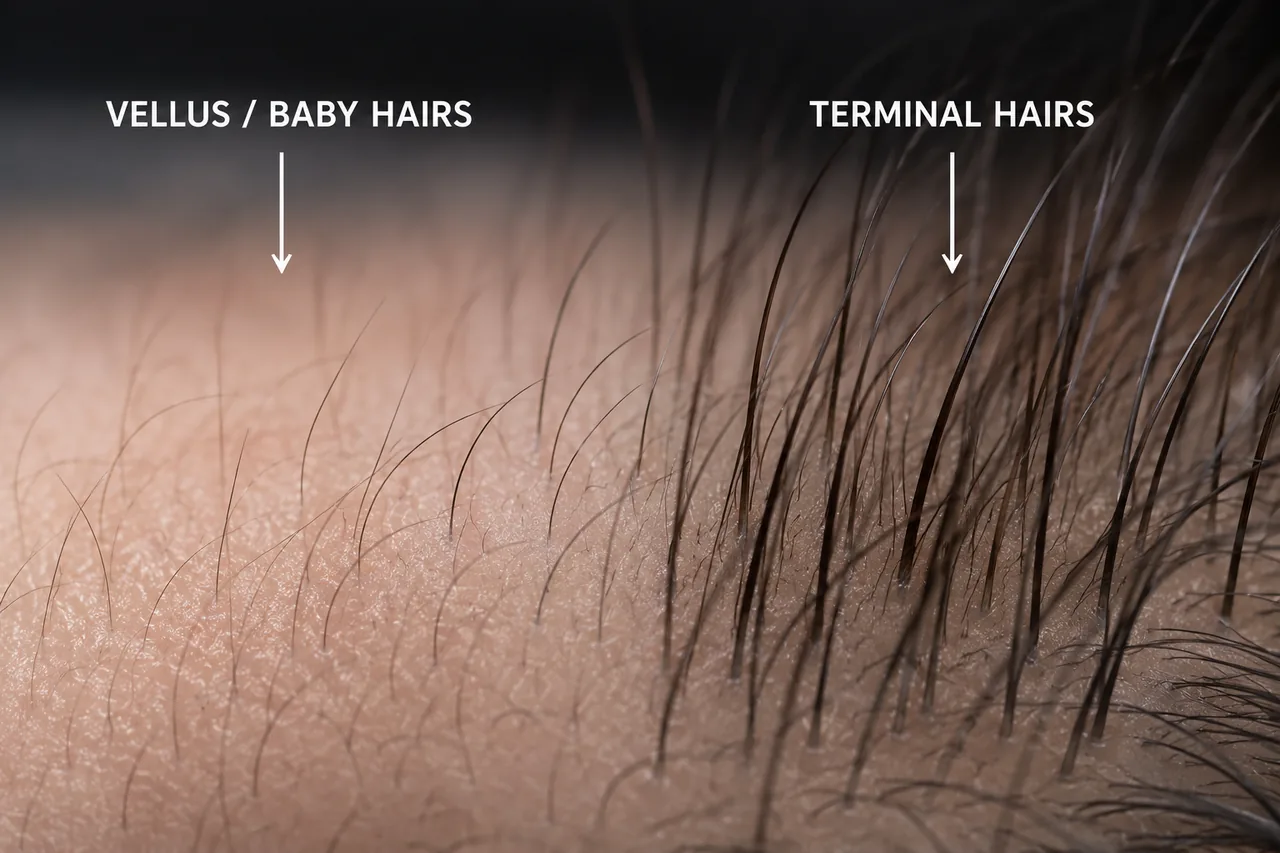
If a study counts both types together, the number can look better than the result feels.
That is one of the biggest unanswered questions with the PP405 density data. We need to know whether the reported density increase came from thicker terminal hairs or mostly fine, early-stage hairs.
Hair-growth marketing can get very creative with counting. Measure a nearly bald spot, and a few new hairs create a large percentage gain. Include wispy vellus hairs, and the count can rise without the client looking fuller. Skip absolute counts, and the percentage can sound bigger than the actual change.
So the real question is not just whether PP405 increased hair density. It is whether it increased the kind of density clients can actually see. Right now, the public information does not fully answer that.
Why the PP405 Mechanism Still Makes Us Cautious
PP405's "follicle wake-up" story sounds exciting, but from the salon side, waking a follicle up is only the first step.
What we really care about is what happens after that. The follicle also needs strong cellular support, good growth signaling, blood-flow support, and a scalp environment that can keep the growth cycle going. If those pieces are weak, early activity may not turn into lasting density.
That is the concern with PP405. It may create early movement, but we still do not know if that turns into real long-term density.
Why NOVOGRO™ Feels More Practical From the Salon Side
That is why more salon professionals are starting to pay attention to approaches like NOVOGRO™, the technology that powers RE:YOU, an emerging brand taking a biology-first approach to thinning hair. From conversations with trusted hair professionals, we understand it is built more like a long-term support system for thinning hair, working across multiple pathways that matter to the follicle. Instead of focusing only on waking the follicle up, NOVOGRO™ looks at whether the follicle has the right conditions to keep producing stronger, thicker hair.
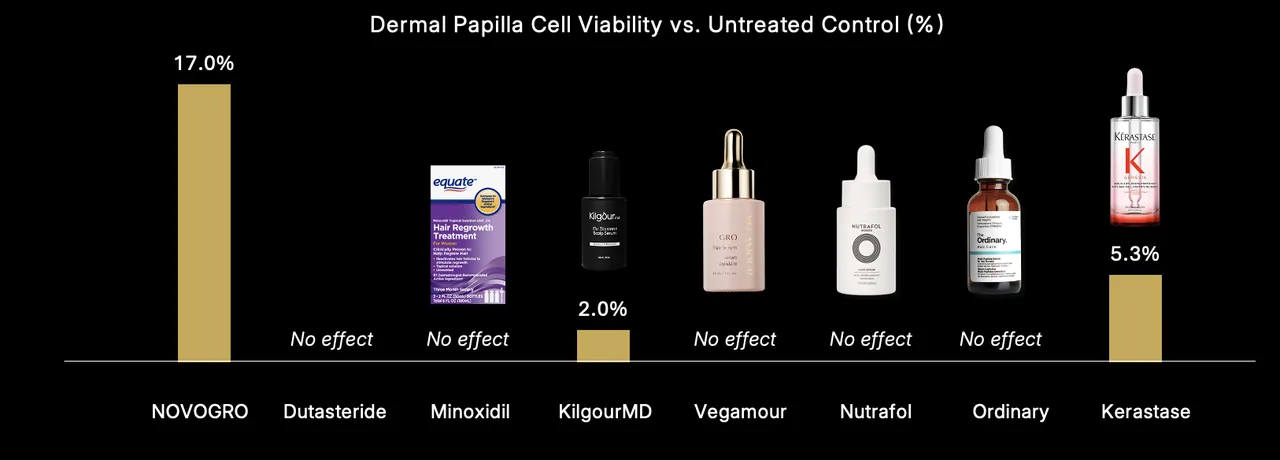
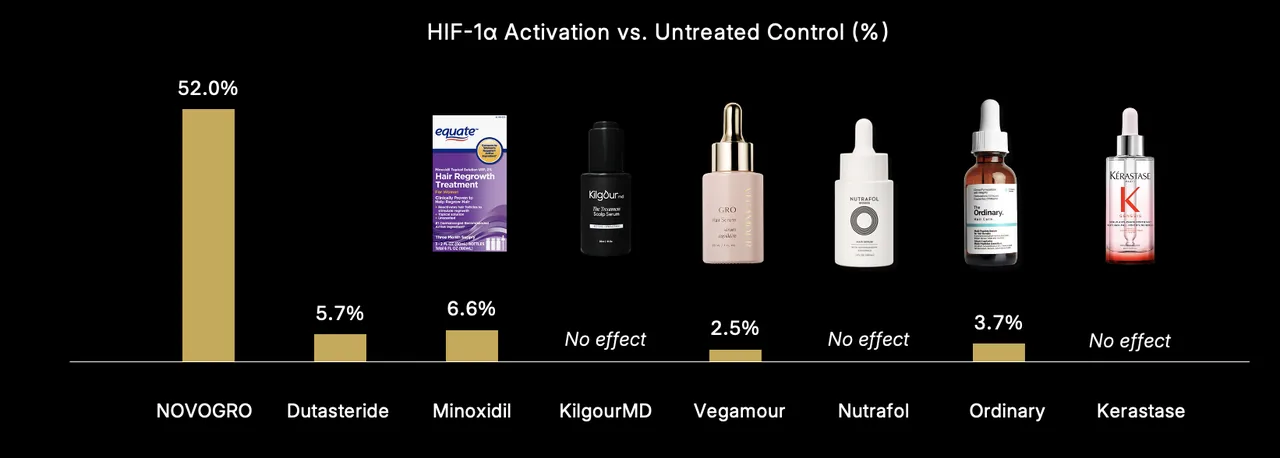
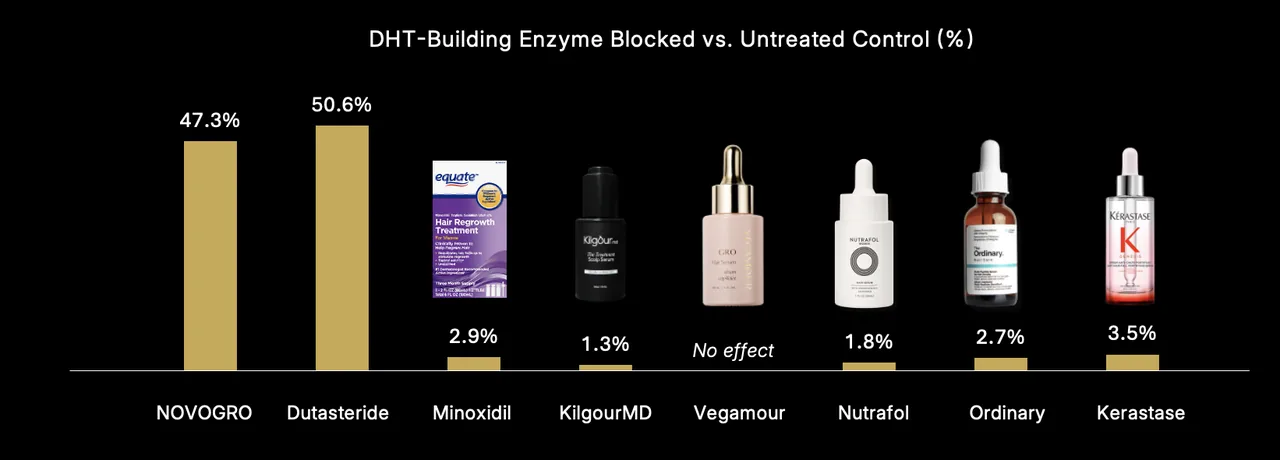
We were also able to review a preclinical data disclosure on NOVOGRO™. To be clear, this is not a direct head-to-head comparison with PP405. But compared with untreated controls and several products already on the market, the early signals are promising.
It supports the dermal papilla cells. These are the control center at the base of the follicle that helps tell hair how to grow. When dermal papilla cells slow down, the follicle gets weaker signals and hair can start coming in finer and softer, like baby hairs. NOVOGRO™ supports dermal papilla cell activity directly, with lab testing showing stronger dermal papilla cell growth compared with other leading serums.
It activates the HIF-1α pathway. Think of this as the follicle's oxygen sensor. When this pathway is active, it helps support VEGF, tiny blood vessels, and the local environment hair needs to keep growing. It creates better conditions around the follicle, so the hair has more support once growth begins.
It addresses DHT-related stress. DHT is a hormone linked to gradual follicle shrinking in people prone to pattern hair loss. NOVOGRO™ addresses this through NOVOGRO-1065, a non-steroidal molecule shown in preclinical testing to strongly inhibit the conversion to DHT. This helps reduce one of the pressures that can make follicles produce thinner hair over time.
It is built to survive real life. A serum only matters if the actives stay active when the client is actually using it. NOVOGRO™'s molecules and formulation strategy are built for real-life use, through washing, styling, coloring, and daily routines, so the formula can hold up beyond the lab and into the salon chair.
What ties all of this together is the way NOVOGRO™ was developed. It uses AI screening to look across multiple follicle needs at once, then advances the strongest candidates into lab testing, including the preclinical data shown above.
The First Clinical Data Is In
The lab work above is preclinical. NOVOGRO™ has now moved onto real heads of hair: NOVOGRO™-powered serums in a double-blind study against minoxidil, the current gold standard, and the three-month interim readout is the first look at how it actually performs.
3-Month Interim Clinical Data
Objective lab measurements after 90 days.
Increase in hair thickness
Decrease in hair loss
26% better than minoxidil
Increase in hair density
Interim readout of an ongoing double-blind study vs. minoxidil.
See the full study →The full study is still ongoing, and we'll share more as later results come in. But even at this interim mark, that is more human data than PP405 has made public.
The Salon Verdict
We are not writing off PP405. The science is interesting, and if larger trials show strong, lasting, visible results, salon pros will pay attention.
But right now, PP405 is still a wait-and-see story. NOVOGRO™ is the one more salon people are starting to watch, because it fits what we actually see: hair needs more than activation.
Hair growth is about helping that hair stay, thicken, cycle properly, and become visible enough to change the way the client feels when they look in the mirror.