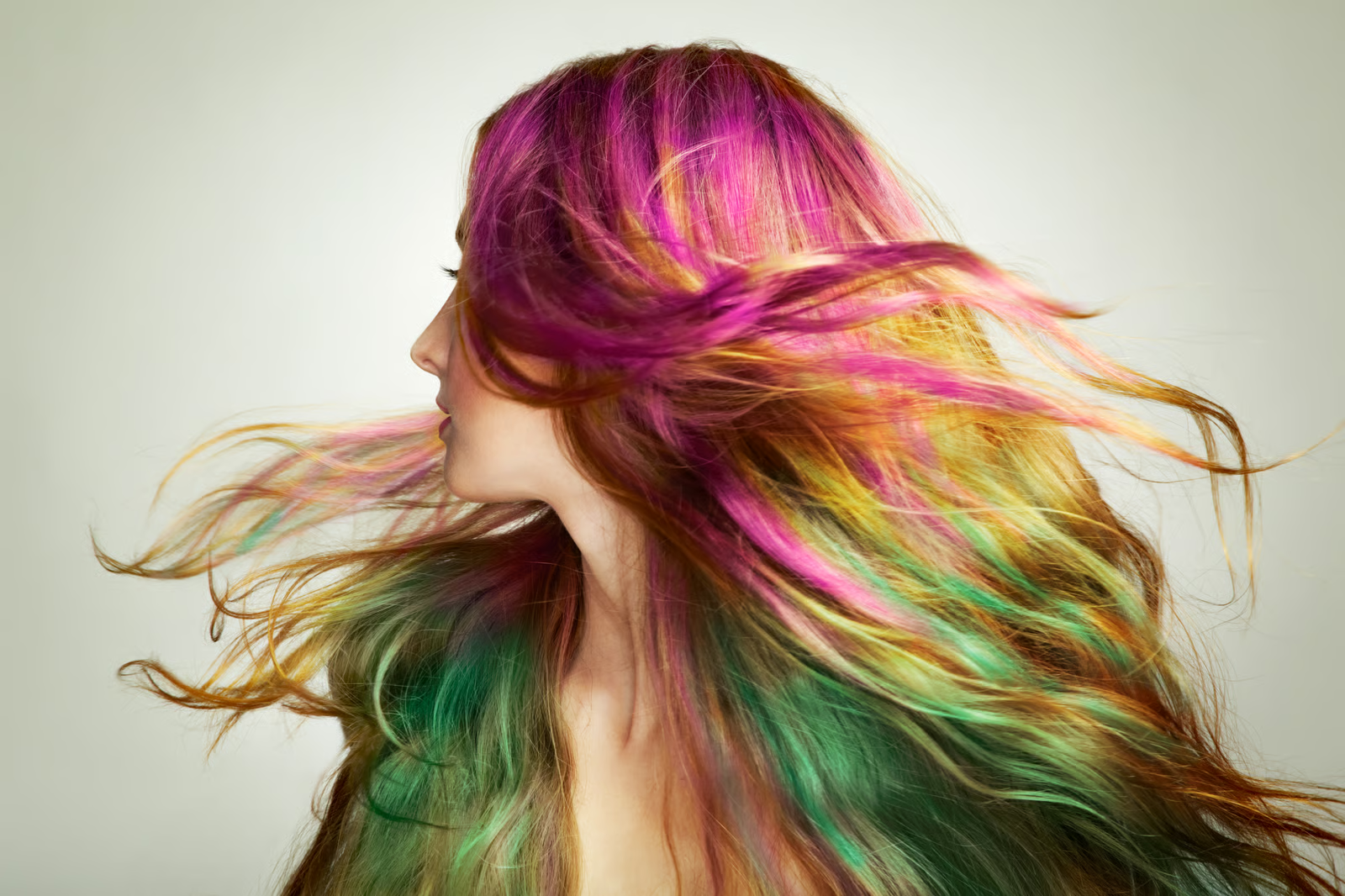

Pastel-to-vivid goals (and what your clients actually want)
This post is built for both. You’ll get a practical color framework for moving from pastel softness to vivid saturation, plus a solo-stylist plan for building a repeatable service menu, pricing strategy, marketing system, and operations routine. Throughout, the guardrail is simple: hair health first. Vivid results are not worth breakage, patchy fading, or unnecessary lift.
You’ll also learn why the “right” ratios depend on your specific brand line and starting hair condition. Manufacturer instructions matter because different clear bases, developers, and shade families are designed for different outcomes. Use the formulas here as patterns you can adapt,not as a substitute for the exact product directions for your chosen brand.
Color formulation: the dilute vs. concentrate framework
In practice, you’ll see this show up in two places:
First, your clear/pastel versus clear/dilute choice. Many brands offer multiple “clear” options or pigment families that behave differently. For example, PRAVANA notes that you should not mix Pravana Vivids Clear-Dilute with Pravana Vivids Clear-Pastel, because they are intended for different outcomes: bright/vibrant versus muted tones. That’s a key reminder that “clear” is not always interchangeable,follow the line’s intended use for the look you’re aiming for.
Second, your ratio of color to developer and the processing plan. Some vivid workflows are designed to lift and deposit differently than pastel workflows. PRAVANA’s Vivids guidance includes an example where you use a “mix it in a ratio of 1:1 ½” (color to developer) in the context of using Vivids for lighter outcomes . Separately, PRAVANA’s FAQ provides a ratio example for its ChromaSilk Creme Hair Color: 1 part color to 1.5 parts 20 volume developer processed 45 minutes with no heat. The takeaway isn’t to memorize numbers,it’s to understand that developer amount and processing time are part of the formula logic, not an afterthought.
Concrete formula patterns you can adapt
Below are three formula patterns based on manufacturer guidance and common pastel-to-vivid logic. Treat them as templates: keep the line-specific rules, then adjust for your client’s starting level and porosity.
Pattern A: Pastel “muted tone” using a pastel clear base (then increase saturation) - Use a brand’s clear/pastel approach for the initial pastel result. - Then, for a vivid version, replace the pastel-softening clear with a vivid/bright-oriented clear (or reduce the dilution effect). - PRAVANA specifically warns against combining its Clear-Dilute and Clear-Pastel intended outcomes in the same formula, so choose one direction per appointment .
How to adapt: - Start with a pastel formula that matches the client’s inspiration photo. - If they later want “more pop,” increase pigment relative to the softening base rather than mixing incompatible clears.
Pattern B: Vivid “lighter outcome” workflow using the brand’s color-to-developer ratio direction - When aiming for a vivid look that relies on a lighter end result, follow the manufacturer’s stated mix direction. - PRAVANA’s Vivids guidance includes the “1:1 ½ (color to developer)” ratio instruction in the context of using Vivids for lighter outcomes .
How to adapt: - Keep the ratio and timing consistent with the instruction. - If you need more intensity, don’t “freehand” by changing developer strength,consider increasing pigment within the approved system, or adjust your base-lightness and application density.
Pattern C: Shade-specific vivid building using the brand’s pastel-to-vivid pairing logic PRAVANA’s blog provides example workflows using VIVIDS Clear–Pastel plus specific VIVIDS shades, including developer/process details for that workflow. Use this as a model: pick the clear base that matches the vibe (pastel versus vivid), then add the shade(s) the way the manufacturer describes for that family.
How to adapt: - If you’re mixing multiple shades, keep the clear base consistent with the intended outcome. - If your client wants a vivid result but your hair isn’t ready, prioritize preparation (lightness and condition) rather than forcing pigment.
Developer and oxidation safety: strand test + timing control
Wella recommends doing a strand test each time you color to determine optimal timing and color results. Wella also provides guidance for hair color safety tests, including mixing small amounts of colorant and developer for testing. That’s not just about allergy prevention; it’s about predicting how your client’s hair will respond to your exact formula and timing.
A simple test-first workflow (solo-stylist friendly)
Confirm readiness: Check the hair’s condition and elasticity. If it feels gummy, brittle, or unusually fragile, vivid goals may need to be postponed.
Do a strand test: Mix a small amount using your chosen formula and developer, apply to a hidden section, and monitor timing based on the hair’s response.
Record your results: Note the start level, the test result, and the time it took to reach the desired tone.
Match the full-head timing: Use the strand test timing to guide your application schedule.
Because vivid saturation is sensitive to both base lightness and processing time, this workflow helps you deliver consistent results even when your client’s hair isn’t identical to the last one.
Hair health guardrails: readiness, porosity, and aftercare
Pre-lightening readiness: assess before you chase saturation
Before attempting vivid results, you need to evaluate whether the hair can handle the preparation required for strong pigment. Ask yourself: - Does the hair feel strong and springy, or does it feel dry and fragile? - Is the hair previously colored, bleached, or chemically processed? - Does the hair show signs of uneven porosity (for example, one section grabs color faster than another)?
If you’re working on hair that’s already fragile, consider a “journey approach.” It’s often safer to build toward vivid over multiple visits rather than forcing high saturation in one session.
Porosity and application density: reduce patchiness
Patchy fading often comes from uneven porosity and uneven saturation during application. Strand testing helps, but technique matters too: saturate consistently, section carefully, and avoid rushing through contact time. If the hair has variable porosity, your goal is even pigment distribution.
Aftercare: the real longevity factor
Even the best pastel-to-vivid formula won’t look good if maintenance is neglected. Color longevity depends on how gently the hair is washed, how heat is managed, and how moisture is restored.
To protect vivid vibrancy: - Use a color-safe routine and avoid harsh cleansing. - Manage heat and protect the hair when styling. - Add conditioning support so the hair holds onto softness and shine.
When aftercare is consistent, you reduce the “cycle” of damage → color loss → more aggressive re-coloring. That’s one of the most practical ways solo stylists protect their client relationships and reduce color corrections.
Conclusion
When you combine both,smart color formulation and a repeatable business rhythm,you don’t just create beautiful color. You create a client experience people want to return to.