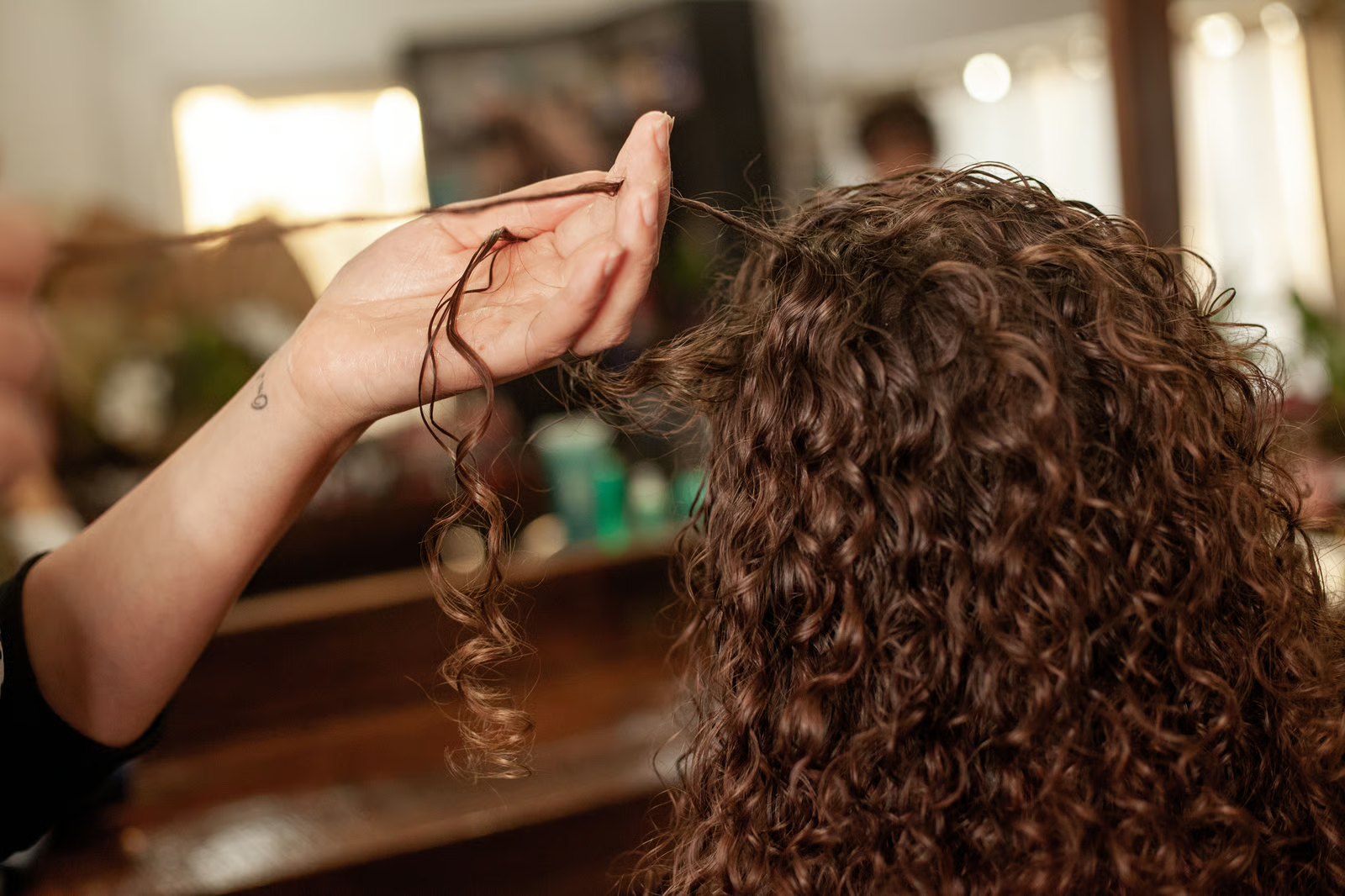

A “curl consultation best curls” should feel like more than a friendly chat,it should be a plan. The best consultations start by mapping your curl pattern and understanding your real-life routine, then setting realistic goals based on your hair texture, density, and porosity. You should leave knowing exactly what will happen in the chair, what to expect during styling, and how to maintain results between visits.
If you’ve ever walked out with a cut that looked great wet but fell flat dry (or a color that looked gorgeous for two weeks and then turned brassy or dry), this guide is for you. We’ll cover how to find a stylist for your hair, what to ask in a curl consultation, and what “best curls” truly means,plus how to approach balayage when you have curls.
How to find a stylist for your hair (step-by-step)
Finding a great stylist for curls is less about chasing a trend and more about matching your hair needs with someone who understands curl behavior. Start with your research: look for portfolios that show multiple curl types,not just one “model hair day.” Search for stylists who post consistent work across different lengths and who demonstrate how they style at home, not only how they style in-salon.
Next, vet experience in a way that’s specific to you. Reviews can be helpful, but the most important clues are in the details: Do their before/after photos look consistent under similar lighting? Do they show how the cut grows out? Do they mention curl mapping, shrinkage, or styling education? A stylist who can explain how curl patterns change with humidity and product choice is usually a safer bet than someone who only talks about the haircut “shape.”
Where to look matters too. Beyond Instagram and Google reviews, curl communities (local groups, meetups, and reputable curl education platforms) can connect you with stylists known for curl-first results. When you contact a salon, ask a simple question upfront: “Do you do curl mapping or a curl consultation before cutting?” Their answer tells you how they work.
Finally, trust your gut during the first interaction. The best curl consultations don’t rush. A good stylist asks about your wash schedule, your go-to products, and what you hate (frizz, flat roots, dryness, uneven curl clumps). They should also ask what you want most,wash-and-go definition, bouncy volume, or a style that can stretch without losing shape. You’re looking for a match, not a gamble.
The curl consultation checklist (questions to ask)
A great curl consultation should feel structured. If you’re not sure what to ask, use this as your guide. The goal is to learn how your stylist thinks, what techniques they use, and whether they’ll teach you how to maintain the results.
Start with the fundamentals: “Will you map my curls before cutting?” Curl mapping helps ensure the cut respects your natural growth patterns and avoids surprises like weight pulling certain sections flat. Then ask about their approach to shrinkage and styling differences: “How do you account for shrinkage from wet to dry?” Shrinkage isn’t a problem to “fix”,it’s part of your curl identity, and a stylist should build the shape accordingly.
Next, ask what products and techniques they plan to use. For example: “What styling method will you use for my consultation,wet-to-dry, diffusing, or a specific set routine?” If you prefer a wash-and-go, don’t let the consultation be built around a finish you’ll never do at home.
You should also ask about product recommendations that match your hair’s needs, not just what’s trendy. “How will you choose products for my porosity and density?” Porosity affects how curls absorb moisture and hold definition, while density affects how much weight your hair can handle without going flat.
Finally, ask what happens after you leave: “Will you teach me how to style at home?” The best stylists don’t just cut,they coach. You want a plan you can repeat: how much product to use, where to apply it, and how to refresh curls between washes.
If your stylist can answer these questions clearly and confidently, you’re likely in good hands. If they dodge details or say “we’ll figure it out later,” that’s a sign to look elsewhere.
What “best curls” means (tailoring the cut to your curl pattern)
“Best curls” isn’t one haircut,it’s a customized outcome. A curl-first stylist adjusts for curl pattern, density, and growth direction so your shape looks intentional in your everyday life. That means the cut should support your natural curl architecture, not fight it.
Curl pattern matters because different curl types behave differently. Looser waves may need more structure to hold shape, while tighter curls often need careful layering so they don’t become triangular or overly puffy. Density matters because thick, heavy hair may require targeted thinning or strategic layering to prevent the roots from collapsing. Porosity matters because hair that struggles to retain moisture may need a cut that reduces dryness-looking ends and supports a more consistent styling routine.
Growth direction is another big factor. If your curls grow outward or downward in certain zones, a uniform “all-over” approach can create imbalance. A skilled stylist will observe where your curls naturally fall and then cut to enhance that pattern.
Communication is key. Bring clarity to your preferences so your stylist can tailor the result. Ask yourself what you actually do at home. Do you want a wash-and-go with defined clumps and bounce? Do you like a “set” with finger coils or twists? Do you air-dry, diffuse, or do a combination? Tell your stylist your routine and your constraints: your time, your humidity environment, and what products you already own.
When your stylist understands your goals, they can design a cut that makes styling easier,not harder. The “best curls” outcome should look good even when you don’t spend an hour in the mirror.
What is balayage stylist explains (and what to ask before booking)
Balayage is commonly described as a freehand highlighting technique where color/lightener is applied in a sweeping motion to create natural-looking dimension that grows out with less obvious regrowth lines [turn0search8]. In simpler terms: instead of placing color in perfectly spaced sections all the way to the roots, balayage is typically applied to mid-lengths and ends for a softer, sun-kissed effect [turn0news12].
If you’re booking a “balayage stylist explains” session, you want them to do more than name the technique. You want them to explain how it will work with your hair’s texture and curl pattern.
For curls, placement is everything. A balayage that’s beautiful on straight hair can look uneven on curls if the lift and placement aren’t adjusted for how your curls clump and dry. Ask: “How will you place color so my curl pattern stays balanced?” A good stylist should talk about lift level and where the lightener will go, considering how your curls frame your face and how your ends behave.
Timing and curl health also matter. The more lift you’re chasing, the more potential stress your hair may experience,especially if your curls are already prone to dryness. Ask: “How will you protect my curl integrity during the process?” You can also ask whether they recommend a pre-color assessment of porosity and elasticity, and what bond-support or conditioning steps they include.
Finally, ask how the service will be finished for your curl goals. “Will you style my hair after coloring in a curl-friendly way so I can see the true result?” You want to leave with a realistic preview of your final look, not just a flat, straightened sample.
Balayage + curls: common pitfalls and how to avoid them
Balayage can be stunning on curls, but the details determine whether you’ll love it long-term. Common pitfalls include uneven lift, dryness, and brassiness. Uneven lift can happen when color placement doesn’t respect curl clumps, or when processing time isn’t tailored to your hair’s starting level and porosity. Dryness often shows up when lightening is too aggressive or when aftercare hydration isn’t part of the plan.
Brassiness is another concern, especially if you’re going lighter. Even though balayage grows out more naturally than some other highlight methods [turn0search8], the tone still needs maintenance. Your stylist should propose a realistic plan, including glossing or toning cadence based on how quickly your hair shifts.
The key is that the stylist should explain what they’re aiming for and why. Instead of promising a perfect “forever” color, they should talk about the fade-out process,how it will look as it grows, and what you can do to keep it looking fresh without over-processing.
Ask questions that protect your curls: “How will you prevent my ends from getting too porous?” “What toner or gloss will you use, and how often will I need it?” “What should I expect during the first wash after color?” A curl-friendly color plan also includes aftercare guidance: gentle cleansing, moisture support, and heat minimization when possible.
If a stylist can’t discuss maintenance or only sells the service without the follow-through plan, that’s a risk. The best balayage results are the ones that remain wearable for months.
Wrap-up: your booking script + next steps
Now that you know what to look for, you can book with confidence. Here’s a simple message you can copy and paste when contacting a salon:
“Hi! I’m looking for a curl-first consultation and a cut that works with my natural curl pattern. Can you do curl mapping and explain how you account for shrinkage from wet to dry? I also want balayage guidance,can you explain placement and how you protect curl health during lightening? I’m hoping for a result I can style at home with my routine (wash-and-go / defined sets).”
For your consultation, bring what helps your stylist make the right plan quickly. Bring photos of your current hair in both wet and dry states, plus photos of the inspiration look you love. Include details on your routine: how often you wash, what products you use, whether you diffuse or air-dry, and what your biggest frustrations are (frizz, flat roots, dryness, uneven clumps). If you’ve recently changed products or noticed increased shedding, mention that too.
Good hair days start with the right plan. When you choose a stylist who understands curls, asks the right questions, and explains both the cut and the color process, you’re much more likely to get “best curls” you can actually maintain,without guesswork.