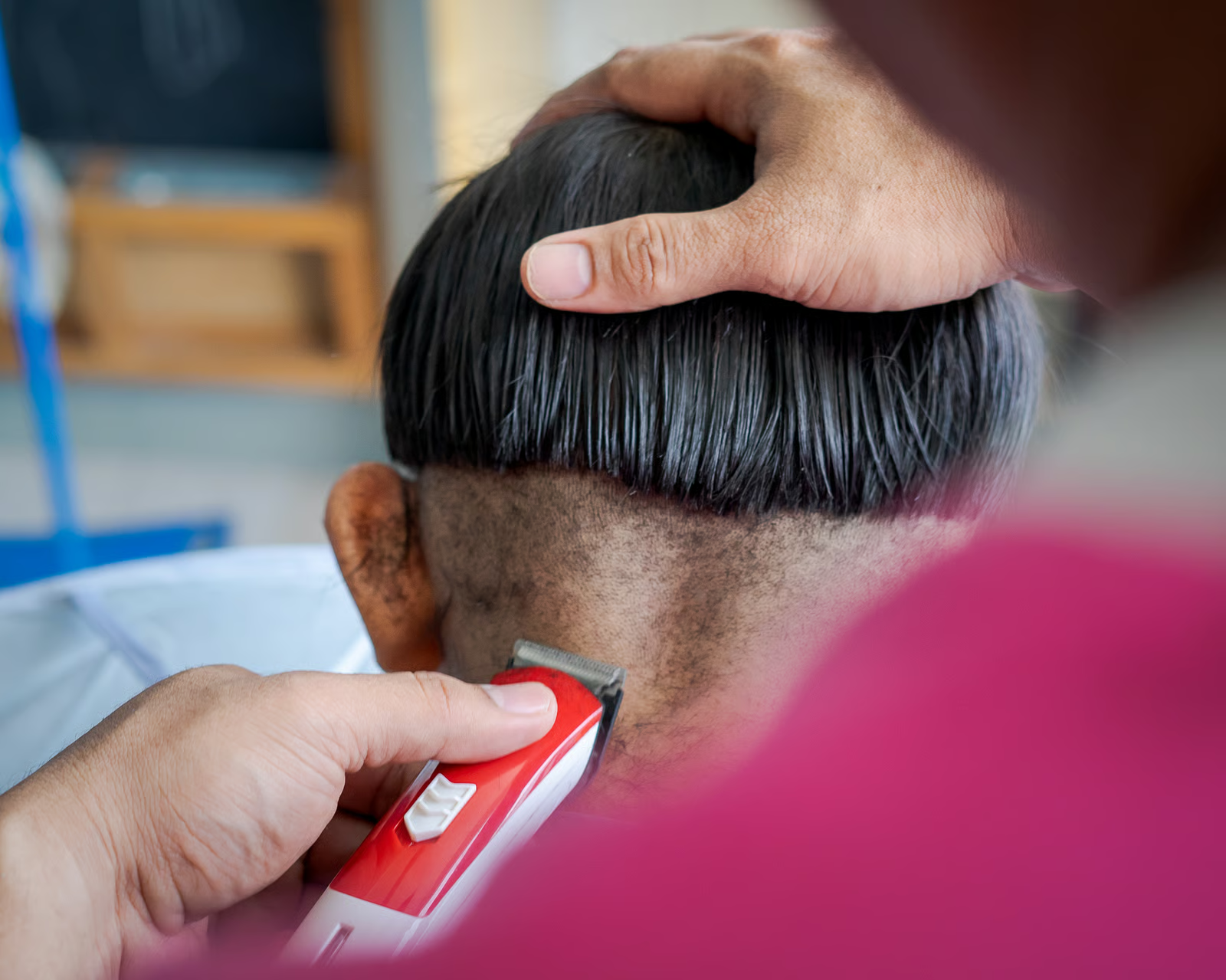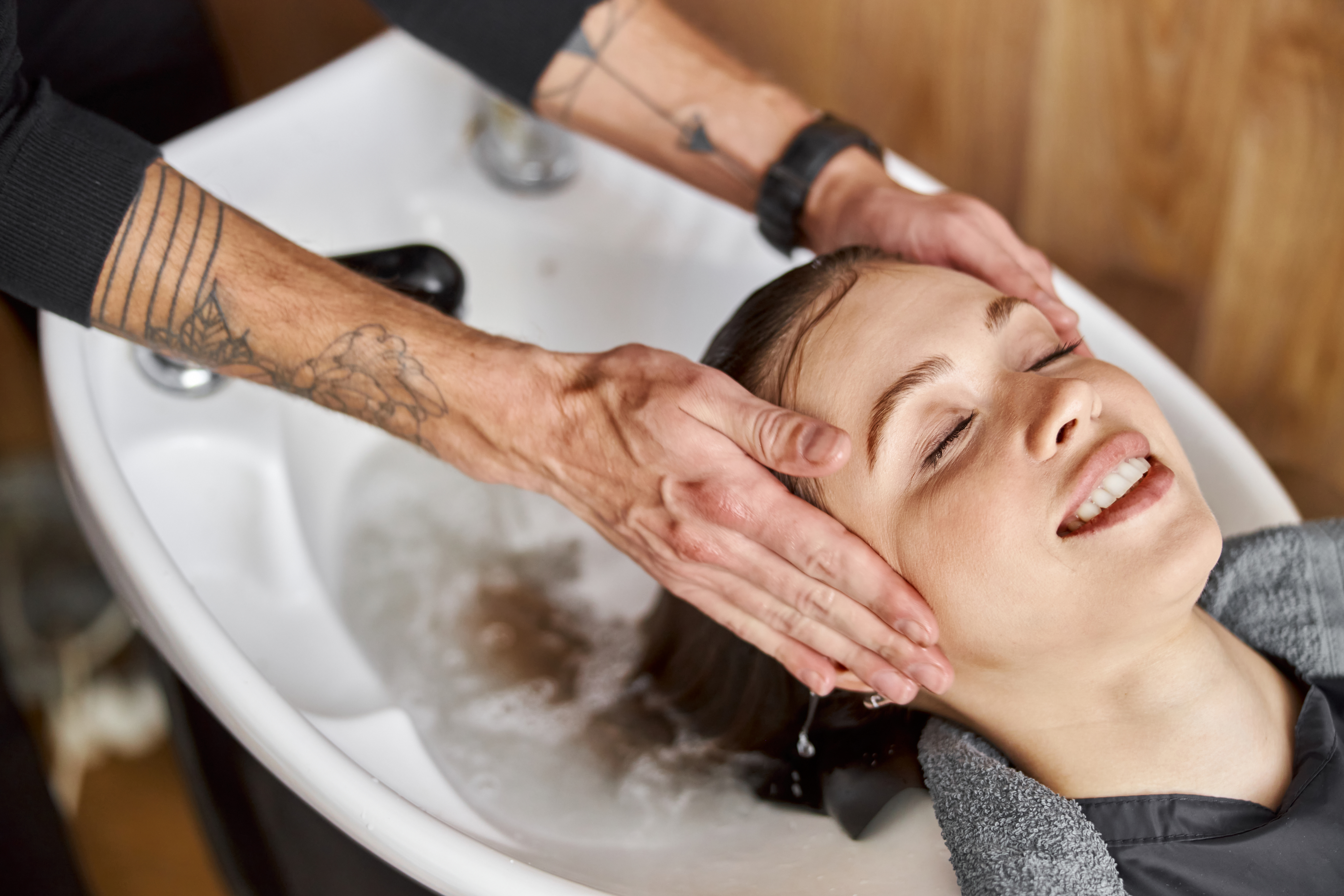

If you have been on social media in the past year, you have seen head spa content. The scalp massage videos, the satisfying extraction shots, the ASMR-style treatment reveals. Millions of views, comment sections full of "where can I get this done," and an entire aesthetic built around relaxation, luxury, and scalp health.
The demand is real. The question is: how do you turn viral curiosity into actual revenue in your chair?
I run a six-figure solo suite, and I added a head spa offering eight months ago. It now accounts for 18% of my service revenue and has a 72% rebook rate. It brings in new clients who have never been to a salon for anything other than a cut, and it turns existing color clients into regulars who come in between appointments just for the treatment.
Here is what I have learned about building a head spa service that actually makes money.
What a Head Spa Actually Is
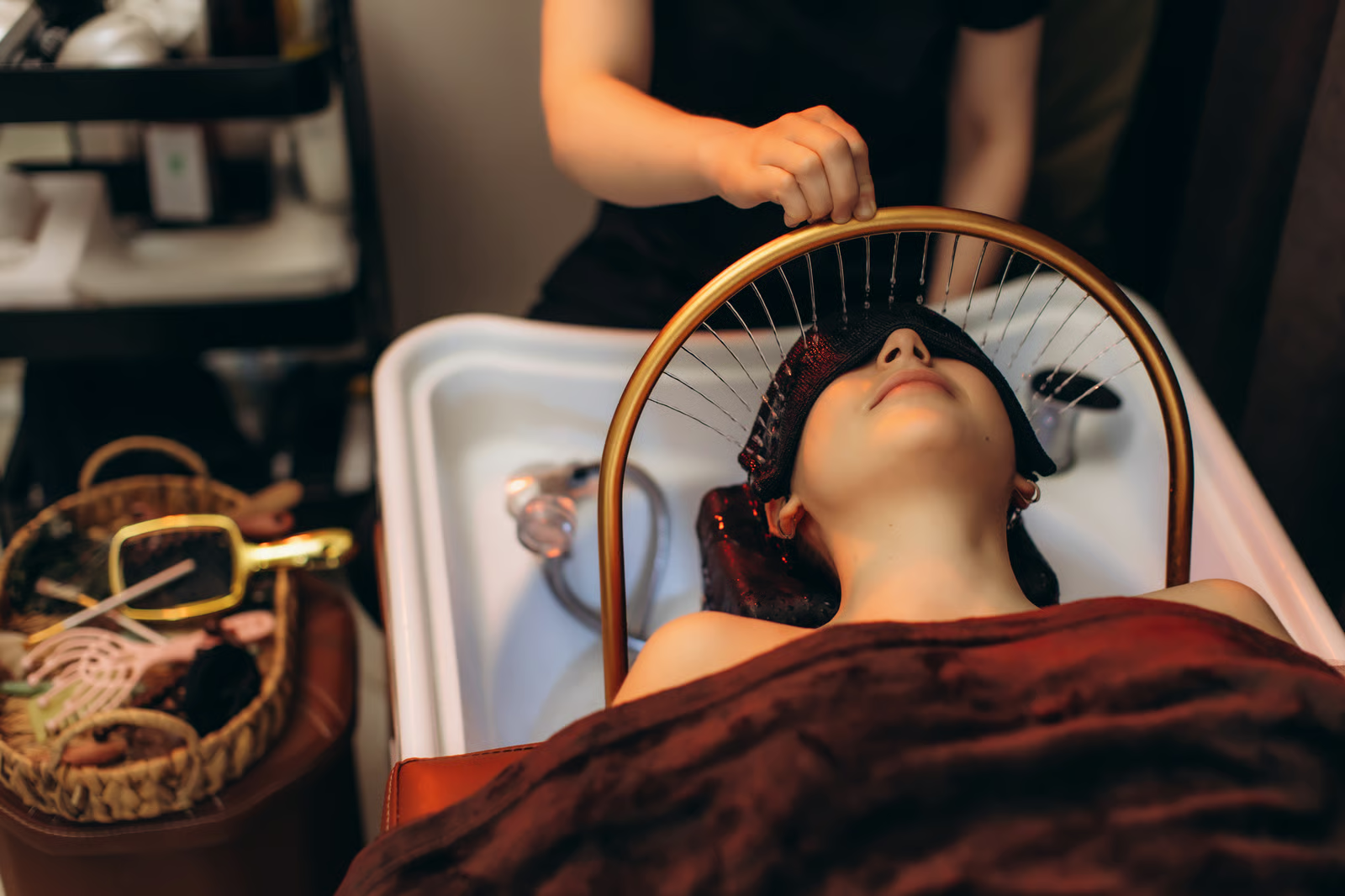
A head spa is a scalp-focused treatment built around massage, cleansing, exfoliation, and hydration. The experience matters as much as the technique. Clients are paying for relaxation, care, and visible results (clean scalp, less buildup, healthier-looking hair).
The treatment typically includes:
- Deep scalp cleansing to remove buildup, oil, and dead skin
- Exfoliation or detox using scrubs, brushes, or steam
- Scalp massage for circulation and relaxation (this is the part that goes viral)
- Treatment masks or serums tailored to scalp condition
- Finishing rinse and style
Total service time ranges from 45 minutes (lite) to 90 minutes (full spa experience). Pricing runs from $75 to $200+ depending on your market and what you include.
The Business Case: Why This Works
Head spa services hit three revenue goals at once:
1. New client acquisition
These treatments bring in people who would not otherwise book with you. They are not looking for color or a major cut. They saw a video, got curious, and want to try it. Many become long-term clients once they experience your space and your work.
2. Increased service frequency
Your color client who comes every 10 weeks? She might add a head spa at week 5. Your cut-and-go client who stretches appointments to 8 weeks? He might book a standalone scalp treatment in between. You are adding visits without cannibalizing your core services.
3. Retail attachment
Head spa clients leave wanting to maintain the results. Scalp serums, exfoliating shampoos, massage tools, and treatment masks all become easy retail add-ons. My head spa clients have a 60% retail conversion rate, compared to 35% across my other services.
Build Options: Lite vs. Full
You do not need to invest thousands upfront. Start small, test demand, and scale as the service proves itself.
Lite Build ($200 to $500 setup cost)
This is where I started. You are adding the service with minimal equipment investment.
What you need: - Silicone scalp massager or brush ($15 to $30) - Exfoliating scalp scrub ($20 to $40) - Treatment mask or serum ($30 to $50) - Warm towels (you already have these) - A relaxing playlist and dimmed lighting
Service structure: - 45 to 60 minutes - Priced at $75 to $100 - Basic scalp massage, cleanse, treatment, style
This setup lets you test client interest without a major financial commitment. If it books consistently for three months, consider upgrading.
Mid-Tier Build ($800 to $1,500 setup cost)
This adds specialized tools and a more polished experience.
What you add: - Handheld scalp massager with heat or vibration ($80 to $150) - Steamer for deeper product penetration ($150 to $300) - Scalp camera or scope for before/after documentation ($100 to $400) - Upgraded product line with multiple treatment options
Service structure: - 60 to 75 minutes - Priced at $120 to $150 - Includes scalp analysis, customized treatment, extended massage
The scalp camera is a game-changer for client buy-in. Showing before-and-after close-ups of their scalp makes the results tangible and drives retail and rebooking.
Full Build ($2,000 to $5,000+ setup cost)
This is the premium experience, closest to what clients see in viral videos.
What you add: - Professional-grade massage chair or shampoo bowl with built-in massage ($1,000 to $3,000) - High-end steamer with adjustable settings ($300 to $600) - Complete product suite (multiple scrubs, masks, serums, oils) ($300 to $500) - Aromatherapy diffuser and curated scent library ($50 to $100) - Noise-canceling headphones or guided meditation audio
Service structure: - 75 to 90 minutes - Priced at $150 to $200+ - Full sensory experience with customized treatment protocols
This level works best if you have consistent demand, a client base willing to pay premium prices, or you are positioning your salon as a wellness destination.
Pricing Strategy That Actually Works
Your pricing should reflect three things: your market, your experience level, and what you include. Get this wrong and you either price yourself out of the market or work hard for margins that don't make sense.
Start by anchoring to your local market. Look at what spas, nail salons, and massage studios charge in your area. Head spa pricing tends to land between a luxury manicure and a one-hour massage. If massages in your market run $90 to $120, your signature head spa should sit in that range or just above, because the results are visible and the retail follow-through makes the experience feel like more than a massage.
Your experience level matters too. If you are adding head spa to your menu for the first time, start soft. You are learning the service flow, building your confidence, and collecting testimonials. A lower introductory price during the first few months lets you iterate without the pressure of justifying a premium rate before you have earned it.
Introductory pricing (first 3 months)
Price 10% to 15% below your target rate while you build demand and gather reviews. A $90 to $95 introductory rate on your signature service can move to $110 to $120 once you have strong word-of-mouth, consistent bookings, and before-and-after content that proves your results. Communicate the price increase in advance ("launching at introductory pricing through July") so clients feel like they caught something, not that they were undercharged.
Do not stay at introductory pricing longer than 3 months. Underpricing long-term trains clients to expect low rates and makes it harder to raise prices without pushback.
Build a tiered menu
Offer at least two options. Clients want to choose based on their budget and how much time they have. A single price point leaves money on the table from clients who would happily pay more for a longer experience.
Service Level
Express Scalp Treatment
Time
30-45 min
Price Range
$65-$85
What's Included
Scalp cleanse, focused massage, treatment mask, quick blowout
Service Level
Signature Head Spa
Time
60-75 min
Price Range
$110-$140
What's Included
Scalp analysis, exfoliation, extended massage, customized mask, style
Service Level
Luxury Head Spa Experience
Time
90 min
Price Range
$160-$200
What's Included
Full sensory experience with aromatherapy, hot towel compress, premium product protocol, extended massage, style
| Service Level | Time | Price Range | What's Included |
|---|---|---|---|
| Express Scalp Treatment | 30-45 min | $65-$85 | Scalp cleanse, focused massage, treatment mask, quick blowout |
| Signature Head Spa | 60-75 min | $110-$140 | Scalp analysis, exfoliation, extended massage, customized mask, style |
| Luxury Head Spa Experience | 90 min | $160-$200 | Full sensory experience with aromatherapy, hot towel compress, premium product protocol, extended massage, style |
Price the top tier at roughly 2x your entry-level option. That gap gives clients a clear sense of value progression and makes the middle tier feel like a smart choice, which is often your highest-volume seller.
Add-ons are easy upsells once clients are already booked. Common options include a hot stone scalp massage ($20 to $30), a CBD or nourishing oil upgrade ($15 to $25), or a take-home mini treatment kit ($25 to $40). Introduce one or two add-ons at booking or during the consultation, not mid-service.
Package pricing and pre-sells
Pre-sold packages drive rebooking, stabilize your cash flow, and give clients a reason to commit to the scalp health journey rather than treating it as a one-time thing.
A 3-session package priced at 10% off and a 6-session package at 15% off is a simple starting point. The math works in your favor: you collect cash upfront, fill future appointments, and dramatically increase the likelihood of retention. Clients who buy a package almost always see results because they complete the treatment series.
Example package pricing based on a $120 Signature Head Spa:
- 3-session package: $324 (saves $36, 10% off)
- 6-session package: $612 (saves $108, 15% off)
You can also bundle a package with a retail starter kit. Offer the 3-session package plus a home scalp maintenance kit (serum, exfoliating shampoo, massager tool) at a combined price that saves them $20 to $30 off retail. The kit reinforces results between visits and pre-empts the "what should I use at home" conversation.
Limit packages to your top two service tiers. There is no reason to discount your express service, and a package should feel like an investment, not a coupon.
Retail Tie-In: Where the Real Margin Lives
Head spa services are profitable, but the real money is in retail attachment. Clients leave relaxed, their scalp feels clean and healthy, and they want to keep that feeling going.
High-conversion retail items:
- Scalp serums (daily maintenance, $30 to $60)
- Exfoliating shampoo (weekly use, $25 to $45)
- Scalp massagers (at-home tool, $15 to $35)
- Treatment masks (weekly or bi-weekly, $30 to $50)
Frame it as a home care routine, not a product pitch. I say: "The scalp treatment we did today works best when supported at home. Here is what I would use between visits." My conversion rate on that exact line is over 60%.
Sample retail menu:
- Scalp serum: $45 (cost: $18, margin: 60%)
- Exfoliating shampoo: $32 (cost: $13, margin: 59%)
- Handheld massager: $22 (cost: $9, margin: 59%)
If 60% of your head spa clients buy one product at an average of $35, and you are doing 15 head spa services per month, that is $315 in retail revenue with roughly $190 in profit. Over 12 months, that is $2,280 in additional profit from retail alone.
Equipment Breakdown: What to Buy First
Start with the essentials. Add specialized equipment only after you have consistent bookings.
Phase 1: Essentials (under $300)
Silicone scalp brush ($15 to $25) – for manual massage and exfoliation
Scalp scrub or detox treatment ($30 to $50) – removes buildup
Hydrating or soothing scalp mask ($30 to $50) – treatment step
Scalp oil or serum ($25 to $40) – finishing product
Warm towel warmer (if you don't already have one, $80 to $120)
Phase 2: Mid-Tier Upgrades ($500 to $1,200)
Handheld electric scalp massager ($80 to $150) – adds vibration or heat
Facial steamer ($150 to $300) – improves product penetration
Scalp camera ($100 to $400) – shows before/after, builds trust and retail sales
Phase 3: Premium Add-Ons ($1,000+)
Massage chair or upgraded shampoo bowl ($1,000 to $3,000)
Professional-grade steamer ($300 to $600)
Aromatherapy system ($50 to $150)
Do not buy everything at once. Test with Phase 1, track your bookings and revenue, then upgrade when demand justifies it.
Essential head spa equipment laid out on salon counter](/image/head-spa-equipment.jpg)
Marketing: How to Fill Your Books
Head spa services market themselves if you do two things right: post the experience and make booking easy.
What to post:
- Before-and-after scalp shots (scalp camera footage is gold for this)
- ASMR-style massage clips (no sound, just visuals and ambient music)
- Client testimonials focused on relaxation and results
- Behind-the-scenes setup (products, tools, the experience you are creating)
Post these as Reels, TikToks, and Stories. Head spa content performs exceptionally well because it is visually satisfying and taps into the wellness trend.
Booking tips:
- Add the service to your online booking system immediately
- Offer a "first-time head spa" discount to lower the barrier
- Create a package deal (e.g., "Try it twice, save 15%")
- Cross-promote to existing clients via email or text
One stylist I coach added a single Instagram Reel of her doing a scalp massage. It got 47,000 views and booked her head spa menu solid for six weeks. This content works.
Common Mistakes to Avoid
1. Overbuilding before testing demand
Do not spend $3,000 on equipment before you know clients will book. Start lite, prove demand, then scale.
2. Underpricing to compete
If you price too low, clients will not value the service and your margins disappear. Price for the experience and your expertise, not just the time.
3. Skipping the consultation
Even a 2-minute scalp check builds trust and lets you customize the treatment. Clients pay more when they feel seen and cared for.
4. Not tracking retail conversion
If you are doing head spas but not selling retail, you are leaving 40% of potential revenue on the table. Track what you recommend and what converts.
5. Treating it like a side service
If you add head spa to your menu but never talk about it, never post it, and only offer it when someone asks, it will not grow. Promote it like you would any other signature service.
Real Numbers: What to Expect
Here is what head spa revenue looked like for me in the first year:
Month
Month 1-3
Services Booked
8/month avg
Service Revenue
$880
Retail Revenue
$210
Total Revenue
$1,090
Month
Month 4-6
Services Booked
15/month avg
Service Revenue
$1,650
Retail Revenue
$420
Total Revenue
$2,070
Month
Month 7-12
Services Booked
22/month avg
Service Revenue
$2,420
Retail Revenue
$630
Total Revenue
$3,050
| Month | Services Booked | Service Revenue | Retail Revenue | Total Revenue |
|---|---|---|---|---|
| Month 1-3 | 8/month avg | $880 | $210 | $1,090 |
| Month 4-6 | 15/month avg | $1,650 | $420 | $2,070 |
| Month 7-12 | 22/month avg | $2,420 | $630 | $3,050 |
By month 12, my head spa offering was generating over $3,000 per month in combined service and retail revenue, with roughly $2,100 in profit after product and labor costs.
That is an extra $25,000+ per year from a service I did not offer 12 months earlier.
Is It Right for Your Salon?
Head spa services work best if you have:
- Clients interested in wellness and self-care (not just cuts and color)
- Time in your schedule to offer 60 to 90-minute services
- A private or semi-private space where clients can relax
- Willingness to promote the service through social media and in-person
- A retail mindset (this service thrives when paired with product sales)
If you are booked solid with color and cutting and have no capacity, head spa might not be the right move yet. But if you have gaps in your schedule, want to attract new clients, or are looking for a service that drives retail, this is one of the strongest opportunities in the industry right now.
Start Small, Scale Smart
You do not need a complete spa setup to get started. You need a scalp brush, a treatment product, and the willingness to test the market.
Start with the lite build. Book five clients. Track your revenue, your retail conversion, and your rebook rate. If the numbers work, upgrade your tools and raise your prices.
Head spas are not a fad. Clients want them, they pay well, and they rebook at rates most other services cannot match. The only question is whether you are going to be the stylist in your area offering them, or the one watching your competitors fill their books with something you could have added months ago.