
Layers are one of the most misunderstood tools in a stylist's arsenal, especially when it comes to thin hair. Clients walk in asking for "more volume" and assume layers are the answer. Sometimes they are. Sometimes they are exactly what causes the problem.
What matters is not whether you add layers. It is how, where, and how much.
The Promise of Layers (When They Work)
Done right, layers can completely shift how thin hair looks and moves. They create lift, break up flat sections, and give the illusion of density.
“Thin hair does not need more hair. It needs better structure. That is what layers are supposed to do.”
— Nina Patel, Salon Educator, Chicago
When executed well, layers can:
Add movement so hair does not sit flat against the scalp
Create volume at the crown, especially for crown thinning concerns
Support styling, making it easier to use volumizing products for fine hair
Enhance shape, particularly with layered cuts or a soft fringe
This is where layering becomes a tool for correction, not just style.
Where It Goes Wrong
The issue is not layers themselves. It is over-layering.
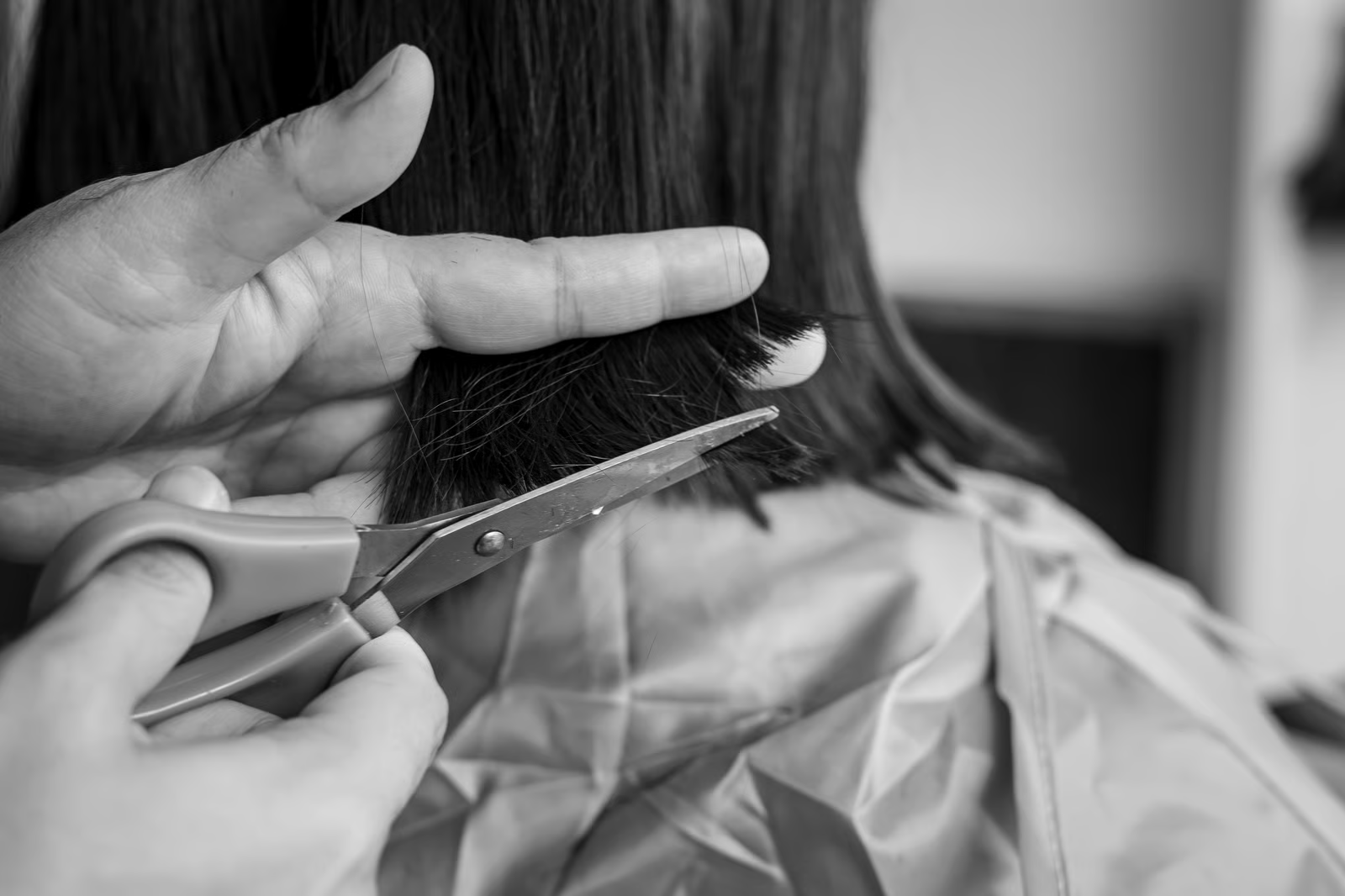
Thin hair cannot afford to lose too much weight. Once you remove too much density, the ends start to collapse, and the hair can look even thinner than before.
“We see this all the time. Someone comes in with thin hair and leaves with less of it. Too many layers, and suddenly the perimeter disappears.”
— Marcus Bell, Colorist, London
Here is where layers start to work against you:
Over-thinning the ends, The fastest way to make hair look sparse. The bottom line should feel solid, not wispy.
Short layers at the crown, Too much creates separation, exposing more scalp.
Ignoring hair density, Fine hair and low-density hair both require restraint.
Cutting for movement instead of fullness, Movement matters, but fullness is the priority with thin hair.
The Line Between Volume and Loss
This is where professional judgment comes in. Stylists are constantly balancing two things: creating lift and movement, and preserving as much visible density as possible.
“You cannot cut your way out of thinning hair. You can only cut in a way that respects it.”
— Dana Reeves, Stylist, Nashville
If a client is already experiencing hair fall or early thinning, aggressive layering can exaggerate the issue.
How Stylists Approach Layers for Thin Hair Now
The approach has shifted over the last few years. It is less about dramatic shape and more about subtle engineering.
Keeping the perimeter strong
The baseline of the haircut stays blunt or slightly softened. This maintains the appearance of thickness.
Adding internal layers only
Instead of visible layers, stylists remove weight from inside the haircut. The outside still looks full.
Focusing on the crown strategically
A small amount of lift at the crown can help, but it has to be controlled.
Customizing for texture
Clients with wavy or curly hair may need different layering to avoid frizz or collapse.
Pairing with the right styling routine
Layers only work if the client can style them. This often includes:
- Volumizing shampoo and conditioner
- Lightweight mousse or styling foam
- A targeted hair serum for ends without weighing them down
The Role of Hair Health
Layers will not fix compromised hair. If the hair is dealing with severe breakage, damage from bleach, or chronic dryness, layering too much will expose those weak areas.
Treatment comes first:
- Protein treatment to strengthen strands
- Hair breakage treatment to reduce snapping
- Regular scalp treatment to support growth at the root
“Healthy hair holds a shape. Damaged hair falls apart. No haircut can override that.”
— Nina Patel, Salon Educator, Chicago
When Shorter Cuts Make More Sense
Sometimes the solution is not more layers. It is less length.
Shorter cuts can instantly create the illusion of density:
- A pixie cut concentrates fullness at the crown
- A soft bob keeps weight at the perimeter
- A structured short cut can make thinning less noticeable
This is especially true for clients dealing with ongoing thinning or progressive hair loss.
What Clients Should Actually Ask For
Instead of asking for layers, the better conversation is about outcome.
A good consultation sounds like:
- “I want my hair to look fuller”
- “I feel like my ends are thin”
- “My crown looks flat”
From there, the stylist decides how much layering is appropriate. Because layers are not a universal fix. They are a precision tool.
The Bottom Line
Layers can be one of the best things you do for thin hair or the fastest way to make it look worse. The difference comes down to restraint, placement, and understanding what the hair can handle.
“With thin hair, every snip shows. You are either building density or taking it away. There is no neutral.”
— Marcus Bell, Colorist, London
Keep the strength, create the illusion, and support it with the right products and styling routine. That is what makes layers work.