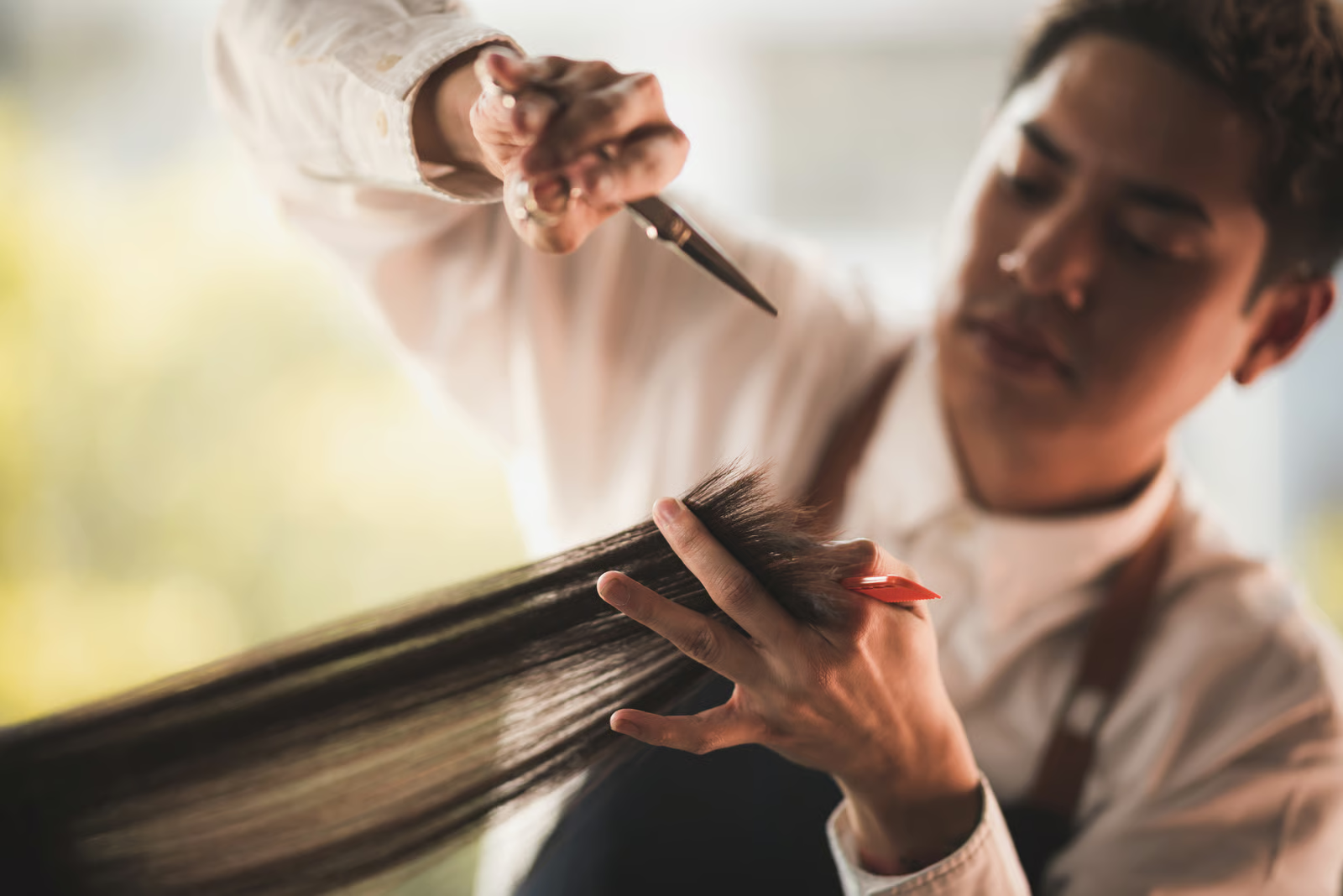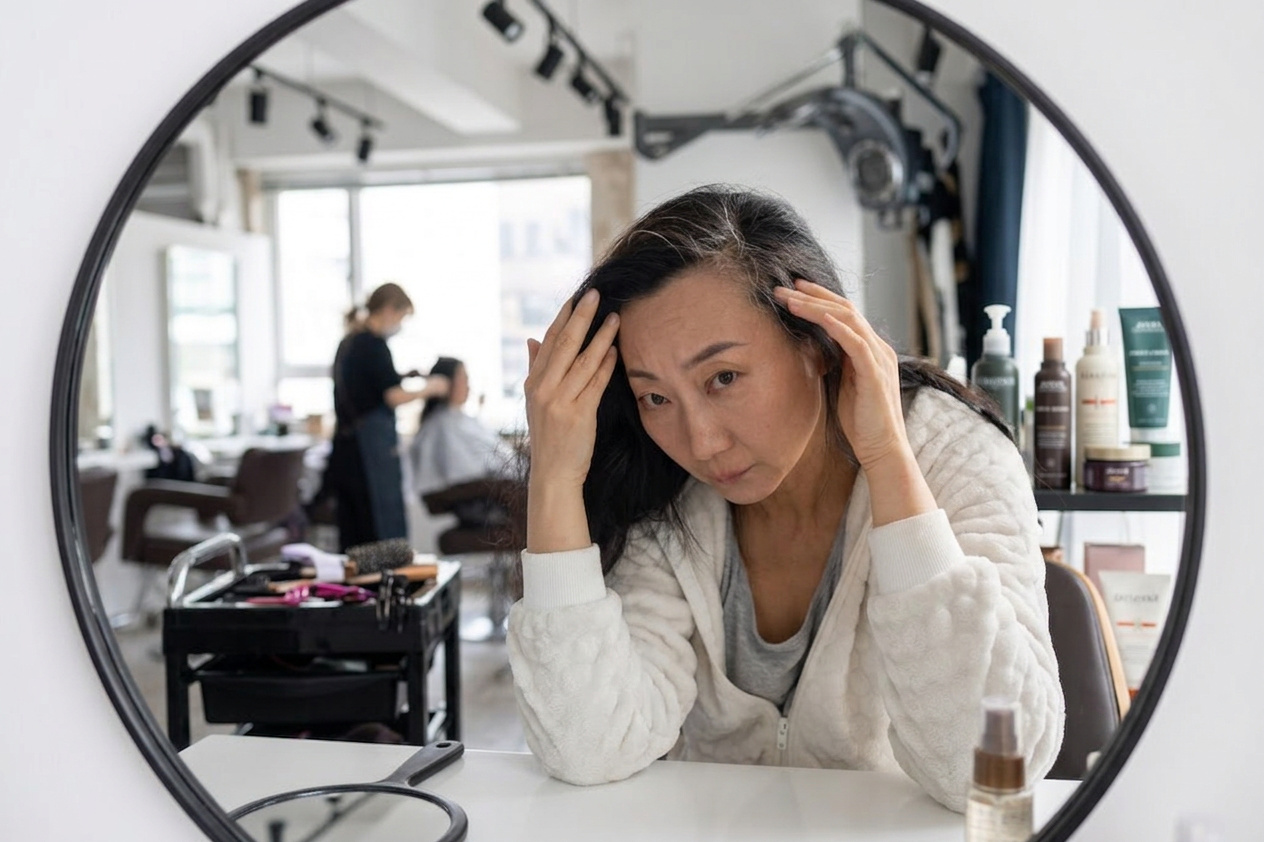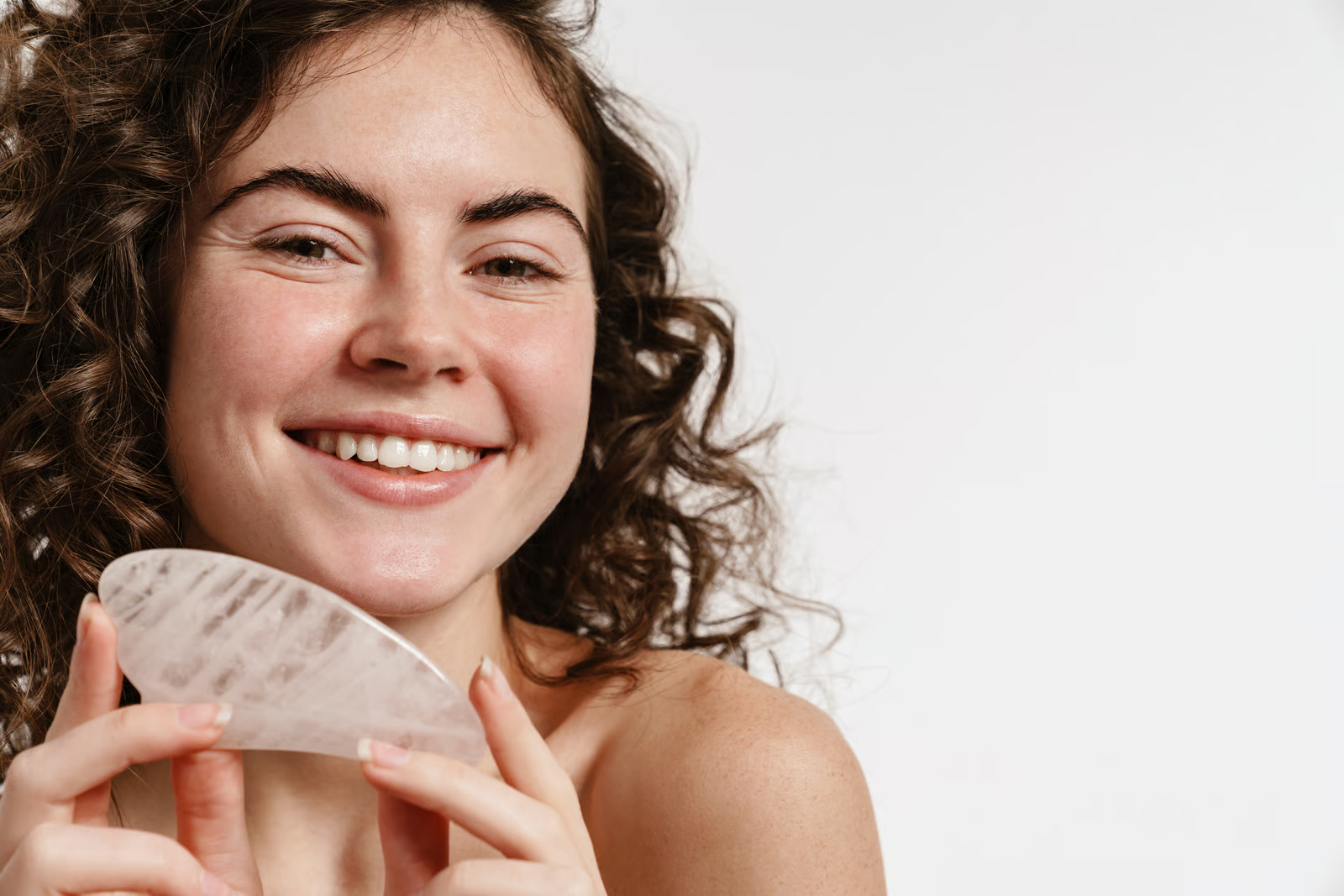
Gua sha has already had its beauty-world moment for the face. The sculpted cheekbones, the lymphatic drainage claims, the jade tools sitting on every bathroom shelf. But behind the chair, the more interesting shift is happening higher up: clients are now asking about gua sha for the scalp.
And stylists are paying attention.
Not because it is a miracle cure for hair loss or hair thinning. It is not. But because scalp work is becoming a serious part of modern hair care, and gua sha fits neatly into that conversation. It sits somewhere between massage, ritual, circulation support, and a more intentional way to apply scalp products.
“The scalp has been ignored for too long. Clients will spend $300 on hair color products, then forget that the hair grows from skin. Gua sha makes them pay attention to the root.”
— Marissa Chen, Scalp-Focused Stylist, Los Angeles
That is exactly why it is showing up in salons, treatment rooms, and at-home routines.
What Is Scalp Gua Sha?
Scalp gua sha uses a smooth-edged tool to gently massage and scrape across the scalp. The technique comes from traditional East Asian bodywork, where gua sha is used on the skin to encourage movement, release tension, and support circulation.
For the scalp, the pressure is lighter and the goal is different. You are not trying to aggressively scrape the skin. You are trying to wake up the scalp, loosen tight areas, and help products like hair serum, scalp oil, or scalp treatment spread more evenly.
Think of it as scalp massage with more precision.
Why Everyone Is Talking About the Scalp Now
The scalp conversation has changed. A few years ago, clients mostly thought about hair length, shine, frizz, and color. Now they are asking more direct questions:
Why is my hair falling out?
Why does my scalp feel tight?
Is buildup making my hair flat?
Can scalp care help with hair growth?
What is the best treatment for thinning hair I can actually maintain?
“Scalp care is where skin care was ten years ago. People are realizing that if the scalp is inflamed, dry, congested, or ignored, the hair is going to show it.”
— Dana Reeves, Salon Owner, Nashville
What Scalp Gua Sha Can Actually Help With
Let's be clear. Gua sha is not a replacement for minoxidil, PRP hair treatment, a dermatologist visit, or medical treatment for alopecia, female pattern baldness, or thyroid hair loss.
But it can support a better scalp-care routine. Stylists like it for a few practical reasons.
1. It helps release scalp tension
A tight scalp is common, especially in clients who clench their jaw, wear tight ponytails, or carry stress in the head and neck. Scalp gua sha can help loosen that tight feeling around the temples, crown, and nape.
“Clients do not always realize their scalp has tension until we start working through it. The crown and hairline are usually where they feel it first.”
— Marissa Chen, Scalp-Focused Stylist, Los Angeles
2. It encourages product distribution
If you are using a scalp serum, hair growth serum, or scalp oil, a gua sha tool can help work the product across the scalp without using your nails. Many clients apply scalp products unevenly, a tool slows the process down and ensures better coverage.
3. It supports circulation through massage
Massage can temporarily increase blood flow to the area being worked. That does not mean gua sha will regrow hair on its own, but it makes sense as part of a broader scalp care routine, especially for clients dealing with stress-related shedding or telogen effluvium.
4. It helps loosen buildup before washing
Used gently before shampooing, scalp gua sha can help lift oil, sweat, dry flakes, and product buildup. It is especially helpful before a clarifying wash or targeted scalp treatment.
Who Scalp Gua Sha Is Best For
Scalp gua sha makes the most sense for clients who want a healthier, cleaner, more responsive scalp. It can be a good fit if you have:
Dry scalp or tightness
Mild flaking or buildup
Flat roots from product congestion
Stress-related scalp tension
Fine hair that gets weighed down easily
A routine focused on hair growth or hair regrowth
Early thinning, where scalp care is part of the bigger plan
Who Should Be Careful
This is where stylists get serious. Scalp gua sha should never hurt. It should never leave cuts, bruising, or burning. And it is not for every scalp.
Avoid scalp gua sha if you have:
Open sores or scratches
Active scalp infection
Severe dandruff or inflamed patches
Psoriasis flare-ups
Recent hair transplant or scalp procedure
Sudden, unexplained bald patches
“A tool should never be your diagnosis. If the scalp looks angry or the shedding is sudden, that is not a spa moment. That is a referral.”
— Marcus Bell, Colorist, London
If you are dealing with scarring alopecia, frontal fibrosing alopecia, or rapidly changing hair loss, see a dermatologist before starting any at-home scalp tool routine.
How to Do Scalp Gua Sha at Home
The technique is simple, but the pressure matters. You want firm enough contact to feel movement, not so much that the scalp feels sore afterward.
1. Start on a dry or lightly oiled scalp
You can do this before shampooing or at night with a lightweight scalp product. Good options include a lightweight hair serum, scalp oil, or scalp moisturizer. Avoid heavy oils if your hair gets greasy quickly.
2. Work in sections
Part the hair so the tool touches the scalp, not just the hair. Start with:
Hairline
Temples
Crown
Sides
Nape
3. Use short, gentle strokes
Move the tool in slow strokes from front to back or from the center outward. Do not scratch, dig, or drag aggressively through tangled hair.
4. Spend extra time where the scalp feels tight
Most clients feel tension at the temples, crown, or behind the ears. Use lighter pressure around the hairline, especially if you are concerned about thinning at the front or temples.
5. Shampoo if needed
If you used oil or loosened buildup, follow with shampoo. Clients with flakes may need a medicated dandruff shampoo or specific dandruff treatment.
How Often Should You Do It?
For most scalps, two to three times a week is enough. If your scalp is sensitive, start once a week.
Once a week for sensitive scalps
Two to three times a week for dry scalp, buildup, or tension
Before wash day if using oils or heavier treatments
At night if pairing with lightweight scalp serum
More is not always better. Overworking the scalp can create irritation, which defeats the point.
The Salon Version vs the At-Home Version
In salons, scalp gua sha is usually part of a bigger service, an add-on to a scalp treatment, gloss, blowout, or restorative appointment. A stylist might combine it with steam, scalp exfoliation, a tea tree treatment, or a hydrating scalp mask.
At home, the goal is maintenance. You are not trying to replicate a full treatment room service. You are just keeping the scalp mobile, clean, and cared for between appointments.
Can Scalp Gua Sha Help With Hair Growth?
This is the question everyone asks. The honest answer: scalp gua sha may support a healthy scalp environment, but it should not be positioned as a guaranteed hair growth treatment.
It can be part of a supportive routine alongside dermatologist-recommended treatments, topical minoxidil, microneedling, red light therapy, or PRP, depending on the person and the diagnosis.
“Scalp gua sha is support, not the whole strategy. The problem is when people confuse a good ritual with a medical treatment.”
— Dana Reeves, Salon Owner, Nashville
What Products Pair Well With Scalp Gua Sha?
The best products are lightweight, scalp-safe, and easy to wash out. Stylists usually recommend:
Scalp serum, Best for targeted application without greasiness
Oil for scalp, Better before shampooing, especially for dry or tight scalps
Scalp moisturizer, Good for clients dealing with dryness, flakes, or tightness
Tea tree scalp treatment, Useful for a cooling, fresh feeling, though may be too strong for sensitive scalps
Shampoo for hair fall, A supportive wash option when paired with a full thinning-hair routine
Volumizing shampoo and conditioner, Helpful if the goal is a cleaner scalp and fuller-looking roots
Avoid applying heavy masks, thick conditioners, or styling creams directly to the scalp unless they are designed for scalp use.
The Mistakes Stylists See All the Time
Scalp gua sha looks easy, but people still overdo it. The most common mistakes:
Using too much pressure, If the scalp feels sore later, you went too hard
Using the tool on tangled hair, This can cause pulling and breakage
Scraping over irritation, Flakes, redness, or sores need care, not friction
Expecting overnight hair growth, Scalp health is long-term
Using heavy oils too often, This can create buildup and make fine hair look flatter
Ignoring actual hair loss symptoms, Excessive shedding or bald patches should be checked by a professional
The Bottom Line
Scalp gua sha is not a magic fix. It will not cure hair loss, reverse alopecia, or replace clinical treatments.
But as part of a serious scalp-care routine, it makes sense. It helps clients slow down, touch their scalp, notice changes earlier, and apply treatment products more intentionally.
“The best scalp routine is the one a client will actually do. Gua sha works because it feels good enough to become a habit.”
— Marissa Chen, Scalp-Focused Stylist, Los Angeles
And in hair care, consistency is usually where the real results start.