

HairProVoices
COLOR: Brunette Glazing: The Salon Treatment Everyone's Asking ForSTYLE: Why a Good Haircut Is More Than Just "Taking Length Off"COLOR: Ready for Vivid Color? Here's What Your Stylist Wants You to KnowTEXTURE: The Curl Consultation: What to Say to Get Your Best Curls EverTIPS: How to Find a Stylist Who Gets Your Hair (And Keeps It)TIPS: How to Book the Right Stylist for Your Hair TypeTIPS: 10 Questions to Ask Before Your Next Color AppointmentPRODUCTS: Bond Builders: What They Are and Why Your Hair Needs OneBUSINESS: The $100K Solo Stylist BlueprintTECHNIQUE: What Is Balayage? Your Stylist ExplainsHAIR CARE: What Your Stylist Notices About Thinning Before You DoSTYLE: Why Layers Can Either Help or Ruin Thin HairHAIR CARE: Gua Sha for Scalp: The Treatment Stylists Are Watching CloselyCOLOR: How to Ask for a Low-Maintenance Color That Actually LastsAT HOME: At-Home Hair Care That Actually Makes a Difference (According to Stylists)BUSINESS: Why the Busiest Stylists Aren't Doing More Clients, They're Doing This InsteadPRODUCTS: The Types of Products Stylists Actually Use for Smoothing HairTIPS: What Your Stylist Is Actually Looking at When You Sit DownSTYLE: 10 G-Dragon Hairstyles Stylists Still ReferenceSTYLE: 10 Best Hair Looks at the 2026 Met GalaSTYLE: Mother's Day Special Edition: 6 Effortless Hairstyles Stylists Are LovingCOLOR: A Stylish History of Hair Color: From Ancient Pigment to Modern Salon CraftSTYLE: Clean Cuts, Strong Lines, Hot-Guy EnergySTYLE: How to Make a Slick-Back Bun Look PolishedHAIR CARE: Your Fine, Frizzy Hair Might Actually Be WavySTYLE: The 2026 Wolf Cut: Messy is the new SexySTYLE: Find the Bangs That Actually Suit YouHAIR CARE: What Stylists Should Know About Female Hair LossSTYLE: Game, Set, HairSTYLE & CULTURE: Your Hair Is Already Talking. Are You Listening?HAIR CARE: Minoxidil vs. Proprietary Molecules: Is NOVOGRO™ the Industry's Best Kept Secret?STYLE: Wet-Look Hair Can Be Chic. It Just Can't Look Greasy.HAIR CARE: Finasteride vs. NOVOGRO™: Why I'm Tired of Watching Women Borrow Men's Hair-Loss DrugsSTYLE: Short Without the Hard Edges: The French Bob I Reach ForHAIR CARE: Shedding vs. Breakage: The 2-Minute Chairside Test Every Stylist Should KnowBUSINESS: The Head Spa Opportunity: Turning Viral Interest Into Real Salon RevenueHAIR CARE: PP405 vs. NOVOGRO™: Why Salon Pros Are Questioning the Dormant Follicle HypeTECHNIQUE: What I Wish Clients Knew Before They Sat Down for ExtensionsHAIR CARE: The Real Damage Summer Does to Your Hair (and How Stylists Undo It)COLOR: There Is a Smarter Way to Go Gray, and Most Women Never Hear ItHAIR CARE: Your Shower Water Might Be the Real Reason Your Hair Feels OffHAIR CARE: How Often Should You Really Wash Your Hair? Let Me Settle This.HAIR CARE: No, You Cannot Repair a Split End. Here Is What Actually Happens.HAIR CARE: Your Flat Iron Runs Hotter Than Your Oven. Your Hair Notices Before You Do.COLOR: Brunette Glazing: The Salon Treatment Everyone's Asking ForSTYLE: Why a Good Haircut Is More Than Just "Taking Length Off"COLOR: Ready for Vivid Color? Here's What Your Stylist Wants You to KnowTEXTURE: The Curl Consultation: What to Say to Get Your Best Curls EverTIPS: How to Find a Stylist Who Gets Your Hair (And Keeps It)TIPS: How to Book the Right Stylist for Your Hair TypeTIPS: 10 Questions to Ask Before Your Next Color AppointmentPRODUCTS: Bond Builders: What They Are and Why Your Hair Needs OneBUSINESS: The $100K Solo Stylist BlueprintTECHNIQUE: What Is Balayage? Your Stylist ExplainsHAIR CARE: What Your Stylist Notices About Thinning Before You DoSTYLE: Why Layers Can Either Help or Ruin Thin HairHAIR CARE: Gua Sha for Scalp: The Treatment Stylists Are Watching CloselyCOLOR: How to Ask for a Low-Maintenance Color That Actually LastsAT HOME: At-Home Hair Care That Actually Makes a Difference (According to Stylists)BUSINESS: Why the Busiest Stylists Aren't Doing More Clients, They're Doing This InsteadPRODUCTS: The Types of Products Stylists Actually Use for Smoothing HairTIPS: What Your Stylist Is Actually Looking at When You Sit DownSTYLE: 10 G-Dragon Hairstyles Stylists Still ReferenceSTYLE: 10 Best Hair Looks at the 2026 Met GalaSTYLE: Mother's Day Special Edition: 6 Effortless Hairstyles Stylists Are LovingCOLOR: A Stylish History of Hair Color: From Ancient Pigment to Modern Salon CraftSTYLE: Clean Cuts, Strong Lines, Hot-Guy EnergySTYLE: How to Make a Slick-Back Bun Look PolishedHAIR CARE: Your Fine, Frizzy Hair Might Actually Be WavySTYLE: The 2026 Wolf Cut: Messy is the new SexySTYLE: Find the Bangs That Actually Suit YouHAIR CARE: What Stylists Should Know About Female Hair LossSTYLE: Game, Set, HairSTYLE & CULTURE: Your Hair Is Already Talking. Are You Listening?HAIR CARE: Minoxidil vs. Proprietary Molecules: Is NOVOGRO™ the Industry's Best Kept Secret?STYLE: Wet-Look Hair Can Be Chic. It Just Can't Look Greasy.HAIR CARE: Finasteride vs. NOVOGRO™: Why I'm Tired of Watching Women Borrow Men's Hair-Loss DrugsSTYLE: Short Without the Hard Edges: The French Bob I Reach ForHAIR CARE: Shedding vs. Breakage: The 2-Minute Chairside Test Every Stylist Should KnowBUSINESS: The Head Spa Opportunity: Turning Viral Interest Into Real Salon RevenueHAIR CARE: PP405 vs. NOVOGRO™: Why Salon Pros Are Questioning the Dormant Follicle HypeTECHNIQUE: What I Wish Clients Knew Before They Sat Down for ExtensionsHAIR CARE: The Real Damage Summer Does to Your Hair (and How Stylists Undo It)COLOR: There Is a Smarter Way to Go Gray, and Most Women Never Hear ItHAIR CARE: Your Shower Water Might Be the Real Reason Your Hair Feels OffHAIR CARE: How Often Should You Really Wash Your Hair? Let Me Settle This.HAIR CARE: No, You Cannot Repair a Split End. Here Is What Actually Happens.HAIR CARE: Your Flat Iron Runs Hotter Than Your Oven. Your Hair Notices Before You Do.
There Is a Smarter Way to Go Gray, and Most Women Never Hear It
Color

There Is a Smarter Way to Go Gray, and Most Women Never Hear It

The transition does not have to be two years of a harsh line and regret. A colorist on how to grow out your grays and actually enjoy the process.

Jul 2, 2026 9 min read

The clients who struggle most with going gray are almost never the ones with the most gray. They are the ones nobody gave a plan.

They wake up one morning, decide they are done coloring, stop, and then spend the next year fighting a hard line of silver at the roots and a length of old color that no longer matches anything. That is not going gray. That is quitting color with no strategy, and it is miserable. There is a far better way to do this, and I wish more women heard about it before they started rather than a year into the mess.

Why the grow-out feels so brutal

When you stop coloring, your natural gray grows in at the root while the previously colored hair stays exactly where it is on the lengths. The place where the two meet is called the line of demarcation, and it is the single reason the transition earned its bad reputation. On someone who colored dark, that line can be stark, a band of bright silver sitting against a wall of brown. Left completely alone, it takes most people well over a year to grow out, sometimes closer to two depending on length. Nobody warns you about that timeline, and that gap is usually exactly where the panicked relapse happens.

The decision is emotional, and that is completely fine

Before we get technical, here is something I say to everyone in my chair. Choosing to go gray is not only a hair decision, it is a personal one, and there is no wrong answer. Some women feel powerful and free the moment they commit. Others quietly grieve their old color for a while, and that is normal too. You are allowed to change your mind halfway through. My job is not to talk you into it or out of it. My job is to make whichever path you choose look intentional instead of accidental.

There is more than one way to do it

The bluntest route is cold turkey, simply stopping and growing it all out. That works best if your hair is short or you honestly do not mind the line while it happens. The most comfortable route for most people is blending, where I weave lowlights and highlights through the lengths so the incoming gray and the old color melt together and that harsh line softens into something you can barely find. For darker hair, we sometimes lighten the lengths gradually across several appointments to meet the gray in the middle and shrink the contrast. And then there is the big chop, cutting the colored hair off entirely to start fresh with your natural silver, which is by far the fastest way through if you are feeling brave.
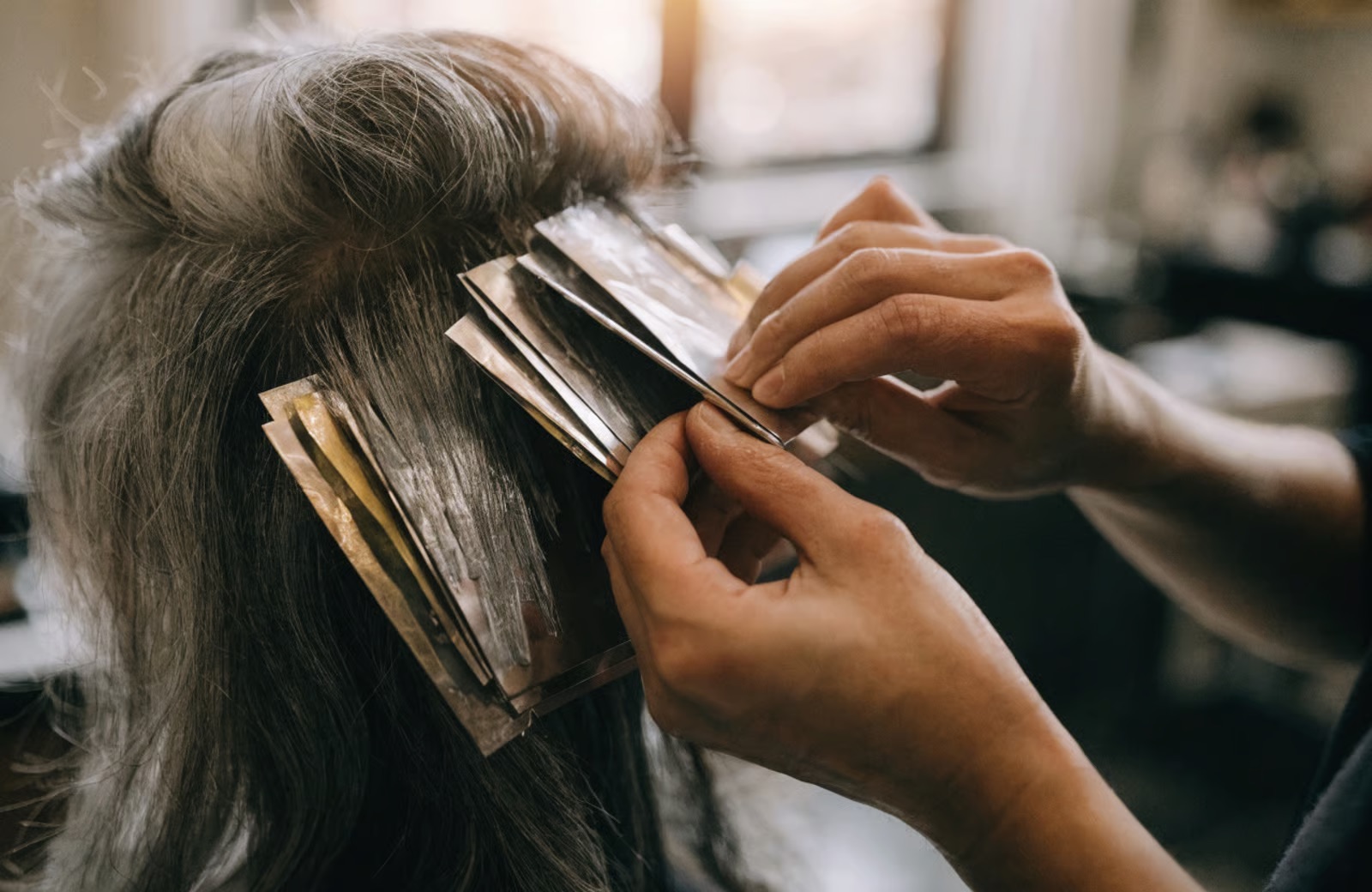
Blending lowlights and highlights through the lengths softens the line of demarcation so the incoming gray and the old color melt together.

Please stop chasing your roots with box dye

This is the one habit that will quietly sabotage everything. I understand the urge completely. The regrowth feels glaring and you just want it gone before the weekend. But box color builds up on the hair, coats it unevenly, and can react in genuinely unpredictable ways when a professional later tries to lighten or blend over it. Every colorist alive has a story about a beautiful transition plan that got derailed by one panicked purchase at the drugstore. If you are committing to gray, the entire point is to stop fighting your roots, not to fight them with the worst possible tool.

Silver is a color you maintain, not the absence of one

The myth I hear most is that going gray finally frees you from the salon. Not quite. Natural silver and white hair is stunning, but it is also porous and it loves to grab onto tones you do not want, especially yellow and brass from your water, your products, and the air around you. Keeping silver looking crisp and bright usually means a purple toning shampoo used correctly, the occasional gloss to neutralize warmth, and yes, still seeing your stylist now and then. Think of it less as quitting color and more as switching to a new color that happens to be your own.

Your haircut matters as much as your color

People forget that going gray changes how your hair behaves, not only what shade it is. Gray hair often has a different texture. It can be coarser, wirier, or a little more prone to wave than the hair you remember. A cut that flattered your old color may not flatter the new texture at all. This makes it the perfect moment to rethink your shape, because the right cut makes silver look chic and deliberate, while the wrong one lets it read as simply grown out and tired. I treat a gray transition as a fresh start for the whole look, not just the color.
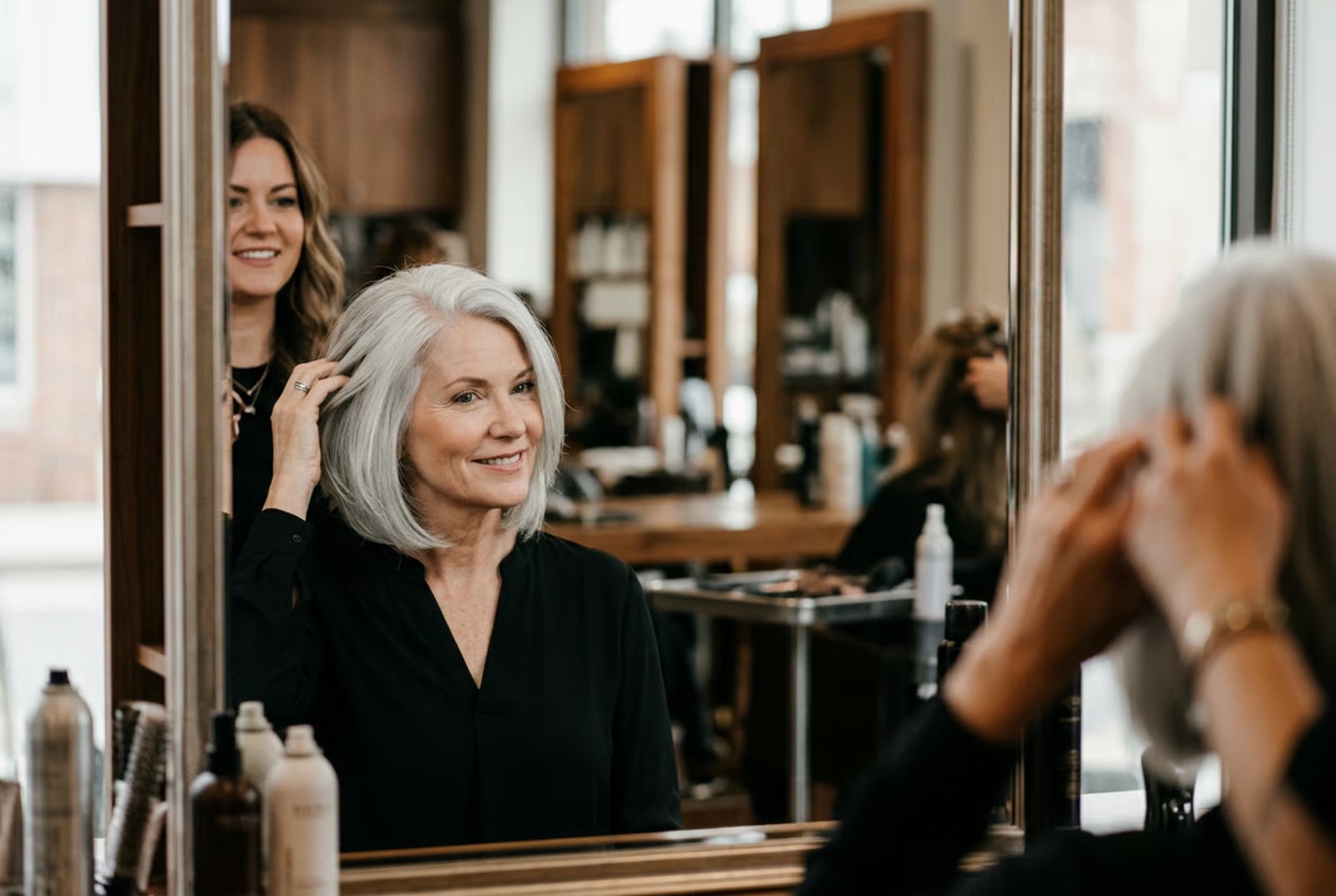
A fresh cut built for the new texture is what makes a silver transition read as chic and deliberate rather than simply grown out.

What actually keeps silver looking expensive

At home, a few small things make an outsized difference. A good purple shampoo, used once or twice a week and no more, keeps the yellow in check. A clarifying wash every so often lifts out the mineral buildup that dulls silver, which matters a lot if you have hard water. And moisture becomes more important than ever, because that coarser gray texture drinks it up fast. Overdo the purple and you drift slightly lilac. Skimp on the moisture and you drift toward straw. It is a balance, and a good stylist will dial in the exact routine for your specific hair.

Going gray is one of the very few beauty decisions that is genuinely yours. It is not a trend and it is not fixing anything. Done with a plan, it is one of the most elegant things a woman can do with her hair. Done by accident, with a hard line and a drawer full of box dye, it simply looks like you gave up, which is a shame, because you did the exact opposite. So if you are even thinking about it, come and talk to a colorist before you stop coloring, not a year after. We would so much rather help you design the transition than rescue it.

About the Author

Vivienne Marsh
Vivienne Marsh

Colorist & Silver Transition Specialist · HairProVoices

Vivienne Marsh is a colorist who specializes in gray blending and silver transitions. She has walked hundreds of clients through the grow-out, and considers it some of the most rewarding work she does.

Newsletter

Get the Best Hair
Advice, Weekly

Join 85,000+ readers getting stylist-curated trend reports, care tips, and inspiration, straight to your inbox.

No spam, ever Weekly digest Unsubscribe anytime